Get Full Government Meeting Transcripts, Videos, & Alerts Forever!
Get email alerts on the Vehicle Accident Reporting topic
No spam. Unsubscribe anytime.
Wyoming panel OKs bill removing $1,000 crash-reporting threshold, keeps rule for inoperable vehicles
Summary
The House Transportation, Highways & Military Affairs Committee advanced House Bill 25 to require reporting only when crashes cause injury, death or render a vehicle inoperable; advocates warned about rural property damage and insurance impacts.
The House Transportation, Highways & Military Affairs Committee voted to advance House Bill 25, which removes a $1,000 vehicle-damage threshold from state crash-reporting law and instead requires motorists to notify law enforcement only when a crash causes bodily injury, death or leaves a vehicle disabled and unable to be safely driven from the scene.
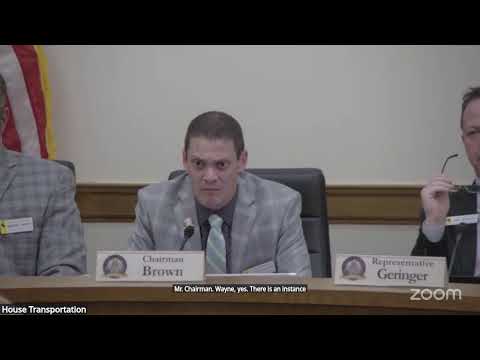
The measure, an interim-committee bill, seeks to reduce paperwork and on-scene reporting for property-damage-only collisions that officers frequently encounter, supporters said. Chairman Brown told the committee the intent was to move quickly through the committee's agenda and allow public testimony on other bills; the committee later voted 9-0 to advance HB25.
The bill would delete the old dollar threshold and leave the reporting requirement in place when a vehicle is “disabled to prevent its normal and safe operation.” Tim Cameron, colonel and administrator of the Wyoming Highway Patrol, told the panel, “So the intention of the bill is to reduce or do away with [the] $1,000 threshold for a crash.” He said agencies typically record officer responses in CAD systems even when they do not file a formal state crash report, and that the change would reduce law-enforcement time on minor property-only crashes in which vehicles can be driven away.
Public testimony included written and in-person comments from agricultural and law-enforcement groups. Scott Zimmerman of the Rocky Mountain Farmers Union said rural crashes can damage farm infrastructure and then never be reported, describing instances where “you go out to turn on your center pivot irrigation system, and your controller is piled up in the ditch, and there's no sign.” Alan Thompson, executive director of Last Cop (the Wyoming Association of Sheriffs and Chiefs of Police), told the committee the bill targets the state reporting form and does not stop local investigations or citation-writing: “All this does is talk about the state form that is required by law enforcement to fill out and submit to the state.”
Committee members asked about practical effects on insurance and fault determinations. Representative Larson raised the concern that two drivable vehicles with substantial damage may not be reported and that could complicate insurance claims; Cameron replied that troopers and officers do not assign legal “fault” in crash reports and that insurers conduct fault analysis when claims are filed. Members also questioned the phrase “normal and safe operation” and whether that leaves too much discretion to responding officers; Cameron said the language is existing statutory phrasing and that officers are expected to use reasonable judgment (for example, not allowing a vehicle that cannot turn its wheels or has severe structural damage to be driven away).
There were calls for technical fixes to clarify when damage discovered after a vehicle has left the scene (for example, hit-and-run or delayed reporting) should trigger a written report. Representative Larson proposed an amendment to clarify that an officer may determine a vehicle was disabled “after being removed from the scene” based on interviews; she withdrew the motion after the chair offered to work with attorneys on wording before committee of the whole. The committee did not adopt amendments on the floor. The roll-call vote on HB25 was 9-0 in favor.
The measure will go to the full House; committee members volunteered to co-manage the bill on the floor.
Less central details: the bill retains existing exclusions (bicycles are addressed separately in the injury provision), and committee staff noted an existing penalty in current statute for failing to report. The committee flagged possible impacts for rural property owners and noted that officers would still respond when asked.