Get Full Government Meeting Transcripts, Videos, & Alerts Forever!
Get email alerts on the Water Planning Master Plans topic
No spam. Unsubscribe anytime.
Committee clears planning bill authorizing water master plans, UW studies and a Popo Agie feasibility study
Summary
Jason Mead, director of the Wyoming Water Development Office, briefed the committee that "the water development program is funded through mineral severance tax distribution, or a portion thereof."
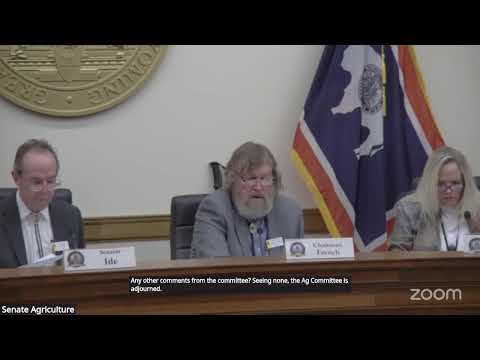
Jason Mead, director of the Wyoming Water Development Office, briefed the Agriculture, State & Public Lands & Water Resources Committee on Senate File 82 and said the "water development program is funded through mineral severance tax distribution, or a portion thereof." The committee voted to report the planning omnibus bill favorably.
The bill authorizes level 1 (master-plan) and level 2 (feasibility) planning studies and lists individual projects eligible for use of water development accounts. Mead described the program's competitive process: applicant sponsors by March 1, vetting and site visits, consultant procurement, and commission and select water committee review before inclusion in the omnibus bill.
What it does: The planning bill funds master plans and research. The committee packet identified account-1 master plans (including an Eulitt water master plan and the University of Wyoming Water Research Program), three agricultural master plans (Pioneer Canal/Lake Hattie, Smiths Fork, and Wheatland irrigation districts, totaling $980,000), and a level-2 feasibility study for middle-Popo Agie River storage opportunities. Mead said master plans often have about a 10-year useful shelf life for municipalities and around 15 years for irrigation districts, but that timing varies by sponsor and project progress.
Fiscal and schedule details: Mead said planning funds typically revert if not expended or contract-obligated within three years; the bill sets a reversion date of July 1, 2028. The director and witnesses emphasized leveraging federal funding sources (NRCS, EQIP and other programs) to stretch state dollars. The planning bill draws on the water development accounts generated from mineral severance tax distributions.
Public testimony: Supporters included Chris McCl (Wyoming Business Alliance), Holly Kennedy (Wyoming Association of Conservation Districts) and members of the select water committee. Senator Steinmetz, chair of the select water committee, described the bill as vetted by the commission and the select water committee and stressed the watershed and forest-health research connects to broader wildfire mitigation and Colorado River Basin concerns.
Committee action and next steps: The committee reviewed the bill pages, accepted the planning-package as presented and recorded an aye vote on the bill. The bill now moves toward the construction omnibus and the full legislative process.
Notes: The package includes two UW Water Research Program studies: a mountain-front aquifer recharge and groundwater-modeling project using machine learning and a project to quantify Wyoming forest metrics to guide fuel-load reduction and watershed health efforts.