Get Full Government Meeting Transcripts, Videos, & Alerts Forever!
Get email alerts on the Aging Policy topic
No spam. Unsubscribe anytime.
Connecticut aging committee members emphasize aging-in-place, spousal compensation and elder-fraud prevention
Summary
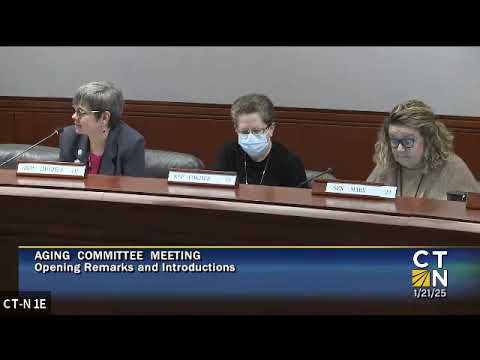
At its Jan. 21 organizational meeting, members of the Connecticut General Assembly Aging Committee outlined priorities including funding for aging-in-place, spousal compensation for in-home caregivers and measures to prevent scams targeting seniors.
Members of the Connecticut General Assembly Aging Committee used opening remarks on Jan. 21 to outline policy priorities for the 2025 session, highlighting aging in place, funding challenges, spousal compensation for in-home caregivers and prevention of scams targeting older adults.
Senator Wong, the Senate ranking member, said, “Connecticut's population's aging ... I think for me, it is to continue the momentum, to give our seniors a sense of dignity, a sense of respect, and aging in place is gonna be critical.” Wong added that funding those priorities is a chief concern and said, “you are my commitment that, we will make a a a budgetary commitment to facilitate those things moving forward.”
Representative Balinski said the committee should “conquer the challenge of spousal compensation, so that people can be cared for by those that love them the absolute most at home and that a spouse can comfortably feel like they can leave their job outside the house.” Members framed aging in place as a way to keep people out of institutions and said it warrants focused legislative work.
Representative Pizzuto recounted holding an elder-justice forum in Middlebury that featured Attorney General Tong and said, “It's amazing how easily the seniors who are starved for conversation are scammed, phone calls, and so forth.” Several members also emphasized protections for seniors against abuse, exploitation and scams as priorities for the committee.
These comments were delivered during the committee’s organizational session; no formal policy proposals, bill texts or votes on these policy priorities were recorded in the transcript. The committee scheduled its next meeting for Jan. 28 at 10 a.m.