Get Full Government Meeting Transcripts, Videos, & Alerts Forever!
Get email alerts on the Interconnection Queue Reform topic
No spam. Unsubscribe anytime.
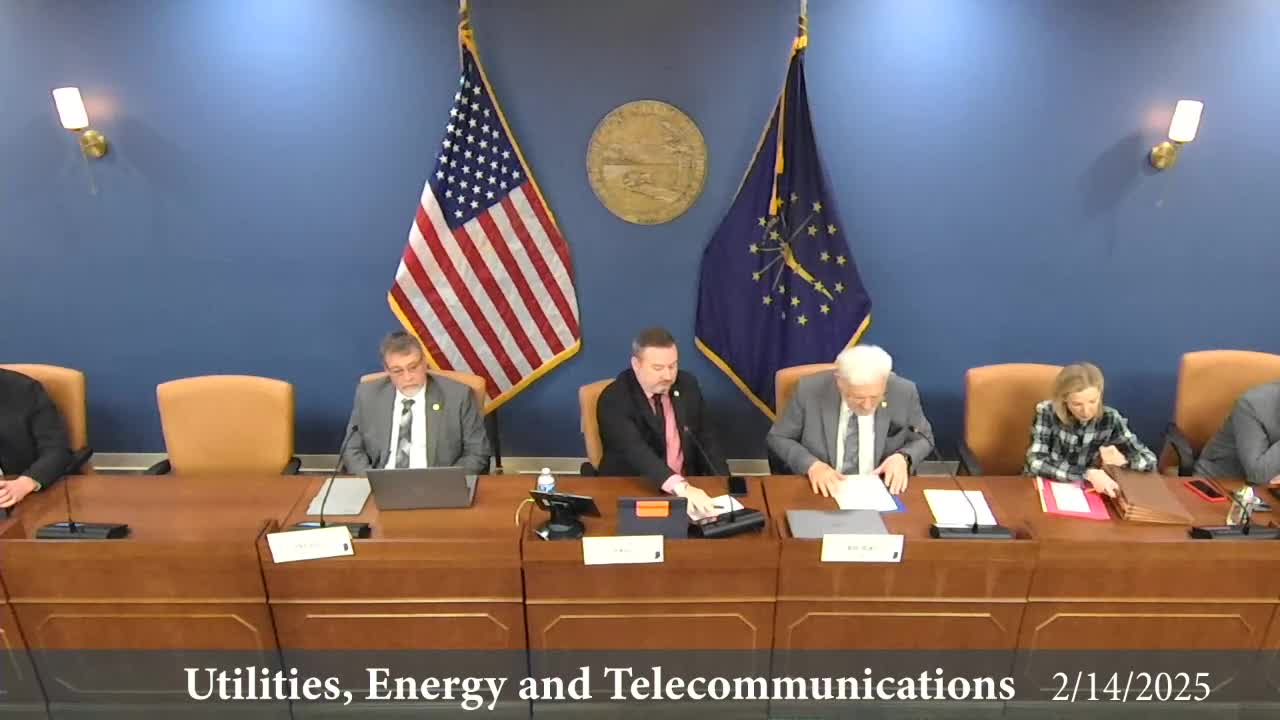
Committee approves resolution urging FERC to speed interconnection reviews as queue backlog grows
Summary
The Utilities, Energy and Telecommunications Committee passed House Concurrent Resolution 3 on a 10‑2 roll call, urging the Federal Energy Regulatory Commission and regional transmission organizations to address multi‑year interconnection backlogs and to adopt expedited review procedures for certain generation additions.
The Utilities, Energy and Telecommunications Committee passed House Concurrent Resolution 3 on a 10‑2 roll call, urging the Federal Energy Regulatory Commission and regional transmission organizations to address multi‑year interconnection backlogs and to adopt expedited review procedures for certain generation additions.
The resolution, presented by committee Chair Ed Soliday, asks federal and regional authorities to develop prioritization or expedited processes to reduce a backlog that witnesses and committee members described as taking up to four years. The committee voted to pass HCR 3 after more than a dozen witnesses and industry groups testified.
HCR 3 does not direct a specific technical fix; it asks federal regulators and RTOs to create systems other than strictly first‑come, first‑served interconnection queues. Chair Ed Soliday said the bill’s purpose was ‘‘to unjam the backlog’’ and emphasized the measure was not prescribing a single solution: "We're not telling them what to do, but it has to be something better than what we have now."
Why it matters: witnesses told the committee long queue times are delaying new generation and transmission needed to meet rapid load growth from data centers, manufacturing and other high‑demand customers. Suzanne Javeroski, the state’s newly appointed secretary of the Indiana Department of Energy and Natural Resources, cited the North American Electric Reliability Corporation’s December assessment, saying Indiana currently falls into a "high risk" reliability category and that supporting RTOs and federal agencies in reforming interconnection is important.
Industry testimony and specifics - Supporters from utilities and business groups said the queue backlog is constraining economic development. Joseph Rampala, speaking for INDIAC, said delays "impede a cost effective generation transition." David Ober of the Indiana Chamber of Commerce and Matt Long of the Indiana Energy Association both urged passage to signal the state’s concern to federal regulators. - Electric cooperatives and municipal utilities highlighted local reliability and cost risks. Allie Jones of Northeastern REMC noted PJM has proposed a resource‑reliability initiative limited to 50 projects that PJM estimates could add up to 10 gigawatts of dispatchable generation and that PJM and MISO filings could be pending soon. - Several witnesses described prior reforms: PJM’s Q‑reform and other RTO steps have shortened processing cycles in some cases, but stakeholders said the number of pending interconnection requests has increased sharply and staffing and study workloads remain a bottleneck.
Concerns and dissent Representative Matt Pierce, who voted against the resolution, argued parts of HCR 3 go beyond asking for reform and instead "kind of... mean jumping the queue," warning expedited review could advantage incumbent, investor‑owned utilities over independent developers and potentially favor dispatchable generation that may not be the lowest‑cost option for ratepayers. Kerwin Olson of the Citizens Action Coalition also opposed the resolution's emphasis on load‑serving entities and large dispatchable projects, saying the language "speaks to the monopoly utilities" and to large data‑center demand rather than nondiscriminatory reform.
Procedural and implementation notes Committee members and witnesses described several details discussed in testimony or in stakeholder processes: queue cycles were described as commonly taking 3–4 years today with a goal in some proposals of processing within one year; MISO and PJM were reported to be preparing filings (MISO reportedly targeting a February filing); some proposals include sunset provisions (witnesses suggested an illustrative 3–5 year window); and PJM has previously implemented a Q‑reform moving toward a "first‑ready, first‑served" approach.
Votes at a glance - Motion: "Move to pass HCR 3." (Mover/second not specified in transcript.) - Outcome: Approved - Roll call result reported in the transcript: 10 yes, 2 no. Named no votes: Representative Matt Pierce (No); Representative Pryor (No).
What’s next The chair said the committee will seek a floor vote if the resolution passes committee; if approved by both chambers, the resolution’s text will be sent to federal agencies, including FERC, and to the state’s congressional delegation. The resolution itself is nonbinding; witnesses and members repeatedly noted actual reforms will depend on filings and approvals at the federal and RTO level.
Ending Committee Chair Ed Soliday closed by urging members to back the resolution as a state signal to federal regulators: "We need to move forward," he said, asking members to vote to send the message that the current system "doesn't work."