Get Full Government Meeting Transcripts, Videos, & Alerts Forever!
Get email alerts on the Social Media Restrictions topic
No spam. Unsubscribe anytime.
Committee hears competing views on draft social‑media age‑verification bill; sponsors will refine language
Summary
Senate Bill 11, a proposal to require parental verification before minors use account‑based social media, prompted supporters who cited youth mental‑health concerns and opponents who said similar laws have been enjoined in other states; author and stakeholders will work on a narrower amendment before the bill returns to committee.
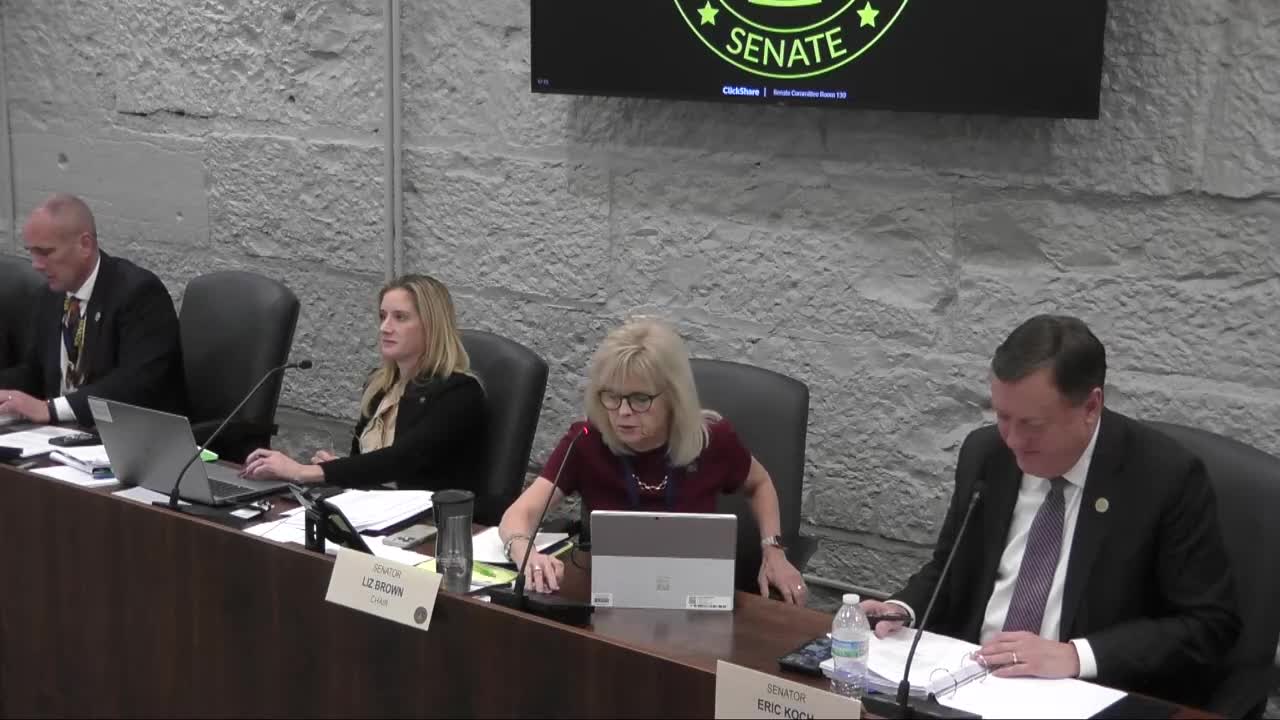
Senate Bill 11, a bill that would require social‑media operators to obtain verifiable parental consent before a minor (15 and under in the current draft) can access account‑based social media, drew competing testimony and legal concerns at the Judiciary Committee hearing.
Author Senator Patrick Bohachuk said the bill’s aim is not to regulate content but to address the broader public‑health question of whether social‑media access itself is harming children. He told the committee the draft narrows "social media" from broader online services, removes a private cause of action and will give operators 30 days to cure violations after a complaint from the Attorney General.
Alexander Mingus of the Indiana Catholic Conference supported the bill as a tool to give parents additional control over their children’s online formation and called for protections that would encourage parental involvement. He said the measure "gives parents a tool for checking unmonitored and unapproved social media usage."
Chris Daley of the ACLU of Indiana testified in opposition and urged the committee not to advance the bill in its present form. Daley cited litigation in other states: he said materially similar laws in Arkansas and Ohio have been enjoined by courts and argued SB 11 risks infringing minors’ First Amendment interests and that the statutory approach is vulnerable to legal challenge. Daley urged investment in mental‑health resources and parental education as alternatives.
Committee members asked technical questions about age‑verification, the difference between account‑based access and general web browsing (for example, viewing publicly posted videos without logging in), and how platforms would handle conflicting parental permissions in shared‑custody situations. Senator Bohachuk said the bill will require commercially reasonable verification methods and that parents would not be required to transmit a driver’s license; the sponsor said data‑privacy safeguards and encryption requirements are included in the draft amendment.
No vote was taken; the author said stakeholders have already met and that he will circulate a draft amendment to tighten definitions and provide a cure period before AG enforcement. The committee will consider the revised language at a future meeting.