Get Full Government Meeting Transcripts, Videos, & Alerts Forever!
Get email alerts on the Housing Evictions topic
No spam. Unsubscribe anytime.
Committee hears proposals to expand automatic eviction‑record sealing; advocates push for automatic and shorter time frames
Summary
Senate Bill 142 would expand eviction‑record sealing (automatic court sealing for qualifying cases and time‑based sealing). Tenants' advocates, legal clinics and social‑service groups urged broader automatic sealing and shorter timelines; title industry representatives flagged technical chain‑of‑title concerns.
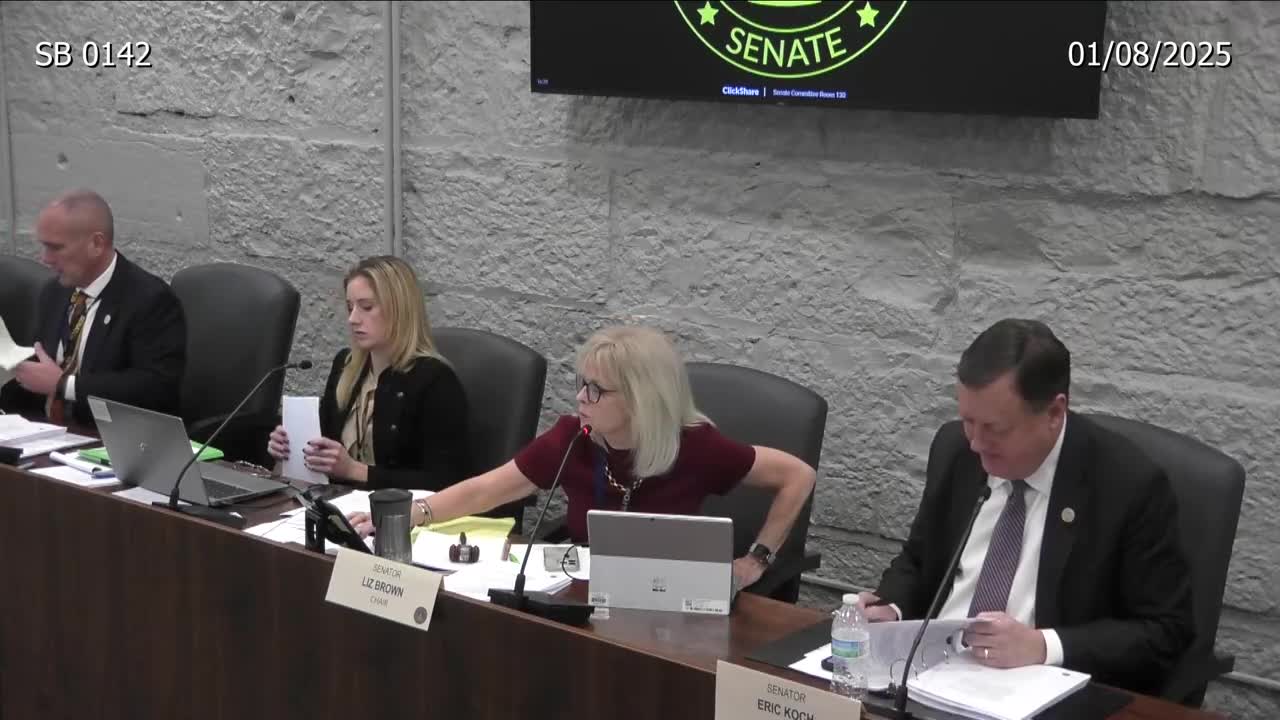
The Senate Judiciary Committee heard extended testimony on Senate Bill 142, which would expand the state’s eviction‑record sealing process by ordering automatic sealing in qualifying cases and creating a time limit for older eviction records.
David Pruitt of Notre Dame Law School’s Eviction Clinic told the committee the bill improves on a 2022 statute by sealing cases where the tenant prevailed or where a judgment was paid, and by setting a seven‑year window after which qualifying eviction records would be expunged. “This bill recognizes that at some point the benefit of having an eviction on someone’s record is outweighed by the harm,” he said.
Indiana Legal Services attorney Jenny Terry — who said her organization helped more than 1,600 tenants file eviction‑sealing petitions last year — said automatic sealing would reduce procedural hurdles for low‑income renters. “A lot of tenants face practical barriers — no printer, trouble serving forms, difficulty getting hearings — and automatic sealing in qualifying cases would reduce wasted time and prevent collateral harm in housing searches,” she said.
Supporters cited data showing tens of thousands of eviction filings in recent years and noted that since the 2022 law took effect courts have ordered more than 31,000 eviction‑sealing actions. Witnesses said sealing at the time of filing for eligible cases can prevent lenders and landlords from seeing pending filings that block housing or loan underwriting, and argued shorter time windows (some witnesses suggested three years) would improve fairness.
Industry and title‑sector witnesses supported many policy goals but raised technical concerns. Elizabeth Berg of the Indiana Land Title Association and the State Bar Association’s real‑property section warned that unpaid money judgments can become liens that attach to subsequently acquired property and urged language that preserves a creditor’s ability to find and enforce unpaid judgments; she offered an amendment to address chain‑of‑title searchability. Committee members signaled willingness to work on technical language to protect creditor rights while expanding sealing for qualifying eviction records.
Other groups that testified in support included Indiana United Ways, AARP Indiana and Prosperity Indiana, which emphasized the long‑term economic and health harms associated with eviction records.
Chair Brown said the committee will hold this bill for further drafting and vote next week; sponsors and stakeholders said they will continue technical work on judgment‑lien language and on the time horizon for automatic sealing.