Get Full Government Meeting Transcripts, Videos, & Alerts Forever!
Get email alerts on the Parental Rights topic
No spam. Unsubscribe anytime.
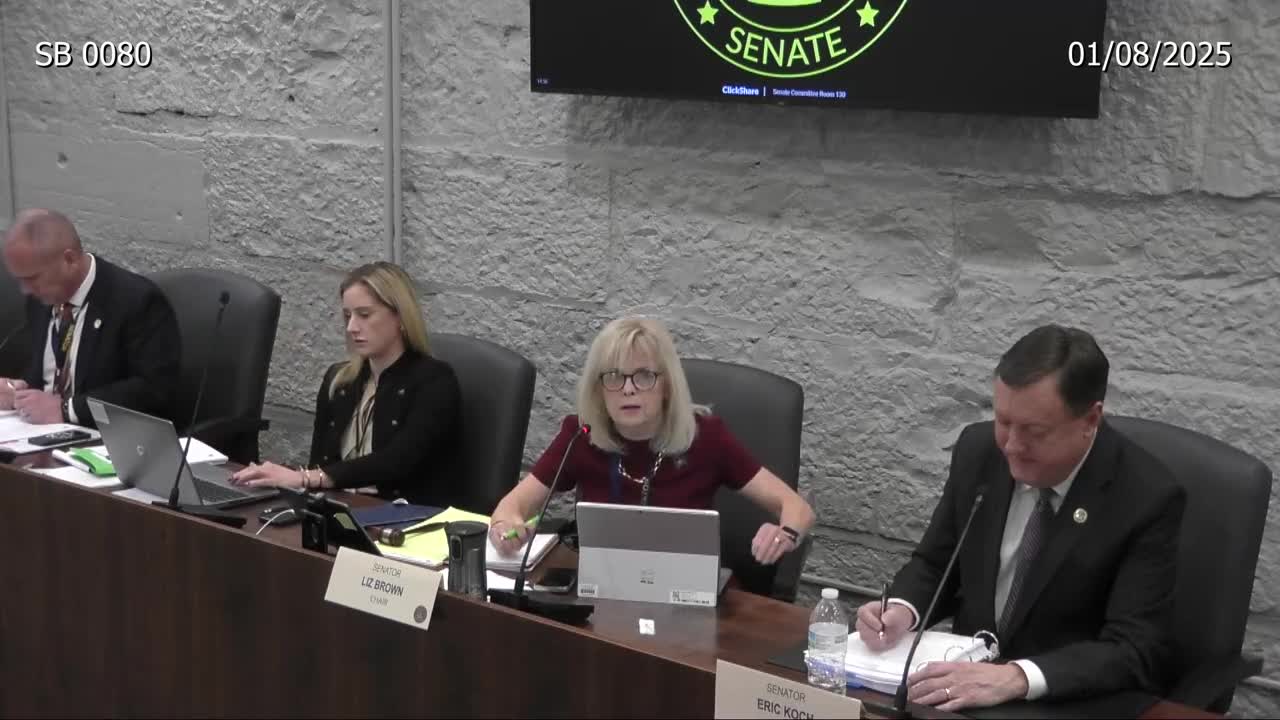
Committee hears hours of testimony on parental‑rights bill; sponsors to amend and hold vote next week
Summary
The Senate Judiciary Committee spent much of its hearing on Senate Bill 143, a measure that would declare parental rights a fundamental right under Indiana law and create an explicit statutory avenue for parents to challenge governmental decisions affecting their children.
The Senate Judiciary Committee spent much of its hearing on Senate Bill 143, a measure that would declare parental rights a fundamental right under Indiana law and create an explicit statutory avenue for parents to challenge governmental decisions affecting their children.
Supporters said the bill simply codifies federal constitutional protection and provides families a clear path to seek relief when state actors, schools or child welfare agencies exclude or withhold information from parents. “Parents have a fundamental right to the care, custody, and control of their children,” said Jordan Carpenter of Alliance Defending Freedom, who testified the bill balances parental rights with child‑welfare exceptions and preserves governmental immunities.
Multiple parents testified about experiences with the Department of Child Services (DCS) in which children were removed from their care and parents said they were denied access to medical records and basic case information. Miranda and Grant Phillips described a case in which their infant was removed, the family spent nearly a year separated, and a later medical diagnosis changed the understanding of the child’s condition. “For 347 days, they kept our children from us,” Grant Phillips said. Dawn Marie White, a private attorney who represents parents in abuse and neglect cases, told the committee she frequently litigates disputes over parents’ access to medical records and called the practice of restricting information an unfair litigation advantage for agencies.
Supporters, including parents and attorneys who said they have lost or been barred from access to records and proceedings, urged the committee to pass a statute that creates an explicit cause of action and a heightened legal standard for government interference. Josh Hershberger, an attorney who represents families and children, said the bill “codifies the federal standard,” provides accountability where parents have had no effective remedies and would “level the playing field.”
Committee members pressed witnesses on several key drafting points. Senators asked whether the bill would change existing immunities for judges, caseworkers and attorneys; witnesses said the bill is written to preserve immunities and to direct relief against governmental entities rather than individual judicial officers acting within scope. Senators also questioned the bill’s language about an “affirmative right of access” to specific medical treatments; witnesses said the statute was drafted so it would not grant parents access to treatments that state law already bars for minors (for example, current Indiana restrictions on certain gender‑affirming medical treatments for minors were discussed during questioning).
A number of senators also raised procedural concerns about DCS practice: witnesses and senators described how emergency removals are followed by detention hearings within roughly 48 hours, how adjudicatory fact‑finding deadlines technically fall within 60 to 120 days but often are extended for “good cause,” and how preliminary hearings can rely on hearsay from caseworkers rather than in‑court testimony by treating physicians. Several senators said that improving timelines and document production for DCS matters may be part of the solution.
Chair Liz Brown said SB 143 would be held for possible amendment and scheduled for amendment and a committee vote next Wednesday; she indicated a technical amendment was likely to add attorney‑client privilege protections for public defenders who represent children in juvenile proceedings.
What’s next: Committee members will receive proposed language and will consider amendments at the next meeting before a committee vote.