Get Full Government Meeting Transcripts, Videos, & Alerts Forever!
Get email alerts on the Parental Rights topic
No spam. Unsubscribe anytime.
Committee hears hours of testimony on parental‑rights bill; members hold measure for amendment
Summary
Senate Bill 143, a measure to codify parental rights and create a statutory cause of action, drew extensive testimony from parents, attorneys and advocates about interactions with Department of Child Services and schools; the committee held the bill for amendment and planned a vote next week.
Senate Bill 143, a bill that would declare parental rights fundamental and allow a statutory cause of action against governmental entities in some circumstances, drew extended testimony and follow-up questions from members of the Judiciary Committee on its first hearing.
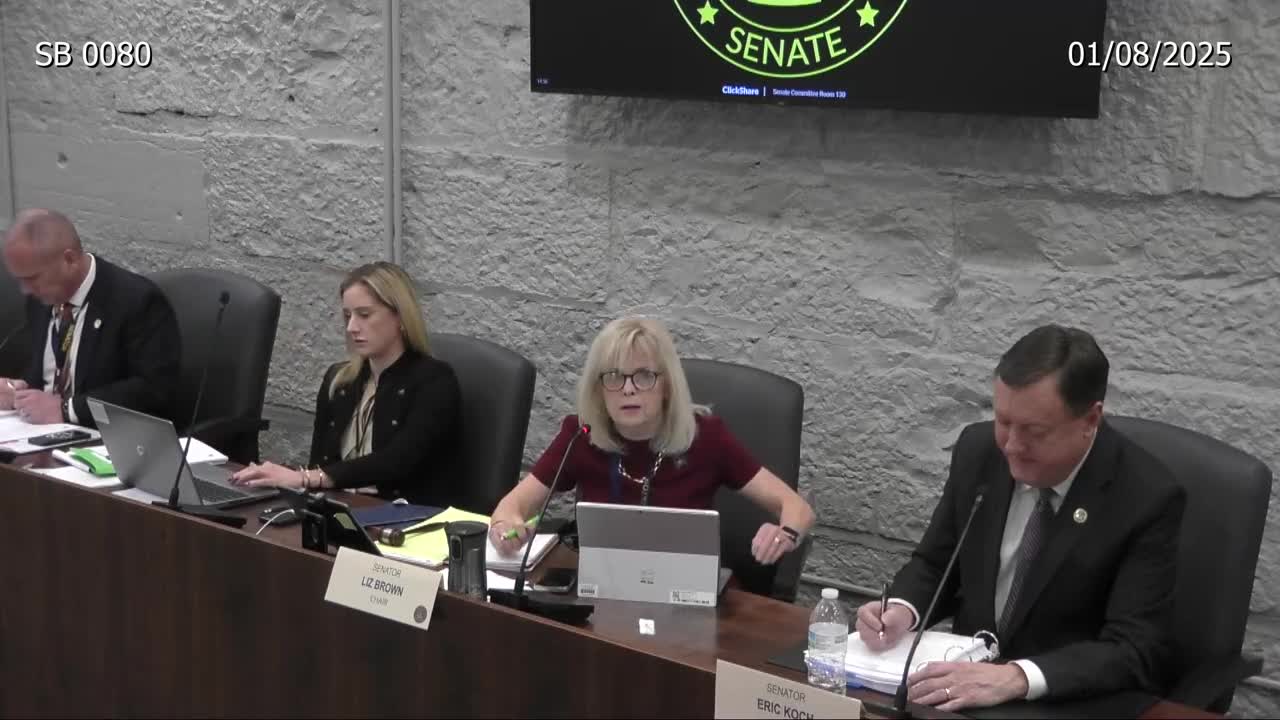
Sponsor Chair Liz Brown opened the discussion and said the measure, described as advancing parental involvement and codifying case law standards, had been negotiated following last year’s session. Jordan Carpenter of the Center for Public Policy at Alliance Defending Freedom (ADF) testified in support and described clients who say school and government officials altered records or withheld information from parents. Carpenter told the committee: "Parents have a fundamental right to the care, custody, and control of their children," and said the bill would elevate that right in state code while preserving immunities for judicial officers and government employees acting within the scope of their duties.
Multiple parents and attorneys gave detailed accounts of interactions with the Department of Child Services (DCS). Miranda and Grant Phillips described a case in which DCS removed their children in December 2022 and kept them out of the home for roughly 347 days; the couple said their youngest was later diagnosed with Ehlers‑Danlos syndrome and the criminal or civil substantiation processes remained in progress. Attorney Dawn Marie White, who represents families in child‑welfare cases, said she regularly sees parents denied medical records and delayed access to courts; she told the committee the earliest hearings are often non‑evidentiary and that discovery of medical records can take months. White said, "When DCS limits that information, the parents have no recourse, except getting to court to get it unlimited again."
Attorney Joshua Hershberger and other witnesses urged a statutory route to allow parents to seek relief in state court when they allege their constitutional rights were violated during DCS proceedings; Hershberger cited federal parental‑rights precedents (Troxell v. Granville; Parham; Stanley) and said the bill would "codify a federal standard" in Indiana law and provide accountability when state actors make allegedly false representations. ACLU of Indiana counsel Chris Daley testified about concerns the bill’s broad sweep could affect about 14% of Indiana’s workforce because it reaches most government employees and warned the committee that vague terms such as "advise, direct, coerce" and the broad definition of "information" could implicate minors’ privacy or routine administrative actions.
Committee members repeatedly asked about specific provisions. Senator Cindy Carrasco and others pressed witnesses about the bill’s strict‑scrutiny language — which makes parental rights a fundamental right subject to compelling‑interest review — and about section 7, which says the chapter "may not be construed to grant a parent the right to access" a medical treatment to which a child has no affirmative right. Carpenter and other attorneys said the provision is intended not to override existing limits on minors' access to certain medical procedures (for example, statutes restricting gender‑affirming medical care for minors) and that the statutory language tries to preserve judicial and quasi‑judicial immunities.
Committee leadership said SB 143 would be held for amendment and vote next week; Chair Brown told members she expects to add language to protect public defenders’ attorney–client privileges and refine immunity language. No formal vote on the bill occurred at the hearing.
The committee hearing included detailed procedural exchanges about DCS timelines: witnesses said detention hearings occur within 48 hours of removal but are often summary (non‑evidentiary), and that fact‑finding hearings can be delayed beyond statutory 60‑day windows for various reasons. Several testifiers described ongoing federal lawsuits or administrative appeals related to their cases.
The committee did not adopt amendments at the hearing and will consider amendments and a final vote at its next meeting.