Get Full Government Meeting Transcripts, Videos, & Alerts Forever!
Get email alerts on the Short Line Railroad Tax Credit topic
No spam. Unsubscribe anytime.
Committee advances short‑line railroad tax credit to spur track upgrades and industrial development
Summary
Senate Bill 292, which would give short‑line and regional railroads a tax credit equal to 50% of qualifying track, crossing and signal investments and includes an industrial‑development credit, was amended and recommitted after testimony from short‑line operators about jobs and infrastructure needs.
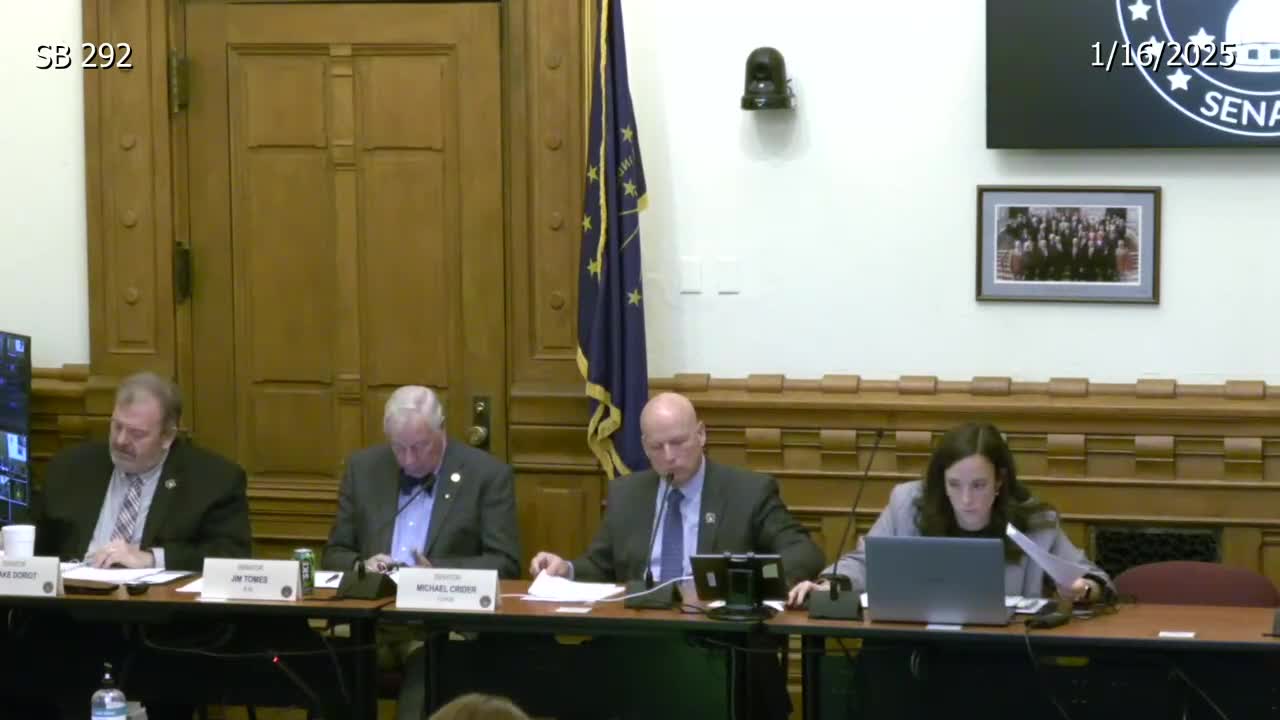
The Homeland Security and Transportation Committee voted to amend and recommit Senate Bill 292 to Tax and Fiscal after testimony from short‑line railroad operators and trade groups who said the tax credit would help them upgrade crossings, rails and signals and support local industrial development.
Senator Dorio, sponsor of SB 292, described the bill as a tool to help small, local railroads upgrade infrastructure. "We would like to do have a ... tax credit for these railroads ... and they would get 50% of the cost of that in a tax credit as they upgrade these rails and crossings," the sponsor said on the record.
Witnesses from Indiana’s short‑line railroads and trade groups told the committee the sector is capital‑intensive and often self‑funded, and that public support would help preserve service and attract industry. Joe Glow (President and CEO, Indiana Railroad) said the Indiana Railroad has increased self‑capitalization in recent years and plans multi‑year capital replacement cycles. "For every $1,000,000 of investment we have, we generate 1 to 2 jobs," he told the committee, and said his railroad planned to install more than 30,000 ties in 2025.
Adam Robillard, chairman of the Railroads of Indiana and general manager of the Madison Railroad, described short lines as local connectors that often enable communities to attract businesses by providing rail service. He said Madison completed nearly $2,000,000 in rail growth projects over three years and used that work to recruit five new businesses to the community.
Kristen Bevel, chief legal counsel for the Chesapeake and Indiana Railroad, described the bill’s mechanics: it would provide a 50% tax credit on qualifying track, bridge and crossing investments and includes a larger credit—identified in testimony as up to $500,000—for industrial‑development projects that add rail‑served jobs. She also said the credits would be awarded on a first‑come, first‑served basis as written in the bill’s presentation to the committee.
Committee members asked about where rail materials are sourced and whether tax credits would produce local economic benefits. Witnesses noted much material procurement is done in the region and that credits would be reinvested into local projects and jobs.
The chair offered a technical amendment to change a code section reference (LSA noted IC 63.138 should be IC 63.138.1). With a motion "move as amended with recommit to Tax and Fiscal," the committee approved the recommitment by roll call; the transcript records the committee vote as unanimous (9-0).
Why it matters: Short‑line railroads operate nearly 2,000 miles of track in the state and provide first‑ and last‑mile service for agriculture and manufacturing; witnesses told the committee the 2021 state rail plan identified more than $112 million in short‑line infrastructure shortfalls and that private reinvestment alone has been insufficient.
Next steps: SB 292 was amended on the floor of the committee to correct a code citation and was recommitted to the Tax and Fiscal Committee for review of fiscal impacts and allocation mechanics.