Get Full Government Meeting Transcripts, Videos, & Alerts Forever!
Get email alerts on the Public Health Funding topic
No spam. Unsubscribe anytime.
State official: Health First Indiana funding expanded local prevention programs; officials report early screening and partnership gains
Summary
Dr. Weaver briefed the Senate Health and Provider Services Committee on Health First Indiana, summarizing 2024–25 appropriations, how counties are spending the money, early screening results and new community partnerships.
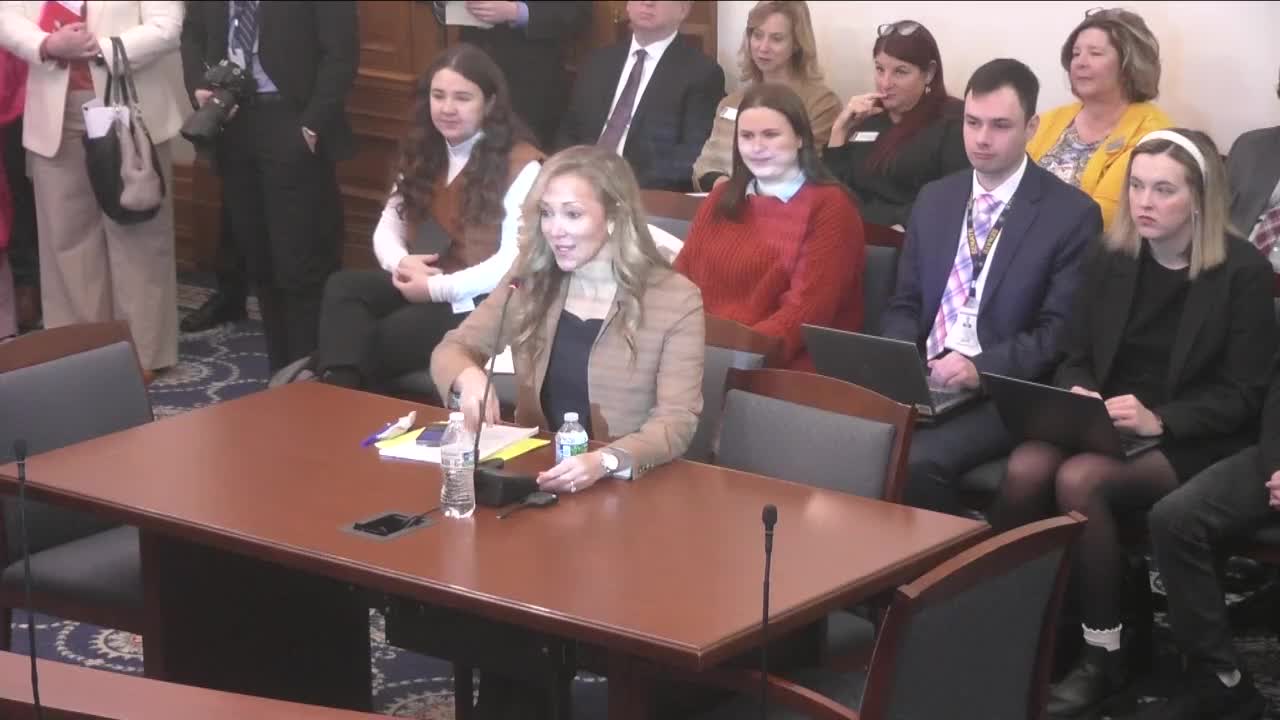
Dr. Weaver, a presenter from the Health First Indiana program, told the Senate Health and Provider Services Committee that the state has substantially expanded funding for local public-health work and that counties are using the money primarily for preventive services.
Dr. Weaver said the state appropriated $75,000,000 in 2024 and $150,000,000 beginning Jan. 1, 2025, for local health departments and that “for every dollar spent on public health interventions shows a $14 return on investment.” She said at least 60% of each county’s funding must be spent on preventive health services, under the program rules, with less than 10% allowed for capital spending and a year‑2 local match expectation of 20%.
Health First Indiana, Dr. Weaver said, requires state and local performance indicators and gives counties flexibility to target local priorities. She provided examples: in 2024 local health departments funded 383 partners and added 567 new partner organizations; in 2025 the program planned to fund 694 partners and identify 436 new partners. Dr. Weaver told the committee that 30% of 2025 funding—about $46,000,000—was planned to flow to faith‑based organizations, schools, law enforcement, health‑care providers and other community organizations.
The presenter gave early outcome and screening numbers through August 2024. She said the program reported about 1,400,000 core health services delivered statewide, nearly 37,000 people screened for chronic disease risk factors, and nearly 5,000 people identified with previously undiagnosed hypertension, diabetes or high cholesterol. On lead testing, she said more than 9,000 children were tested and 8,000 families received lead‑education materials; teams identified about 3,000 children with elevated blood lead levels and 1,800 children who required case management.
Committee members asked for comparisons to pre‑program baselines. Senator Bohachuk asked for the delta between services before and after the program began; Dr. Weaver said the state had not previously collected that level of countywide, comparable data and thus could not present a complete pre/post delta now. Several senators asked for follow‑up metrics the committee could use in future budget years, including county‑by‑county immunization and lead‑testing trends; Dr. Weaver agreed the agency could compile additional county comparisons where historical data exist.
Senators also raised implementation questions: how counties identify and engage community providers, whether counties can receive funding above their per‑capita allotments, and how the state will follow individuals from screening to treatment. Dr. Weaver said counties can pursue other grants and that the program is intended to broaden local partners; she acknowledged follow‑up on screened individuals is difficult but said it is an expectation where possible and that the state will improve tracking.
The committee adjourned the Health First Indiana briefing and moved on to the bills on the agenda.