Get Full Government Meeting Transcripts, Videos, & Alerts Forever!
Get email alerts on the Zoning Rezoning topic
No spam. Unsubscribe anytime.
Elizabethtown council holds first reading to rezone 310 College Street to neighborhood office; directs planning to review historic protections and notice radius
Summary
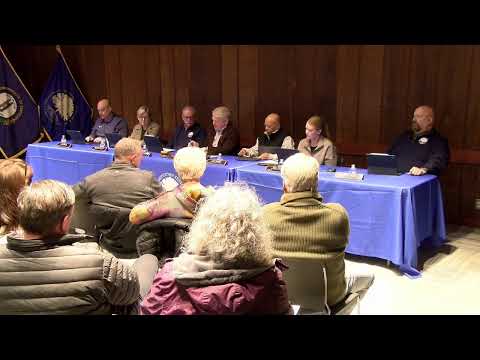
At its Jan. 21 meeting the Elizabethtown City Council held a first reading of an ordinance to reclassify 310 College Street from R‑4 residential to C‑1 neighborhood office, heard public opposition from nearby residents, and voted to direct planning staff to review the city's historic preservation boundaries and expand notice procedures.
Elizabethtown City Council held a first reading Jan. 21, 2025, of an ordinance to change the official zoning classification for the property at 310 College Street from R‑4 (residential) to C‑1 (neighborhood office), and directed planning staff to evaluate the city's historic preservation ordinance and to expand notice procedures for future zoning requests.
A council member offered the motion to seek C‑1 zoning for 310 College Street, saying the C‑1 district "restricts buildings adjacent to residential areas to no more than 5,000 square feet" and allows 13 permitted commercial uses, a narrower set than the C‑2 neighborhood-commercial district that the Planning Commission recommended. The council member cited the city's comprehensive plan, the staff report and testimony at the hearing as the basis for proposing C‑1 rather than C‑2. The motion to read the ordinance on first reading was seconded and approved by voice vote; the record shows an opposition from Judge Howard during that vote. The ordinance was read for the first time in the meeting; no final adoption vote was taken.
The councilwoman and other members said they were mindful of legal constraints on ex parte contacts in planning and zoning matters and emphasized fairness and adherence to court guidance on procedure. Citing neighbors' concerns, the council member who moved the change said the C‑2 district includes a broader range of uses—"financial institutions, liquor stores, museums, and convenience stores"—that neighbors had said would be incompatible with the surrounding houses.
During public comment, residents who live on or near College Street urged the council to deny the commercial rezoning. A resident identifying himself as Brad, who said he lives at 315 College Street, said he and others oppose commercial zoning and reported a petition of more than 60 signatures asking the council to vote no. Eric Perris of 309 College Street criticized the council and said he plans public protest; Perris said, "I will be picketing city hall" and said he believed citizen concerns had not been prioritized.
After the first-reading action, a motion from the council directed the planning department and planning commission to evaluate the city's historic preservation ordinance and the boundaries it establishes, including whether to expand protections to areas such as the College Street neighborhood. The motion requested a staff and planning commission report to the council within 90 days and asked staff to develop a one‑page bullet list describing the zoning-change and hearing process; the council also asked that the bullet list be both posted online and mailed to property owners affected by future zoning notices. That motion was seconded and passed by voice vote.
The council also voted to ask planning staff to examine a wider notice radius for initial zoning-change hearings so more nearby residents receive earlier notice of potential reclassification; that motion was seconded and passed by voice vote.
The meeting moved on to other business after public comment and later convened a closed session under KRS 61.810(1) to discuss potential acquisition or sale of real property; the council announced no action would follow the closed session.
Why it matters: The first reading begins a formal process that could change allowable uses for properties adjacent to long-standing residential neighborhoods and that prompted both sustained council discussion and multiple public objections. The council's direction to planning staff could lead to changes in historic-protection mapping and the city's outreach procedures for zoning cases.