Carroll County school board holds public hearing on HB 581; residents raise funding, tax concerns
Loading...
Summary
The Carroll County Board of Education held a public hearing on House Bill 581, the statewide "floating" homestead exemption, hearing testimony about property-tax increases, funding risks to schools and questions about timing before the board's upcoming opt-out decision.
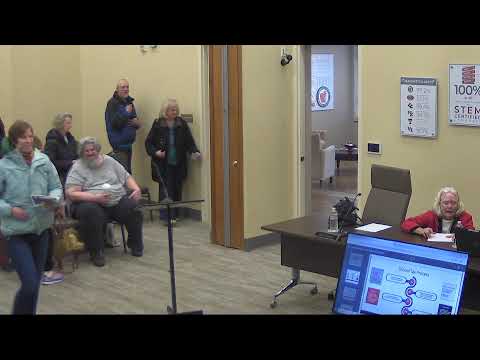
The Carroll County Board of Education held a public hearing on House Bill 581, the statewide adjusted base-year ad valorem homestead exemption, hearing hours of public comment and staff analysis as the board considers whether to opt out of the new exemption.
The issue matters because board and district officials told residents the exemption — often called a "floating" homestead exemption — would stack on top of existing local exemptions and could reduce local school funding if the board keeps the county inside the program. Dalene Wolfe, assistant superintendent for business and finance, told the board that modeling over the past five years showed an aggregate impact of as much as $21,000,000 — the equivalent, she said, of more than 200 teaching positions — and an average annual impact of about $4,000,000 in the period analyzed.
Wolfe said the statute that created House Bill 581 allows the state to cap the exemption amount each year and that the law does not require that cap be tied to the consumer price index. "The state would then control the new exemption amount by establishing a cap annually. This cap could be based on CPI, but the statute does not require it to be based on CPI," Wolfe said. She also warned that because of an existing state cap on millage, the board could not make up the funding loss by increasing the millage rate.
Board and district officials repeatedly told the public that current homestead exemptions and the county's senior exemption would not be affected by the HB 581 opt-out decision. "The answer is no. Has no impact on current homestead exemptions," a board official said during the hearing. The board also said state law restricts SPLOST/eSPLOST proceeds to capital projects and that those sales-tax funds cannot be used to cover operating expenses.
Public commenters described personal tax increases they said had strained household budgets and urged different outcomes. "My taxes went up to $721. I was previously paying 3.81. It almost went up a 100%, and I'm wondering why," resident Keith Johnson said. Other speakers urged the board to weigh voter sentiment: one attendee said, as reported at the hearing, that 63% of Carroll County voters favored the statewide exemption in the November referendum and urged the board to stay in.
Board members and staff described the complexity of the law and of local property assessments. A board official said the county assessor sets fair-value assessments and that the school board cannot change assessment values; the board controls only the millage rate. The board noted it has reduced the millage rate in recent years, including three consecutive years of millage reductions and a roughly 17% reduction since 2016, and stressed those rollbacks as part of their stewardship of taxpayer dollars.
Speakers asked about the opt-out timing and whether an opt-out could be reversed. Board staff said the board has a single opportunity to opt out under the statute within the prescribed window; if the board does not act by the end of the opt-out window, the locality remains in the program. Staff also said that locally elected bodies could pursue alternate legislative or local mechanisms in the future if they wished to seek similar relief.
The meeting included a schedule update: board staff said this was the second of two public hearings for the board’s consideration, that a third hearing would be held at 6 p.m. later the same day, and that a special-called meeting was scheduled at 7 p.m. for a board vote.
The board did not take a final vote on HB 581 at this hearing; instead it received public comment and staff analysis ahead of the scheduled special meeting. The meeting ended after a procedural motion to adjourn that passed on a voice vote.
Carroll County residents and board members left the hearing with sharply differing views about local taxes, the role of state policy and how to balance taxpayer relief with school funding needs. The board said it will consider the testimony and the financial models before taking a formal vote at the announced special meeting.