Get Full Government Meeting Transcripts, Videos, & Alerts Forever!
Get email alerts on the Judicial Review Accomplice Corroboration topic
No spam. Unsubscribe anytime.
Tennessee Supreme Court Hears Appeal Over Accomplice‑Corroboration Instruction in Slater, Sparkman Case
Summary
NASHVILLE — The Tennessee Supreme Court on Monday heard argument in State of Tennessee v. Mustafa Malik Slater and Tramel Rasha Sparkman over whether a trial court erred by giving an accomplice‑corroboration jury instruction that the state says was abrogated by State v. Thomas.
NASHVILLE — The Tennessee Supreme Court on Monday heard argument in State of Tennessee v. Mustafa Malik Slater and Tramel Rasha Sparkman over whether a trial court erred by giving an accomplice‑corroboration jury instruction that the state says was abrogated by State v. Thomas.
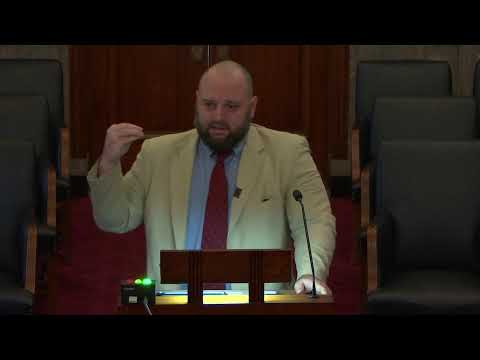
Alan Groves, arguing for the state, told the court that “because the trial court failed to follow binding Supreme Court precedent, this court should reverse,” and urged the justices to construe State v. Thomas as applying to all trials commencing after the March 2024 mandate in that case.
The argument matters, Groves said, because Thomas removed the common‑law accomplice‑corroboration rule for trials that begin after the Thomas mandate. He said the trial here had not yet occurred and therefore the trial court’s instruction was inconsistent with that Supreme Court holding. “So as this court knows, historically, Tennessee courts did recognize the common law accomplice corroboration rule,” Groves said, and Thomas, he argued, abrogated that rule for trials commencing after the mandate in March 2024.
Defense counsel pressed separate concerns. Douglas Bates of the Hickman County Bar and another attorney identified in the record as Mr. White argued that defendants faced prejudice from multi‑year delays to trial and that some evidence in the record may have been illegally obtained, issues they said distinguish this case from Thomas. Bates told the court he felt “like that kid again getting the bunt sign knowing I'm about to get out” when the state sought review, a comment intended to convey concern about procedural posture and consequence. Mr. White argued the prosecution had benefited from delay and said, “a 5 year delay to trial that was, primarily caused by the state.”
Defense attorneys also raised speedy‑trial concerns and the possibility that law enforcement errors — including contested interrogations by the Tennessee Bureau of Investigation and the Hickman County Sheriff’s Department, as described in the briefs and argument — could affect the reliability of accomplice testimony. Mr. White referenced recent opinions he said create tests for whether law‑enforcement errors were isolated or the product of reckless disregard of constitutional requirements.
Both sides discussed procedural posture and appellate practice. The state said it had sought interlocutory review under Rule 9 rather than an extraordinary appeal under Rule 10 and defended that choice as consistent with usual practice. Defense counsel warned that if this court’s ruling allowed the case to proceed without the corroboration instruction, defendants could later renew speedy‑trial claims on direct appeal.
The justices questioned counsel about timing, prejudice and the factual record. No decision was announced from the bench during the morning argument; the court recessed until 1:30 p.m.
Background: The appeal arises after a trial court granted defendants’ pretrial motion to give what counsel termed the “old accomplice corroboration” jury instruction. The state says Thomas, issued in March 2024, abrogated the common‑law rule for trials beginning after that mandate and that the trial court therefore erred. The defense contends factual differences in this case — including alleged illegally obtained statements and lengthy pretrial delay — make Thomas inapplicable or raise separate constitutional concerns that must be addressed.
No formal ruling or written opinion was delivered at the argument; the court heard argument and recessed.