Get Full Government Meeting Transcripts, Videos, & Alerts Forever!
Get email alerts on the Evidence Admissibility topic
No spam. Unsubscribe anytime.
Tennessee Court of Criminal Appeals hears challenge to admission of recorded pretrial statements in Aspen Chapman murder case
Summary
At a January session in Nashville, defense counsel argued that Tennessee Rule of Evidence 607 bars the State’s use of recorded pretrial statements from two witnesses under Rule 803(26); the State said the trial court properly admitted the statements and that the evidence supports a first-degree premeditated murder conviction.
NASHVILLE — At its January session in Nashville, the Tennessee Court of Criminal Appeals heard oral arguments in State of Tennessee v. Aspen Chapman over whether recorded pretrial statements from two witnesses should have been admitted at trial and whether the record supports a first-degree premeditated murder conviction.
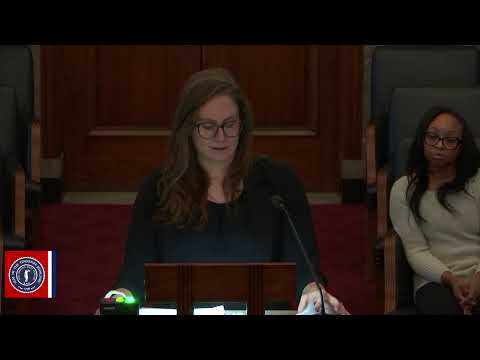
Defense attorney Ben Russ told the three-judge panel that the State used pretrial recordings of Latronea and Messiah Howard to obtain a conviction despite the sisters’ trial testimony that they did not remember making those statements. "The state's attorney was clearly in the know that the Howards were gonna take this position at trial," Russ said, arguing that Tennessee Rule of Evidence 607 remains “good law” and conflicts with the narrower-substance admission in Rule 803(26).
The issue is central to the defense’s claim because, Russ said, the only substantive evidence placing Aspen Chapman at the shooting was the Howard cousins’ pretrial statements and a firearm and a shell casing linked by forensic testing to a gun found at Chapman’s home. He told the court the pretrial statements were made in 2018, the case did not go to trial until 2022, and that the sisters initially gave recorded statements to detectives but later testified that they did not remember the interviews or the events of the night in question.
Assistant counsel Abigail Hornsby for the State said the trial court did the proper inquiry and that both Rule 613(b) and Rule 803(26) were satisfied. Hornsby told the court the recordings were made in part in a detective's car and later at the station, and that the trial court held a jury-out hearing and found the pretrial statements were made under circumstances indicating trustworthiness. "This court should affirm the defendant's convictions," Hornsby said, adding that the jury could infer premeditation from the evidence showing Chapman pursued and fired on two unarmed victims, which caused their vehicle to crash into another car that killed the driver, identified in the trial record as Miss Jenkins.
Russ framed the central legal question as whether the State effectively called the Howards for the sole purpose of placing their prior recorded statements before the jury and then treating them as substantive proof. He cited Rayfield (2015) and the older Mayes decision for criteria that, he said, require a preliminary inquiry into whether a witness was called primarily to introduce a prior statement for its truth. "If you allow someone to call a witness you know is going to be inconsistent, you're essentially getting through the back door," Russ said.
Hornsby responded that the defense itself had tactical reasons to have the Howards testify and that the record reflects the trial court considered trustworthiness and allowed the statements after a proper hearing. She also argued the record supports a first-degree premeditated murder conviction under the State’s theory and relevant Tennessee precedent allowing transferred intent in some cases.
The transcript of the hearing records several factual clarifications offered by both sides: the two sisters’ pretrial statements were recorded (initially audio in a detective’s vehicle and later video at the station), the statements were made in 2018, the trial occurred in February 2022, and police located a firearm at Chapman’s house whose shell casing matched at least one casing from the scene. Counsel discussed case law and the interplay of evidentiary rules; the defense emphasized 607’s restriction on calling a witness to impeach that witness with a prior statement, while the State emphasized the separate inquiry embodied in 803(26) concerning whether a recorded prior statement is sufficiently trustworthy to be admitted for its truth.
The panel asked questions but did not reach a decision during the oral argument. The court took the matter under advisement; the session’s schedule indicated cases would be assigned and decided after oral argument.
Background: According to argument summaries presented to the court, the underlying incident involved two women, identified in the trial record as Miss Armstrong and Miss Tucker, who encountered a group at a market; gunfire followed, and the victims’ vehicle collided with another car carrying a mother and daughter, the elder of whom (Miss Jenkins) died. The defendant, Chapman, was convicted at trial of first-degree premeditated murder of Miss Jenkins and other related counts. At issue on appeal is whether admitting the Howard cousins’ recorded pretrial statements under Rule 803(26) — after they testified inconsistently at trial — was reversible error given Rule 607 and related case law cited by defense counsel.
The court moved on to the next scheduled case after hearing both sides' arguments; a decision in Chapman’s appeal will be issued in due course by the panel.