Get Full Government Meeting Transcripts, Videos, & Alerts Forever!
Get email alerts on the Community Services Budget topic
No spam. Unsubscribe anytime.
Muscatine County reviews FY 2025–26 Community Services budget amid regional funding changes
Summary
Community Services Director Jessica Belch presented the proposed FY 2025–26 General Administration, Mental Health and Veterans Affairs budget, outlining a potential FTE reduction, a shift to cloud-based software, fee increases for rep‑payee services and concerns about regional funding that ends this fiscal year.
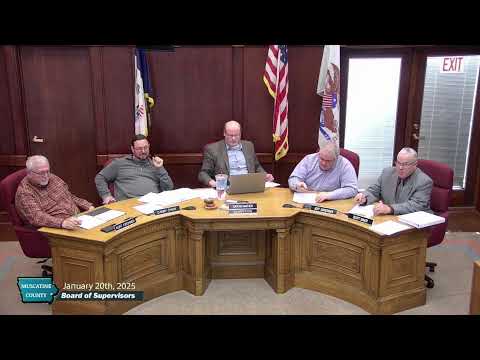
Community Services Director Jessica Belch presented the Muscatine County Board of Supervisors with the proposed FY 2025–26 General Administration, Mental Health and Veterans Affairs budget at the Jan. 20, 2025, meeting. The presentation outlined staff changes, proposed software upgrades, fee adjustments and concern about the loss of regional funding slated to end this fiscal year.
Belch said a long‑time employee retired and the department is proposing not to refill that position if a cloud‑based software system can be implemented to streamline record keeping and case management. The proposed move to a cloud system is intended to consolidate client records currently scattered across local drives and a legacy EMS system; the department reported approximately 160 payee clients and about 216 clients served across guardianship, conservatorship and payee functions.
Budget changes Belch described include increasing the allowable rep‑payee monthly fee from $41 to the Social Security maximum of $55, an increase in training funds to cover required guardianship training, and raising the Veterans Affairs funeral assistance budget. Last year that funeral assistance budget was $7,000; Belch requested $10,000 for the coming year. The department also proposed modest increases to address more requests for rent assistance.
A major concern discussed at the meeting is regional mental‑health funding that the department expects to end on June 30, 2025. The county previously received approximately $153,000 in regional reimbursement; Belch said that funding will not be available in FY 2025–26. Board members and staff discussed how the loss of that revenue shifts salary and program costs back to the county and cited the potential service‑delivery impacts if responsibilities shift quickly to the county rather than the incoming administrative services organization (ASO).
Supervisors asked for more precise cost accounting for guardianship, conservatorship and payee services if the county is asked to provide those services under a wider ASO arrangement. The board noted that guardianship work has many downstream costs — court filings, annual and termination reports, asset dispositions and occasional contested hearings — and that some legal work in the past has been performed pro bono by county attorneys, which is not guaranteed going forward.
Belch said the department is budgeting conservatively for some one‑time reimbursements and has factored an estimated revenue increase from the rep‑payee fee change from $98,000 to roughly $121,000 in the budget summary.
Board members directed staff to continue monitoring ASO transition details and to return with clearer cost estimates for guardianship and related work if the ASO requests county involvement.