Get Full Government Meeting Transcripts, Videos, & Alerts Forever!
Get email alerts on the School Activities topic
No spam. Unsubscribe anytime.
Bill to ban school extracurriculars on six specified holidays draws split testimony
Summary
House Bill 1251 would bar schools from holding extracurricular activities on six named family days; supporters said the ban protects family time, while athletic and school activity groups warned of conflicts with tournaments and community traditions.
House Bill 1251 would prohibit schools from holding extracurricular activities — including practices, games, performances, competitions and related travel — on six designated "family days": New Year's Day, Memorial Day, Independence Day, Thanksgiving Day, Christmas Day, and Easter Sunday.
Douglas Elske, who testified in support, said practices scheduled on holidays interfere with family traditions and that six blackout days would not "make or break" a student athlete's development. Supporters including former athletes and parents said some practices called "optional" are effectively mandatory, and they urged stronger protections for family time.
Opponents said the proposal is too broad and would have unintended consequences for large, multi‑day tournaments and long‑standing community events. Jim Hausler, representing the North Dakota High School Activities Association, said many statewide tournaments and events use holiday adjacencies for travel and competition (for example, hockey and basketball contests the day after New Year's Day and the Rumble on the Red wrestling tournament). He warned the ban could force cancellations and curtail opportunities for students to perform in parades and civic events on Independence Day or Memorial Day.
Several education administrators urged local control and noted that existing activity association rules already limit mandatory summer or holiday practices in many cases. Dr. Amy Copas of the North Dakota Council of Educational Leaders said principals and superintendents treat expulsions and holiday scheduling as matters of last resort and local discretion; she and other opponents urged lawmakers to preserve district-level authority and look for narrower solutions rather than a statewide prohibition.
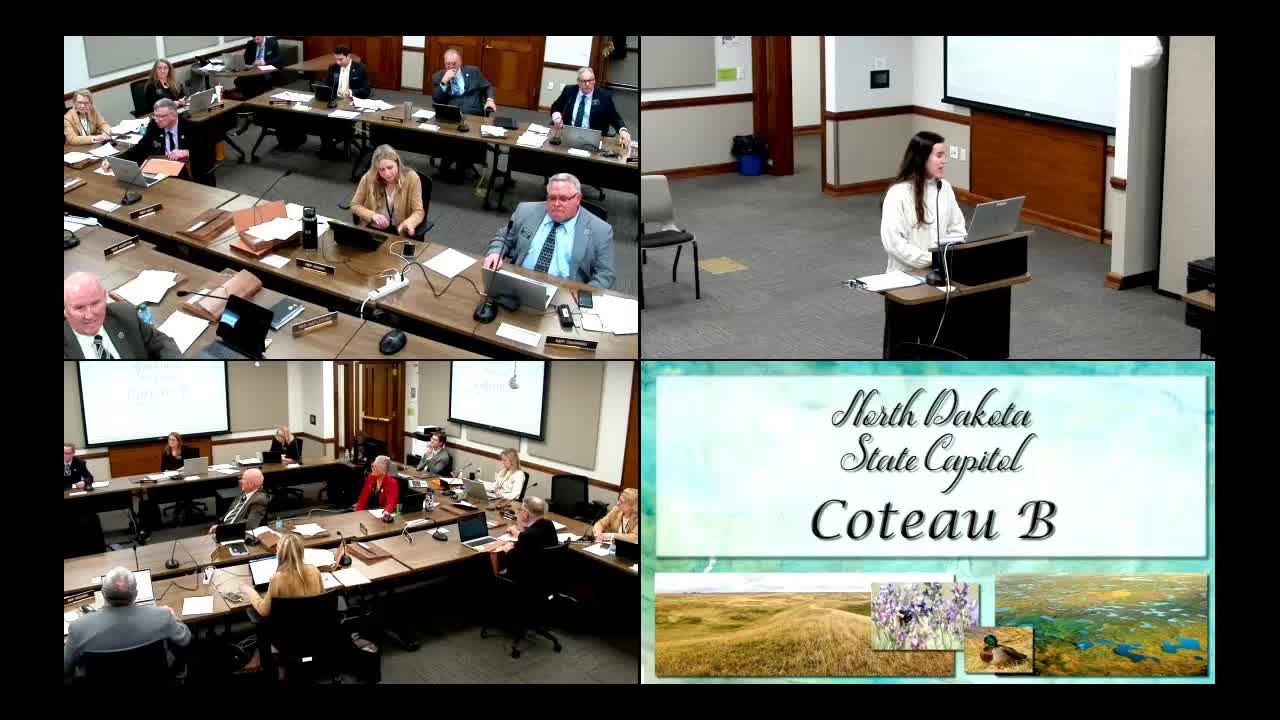
The committee heard both supportive personal testimony (including from a student athlete who described being required to attend practice on July 4) and institutional opposition from NDHSAA and local activity administrators. No vote was taken and committee members asked for more information, including activity association rules about mandatory summer and holiday training.
Ending: The hearing closed with committee members noting competing values — family time versus longstanding extra‑curricular traditions and statewide events — and asking staff to follow up with the NDHSAA and local districts on technical impacts and possible narrower language.