Get Full Government Meeting Transcripts, Videos, & Alerts Forever!
Get email alerts on the State Legislation topic
No spam. Unsubscribe anytime.
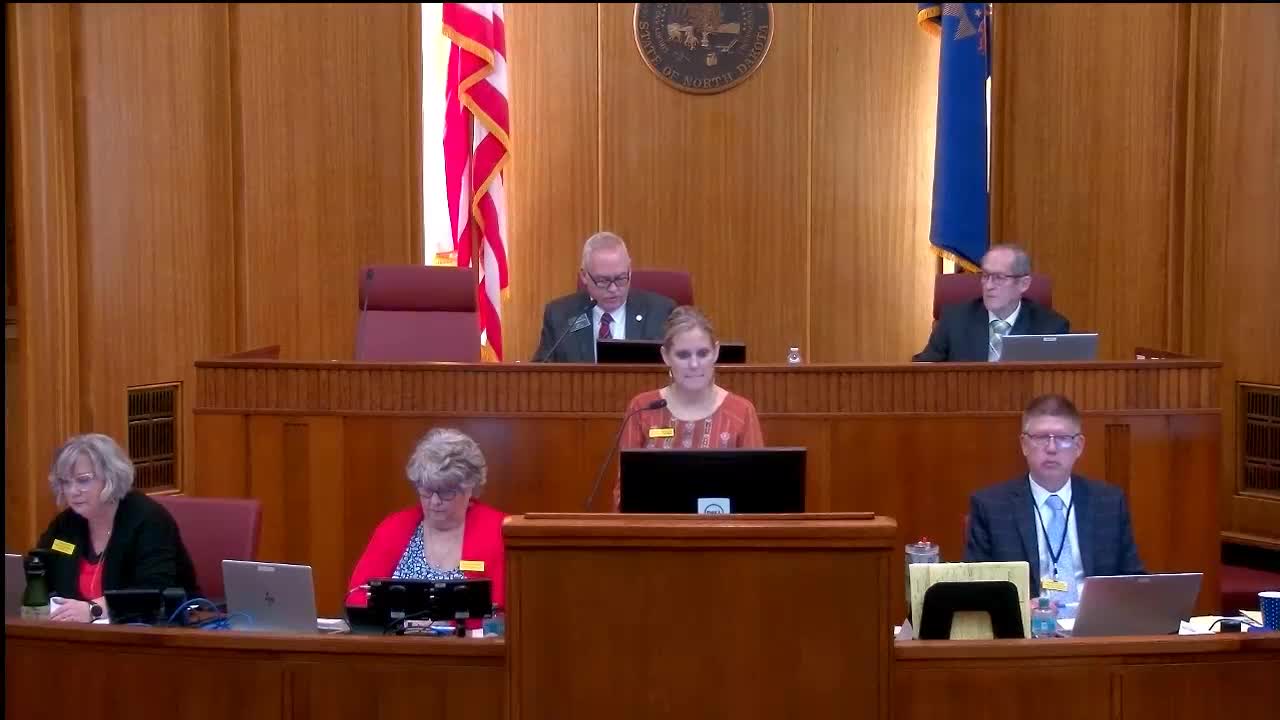
North Dakota Senate passes a package of bills on water, courts, veterans and energy; foreign-ownership measure fails
Summary
During an inauguration-day session in Bismarck, the North Dakota Senate approved multiple bills on water-course reviews, court fee updates, veteran business credits and energy studies and rejected a measure addressing foreign ownership of land and businesses.
The North Dakota Senate on Monday approved a series of bills covering water-course determinations, court-fee changes, veterans’ business credits, public hearing procedures for energy projects and other measures, while voting down a contentious bill on foreign ownership reporting and restrictions.
The package included unanimous passage of several committee-backed bills and narrower votes on others. The most contested measure, Senate Bill 2026 — addressing filings and prohibitions related to foreign persons and entities owning or developing North Dakota property and businesses — failed 23–24 after extended debate about implementation, costs and potential litigation.
Senator Kessel, speaking for the Senate Energy and Natural Resources Committee on Senate Bill 2044, said the bill “provides an important clarification and process improvements to our state's water course determination procedures,” including a state-level review and an appeal path to section 61-03-22 of the North Dakota Century Code. The Senate passed SB 2044, 47–0.
Supporters described the session’s other measures as technical fixes or targeted policy changes. Senator Klein said Senate Bill 2046, which grants a $250 workers-compensation premium credit for National Guard members, veterans and their spouses and permits certain electronic decision notices from the Workers' Safety and Insurance office, was “another opportunity to help and support our military and veterans here in North Dakota.” The bill passed, 47–0.
Senate Bill 2057, which raises and modernizes a broad set of court fees (many roughly doubling from longstanding levels), drew more debate; sponsor Senator Brownberger said fee increases were calculated using cost-of-living adjustments since the 1990s. The Senate approved SB 2057, 43–4.
The chamber also advanced bills to streamline procurement processes for the North Dakota National Guard (SB 2130, passed 47–0, emergency clause carried), change how the Public Service Commission holds public input versus technical hearings for energy conversion and transmission facilities (SB 2116, passed 47–0), and allow the State Energy Research Center to study nuclear and other energy options previously excluded by statute (SB 2159, passed 45–2).
On the floor, senators debated SB 2026 at length. Senator Barta, the bill carrier, described the measure as the outcome of an interim study and said it was intended to continue work begun last session and preserve prior study results. “This conversation needs to continue,” he said. Opponents raised logistics and legal concerns. Senator Rors argued the proposal created an “unworkable process” for county recorders and law enforcement sharing; the committee had recommended a do-not-pass, and the measure ultimately failed, 23–24.
Votes at a glance
- SB 2044 — Amend NDCC §61-01-06 (water-course determinations): Passed 47–0. - SB 2046 — One-time premium credit for National Guard/veterans; electronic decisions (WSI): Passed 47–0. - SB 2059 — Amend hearings/appeals for Department of Water Resources processes: Passed 47–0. - SB 2130 — Prequalification/selection for certain A/E/CM services; emergency clause (National Guard projects): Passed 47–0; emergency clause carried. - SB 2077 — Criminal responsibility proceedings following verdict/finding: Passed 47–0. - SB 2118 — Amend appeals of stream crossing calculations: Failed 0–47 (committee recommended do not pass; bill defeated). - SB 2083 — Exempt sensitive images from open records (bodycam/investigative images): Passed 47–0. - SB 2090 — Updates for State Fire Marshal and related fee/accounting changes: Passed 47–0. - SB 2065 — Amend formation of irrigation districts/permitting summary reports: Passed 47–0. - SB 2057 — Modernize and raise various court fees (many roughly doubling): Passed 43–4. - SB 2165 — Peace officer standards and training board authority, exam access, fees/suspension: Passed 47–0. - SB 2141 — Change in purpose-of-use for conditional/perfected water permits (allows certain transfers to lesser uses): Passed 41–6. - SB 2026 — Foreign grantee/property/business reporting and prohibitions (contingent fiscal note ~$3,600,000): Failed 23–24. - SB 2116 — Public hearing process for energy conversion/transmission facilities (separate public-input hearings): Passed 47–0. - SB 2159 — Allow State Energy Research Center to pursue projects previously restricted (including study of nuclear): Passed 45–2. - SB 2157 — Legislative study on farm safety insurance discount program: Passed 47–0. - SB 2114 — State radio/NLETS terminal fee adjustment (small increase per terminal): Passed 46–1.
What senators said and committee notes
- Senator Kessel (Energy & Natural Resources committee) framed SB 2044 as establishing a “clear review process” at the Department of Water Resources and preserving water protections while adding due process.
- Senator Barta (bill carrier for SB 2026) said the bill was the product of an interim study and urged keeping the issue under legislative oversight; he emphasized the measure continued prior work on foreign ownership definitions and filings.
- Senator Rors warned that SB 2026 would place impractical burdens on county recorders and run into federal privacy and information-sharing limits, a point that influenced the committee’s and floor outcome.
Context and fiscal notes
- The fiscal note for SB 2026 showed an estimated $3.6 million expenditure for the 2025–27 biennium; the bill did not include an appropriation for that amount. Committee testimony cited technical and legal costs tied to implementing reporting and review duties.
- Sponsors said SB 2130’s streamlined procurement authority would enable the National Guard to better use federal funds, with an estimate (committee testimony) that the state could fully utilize $14–16 million in federal funding across the biennium with the change.
- SB 2114’s modest NLETS fee adjustments were projected to generate roughly $7,800 in additional special-fund revenue over the biennium and small cost increases for counties and cities.
Procedure and next steps
The Senate adopted committee reports, amended language on several bills during the 6th-order consideration, and placed amended bills on the 11th-order calendar for further floor action as required. After concluding the orders of business, the Senate adjourned until 1 p.m. Tuesday, Jan. 21, 2025. Committee schedules and follow-up hearings were announced before adjournment.
Ending
The session combined several technical code cleanups and targeted policy changes with a few consequential policy debates, most notably over foreign ownership reporting and enforcement. Where bills passed, sponsors and committees said changes would streamline state processes or correct statutory language; where bills failed, senators cited implementation, privacy and litigation risks.