Get Full Government Meeting Transcripts, Videos, & Alerts Forever!
Get email alerts on the Infectious Disease Surveillance Syphilis Rabies topic
No spam. Unsubscribe anytime.
Health officials report sharp syphilis rise, describe rare human rabies investigation and virus sequencing work
Summary
Witnesses described a 60% year‑over‑year increase in reported syphilis cases, steps taken to prevent congenital syphilis and an unusual human rabies case that prompted roughly two dozen post‑exposure prophylaxis recommendations; officials also outlined DNA sequencing used in foodborne outbreak work and hospital infection control programs.
The Human Resources Subcommittee heard detailed accounts of surveillance and outbreak work from the Department of Health and Human Services, including a substantial increase in syphilis cases, a rare human rabies investigation that required prophylaxis for exposed healthcare workers and expanded laboratory sequencing to track enteric outbreaks.
Why it matters: Rapid rises in sexually transmitted infections and the reappearance of rare but fatal diseases are public‑health priorities that can drive prevention funding and clinical outreach. Committee members examined how field investigators, partner clinics and laboratory capacity work together to identify cases and protect contacts.
Kirby Krueger explained that reported syphilis cases rose to 343 in 2024, a 60 percent increase from 214 cases in 2023. He said partner services (case interviews and partner notification) yielded about 20 percent of detected new cases and that the department identified 16 pregnant women with syphilis in 2024; 14 were treated before delivery, but two were late or had no prenatal care and two infants met the clinical case definition for congenital syphilis and received treatment.
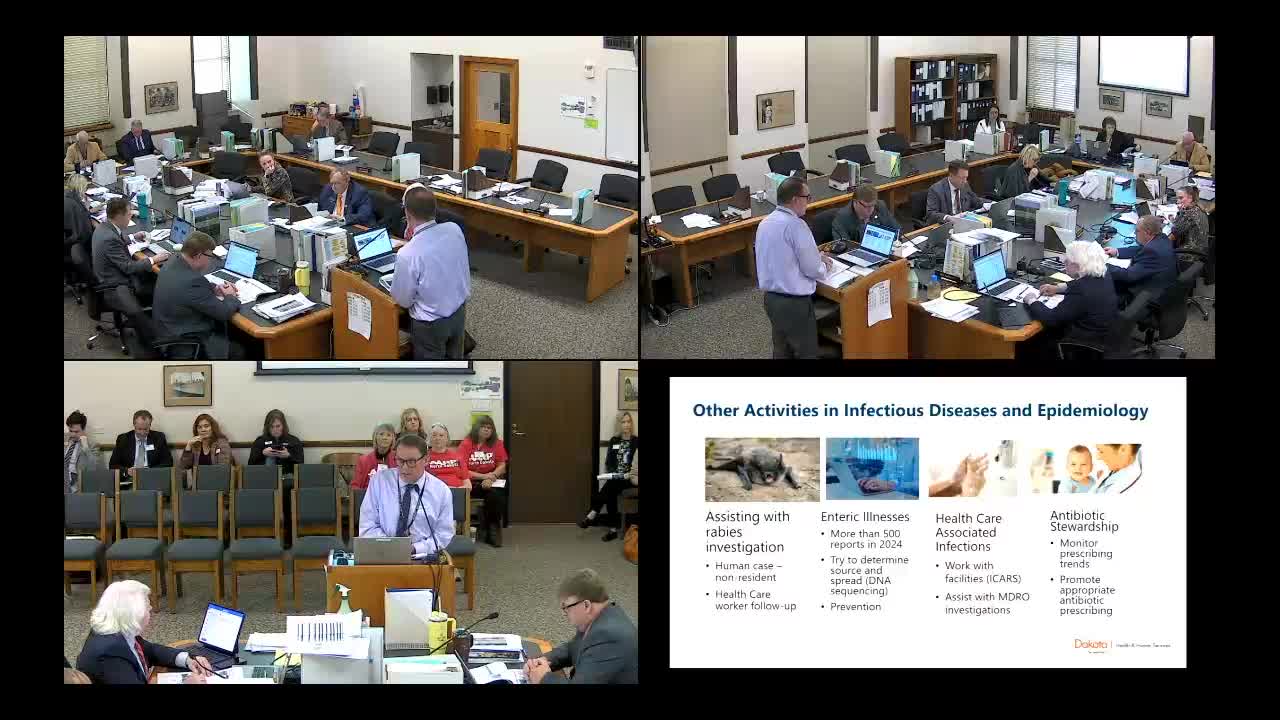
Krueger also described an investigation of a non‑North Dakota resident who died of human rabies after receiving some healthcare in the state. He said the diagnosis was confirmed postmortem and that about 24 individuals were recommended to receive rabies post‑exposure prophylaxis after the exposure assessment and clinical review. Krueger told the committee that human‑to‑human transmission of rabies is rare and usually involves organ‑transplant cases; this hospital incident required detailed tracing and coordination with the treating facility.
On laboratory work and foodborne surveillance, Krueger and staff explained that the department seeks DNA sequencing for enteric pathogens (salmonella, campylobacter, E. coli O157) through a reference laboratory to match strains across cases. That sequencing can take weeks; public notification depends on whether sequencing shows a national link or local cluster. The subcommittee also heard about the state's infection‑prevention outreach (ICARS voluntary assessments) and antimicrobial‑stewardship awards to facilities that have formal stewardship programs.
Ending: Lawmakers sought clarification on hospital protocols for suspected rabies patients and asked for follow‑up on which facilities participate in voluntary infection‑control assessments. Department staff said they would provide facility participation lists and additional details to the committee.