Get Full Government Meeting Transcripts, Videos, & Alerts Forever!
Get email alerts on the Primary Residence Credit topic
No spam. Unsubscribe anytime.
Senate bill to extend $500 primary-residence credit to homes held in trust draws questions on retroactivity and administration
Summary
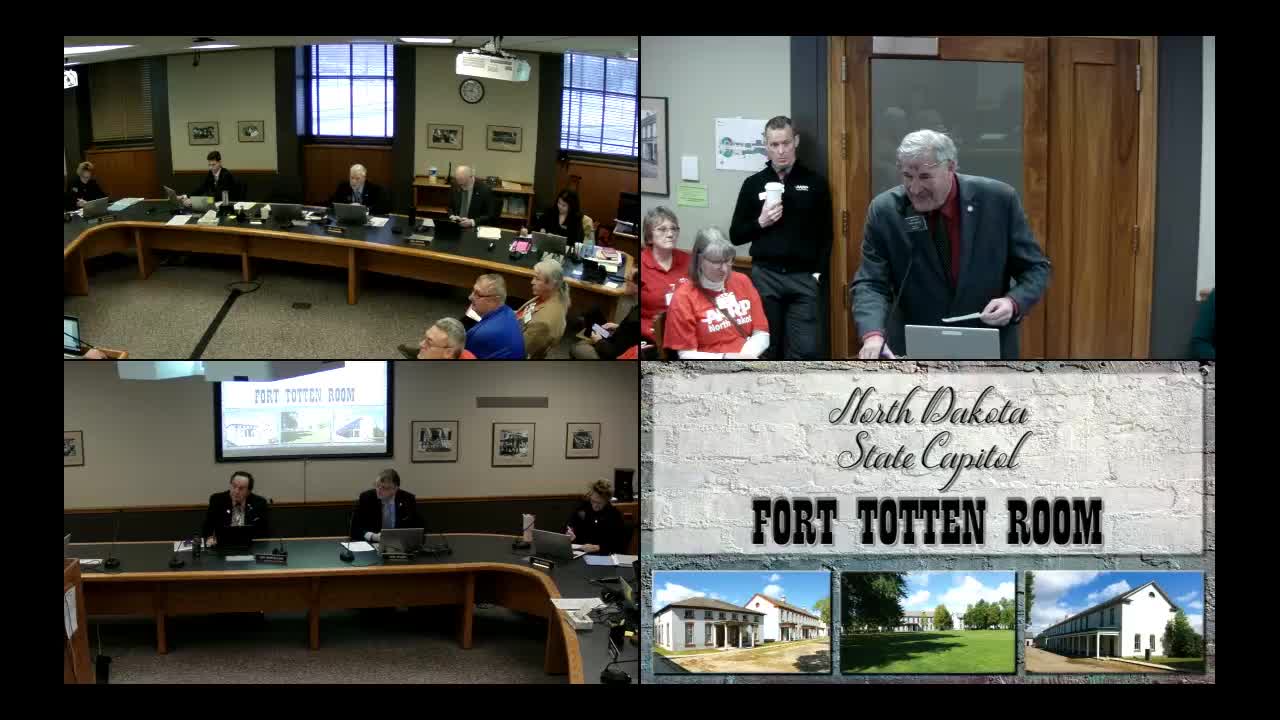
Senator Mark Weber, sponsor of Senate Bill 2201, told the Senate Finance and Taxation Committee the bill is meant to correct an oversight and make owners of primary residences held in trusts eligible for the $500 primary-residence credit.
Senator Mark Weber, sponsor of Senate Bill 2201, told the Senate Finance and Taxation Committee the bill is meant to correct an oversight and make owners of primary residences held in trusts eligible for the $500 primary-residence credit.
"Basically, Senate Bill 2,201 is basically a fix it bill," said Senator Mark Weber, District 22, introducing the measure and saying the change would allow owners of primary residences held in trust to claim the credit for 2024 and 2025 and include an emergency clause so people could apply immediately.
The bill’s sponsor said the oversight affected about 4,000 homes. "In checking with the state tax commissioner, he estimated that about 4,000 homes were not eligible because of this little glitch," Weber said.
Why it matters
Supporters said the measure restores the original intent of the primary-residence credit so primary homeowners — including those who hold their homes in a trust for estate planning — receive the $500 benefit. That relief is designed to reduce owners’ property-tax bills for the tax years specified in the bill.
What supporters and counties said
Linda Swihovic of the North Dakota Association of Counties told the committee the Association supports including trusts but urged clarity about retroactive administration. "This will be a manual process at the county level to do the retroactive refunds, process the rebates or the abatements and the refunds," Swihovic said. She added counties could issue checks and noted workload implications.
A homeowner who testified in favor, Michelle Doyle of Mandan, said she and others put homes in trusts for estate-planning reasons and have not received the credit. She also said she preferred applying the credit to future taxes rather than receiving a retroactive check.
Questions and administrative concerns
Senator Patton pressed for certainty about the retroactive language and whether counties and the tax department could practically handle refunds and whether allowing retroactivity would set a precedent. "I'm kind of concerned about that aspect of it from two standpoints," Patton said, naming county auditors, tax directors and precedent-setting as concerns.
Senator Weber said legislative counsel, the tax department and the Association of Counties revised the bill several times to make the retroactive language workable. Shelley Myers, state supervisor of assessments, told the committee that county workloads vary and that some counties already have significant backlogs of abatement forms; she said mobile-home and real-estate timing differences complicate processing.
Scope questions
Committee members also noted that the bill, as drafted, extends beyond trusts to property owned through other entities. Senator Patton read language from the draft that would allow an individual who holds at least a one-third ownership interest in a corporation or pass-through entity to qualify. The tax department said that verifications for LLCs and corporations will require additional work and may be handled by manual review and requests for documentation.
Fiscal note and refund mechanics
Committee members discussed the bill’s fiscal note, which was presented as approximately $2,000,000, based on an estimated 4,000 eligible trusts at $500 each. Counties and the tax department said the retroactive payments would likely require issuing checks because many taxpayers already paid and the funds were apportioned to local taxing districts. Swihovic suggested one administrative alternative: allow applicants to apply a retroactive $500 to the 2025 tax year instead of issuing checks; counties would still face verification and distribution tasks.
Next steps
Committee members signaled the bill needs clarifying amendments before a vote. Senators Wallin and Patton volunteered to draft amendments to narrow the retroactive refund eligibility to primary residences held in trust and to allow taxpayers the option of a refund or applying the credit to the 2025 tax year. Senator Weber said he is open to amendments and does not intend to act on the bill immediately.
Ending
The committee closed public testimony on Senate Bill 2201 after supporters spoke and members of the tax department and Association of Counties described verification and administrative workload issues. No final committee vote was taken during the hearing.