Get Full Government Meeting Transcripts, Videos, & Alerts Forever!
Get email alerts on the Domestic Workers Rights topic
No spam. Unsubscribe anytime.
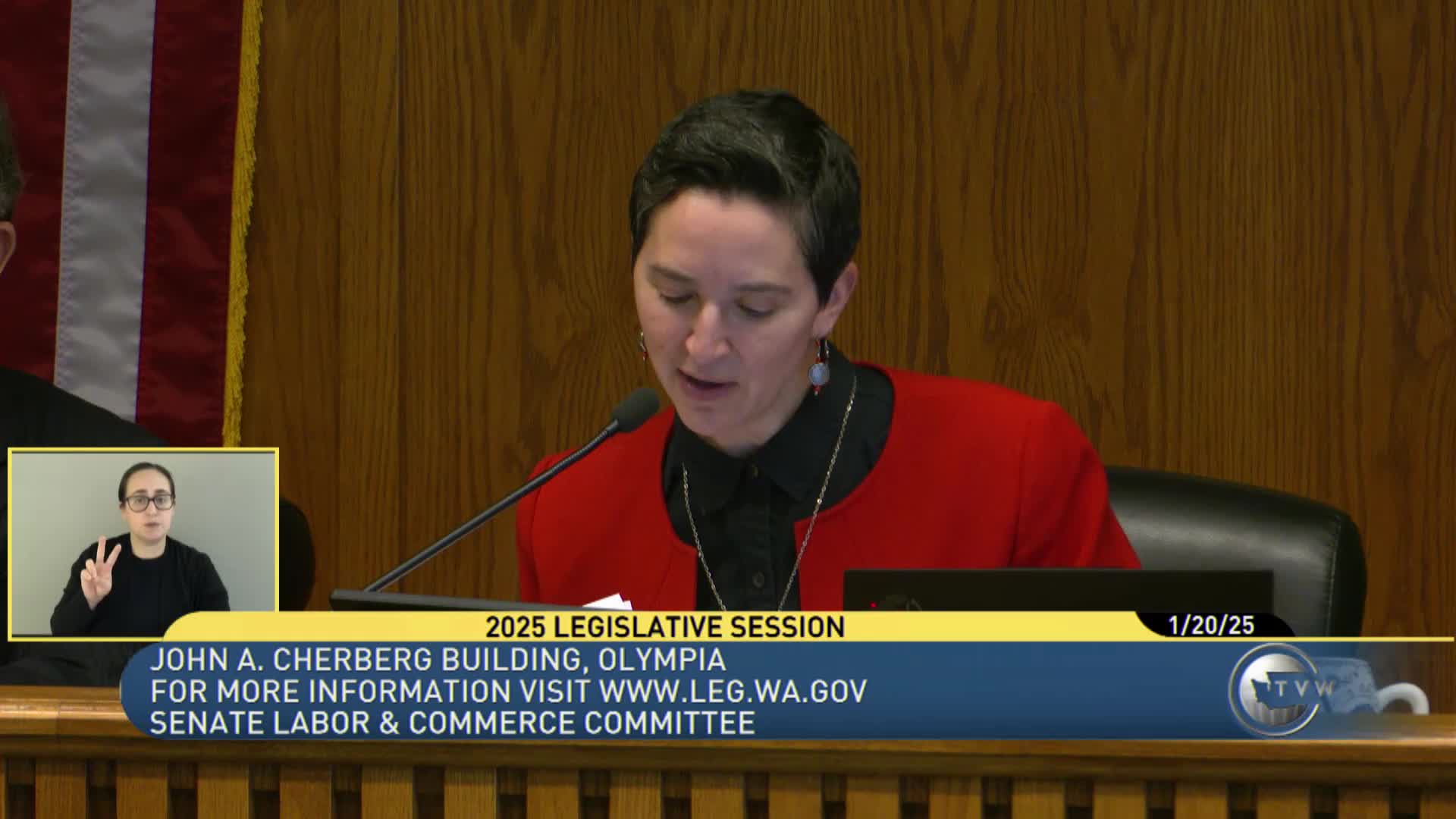
Committee hears SB 5023 to extend labor protections to domestic workers; advocates and many domestic workers testify in favor
Summary
SB 5023 would extend minimum wage, overtime, meal/rest break, anti‑discrimination and other protections to domestic workers, remove several statutory exemptions, and require written agreements and notice periods. The bill drew large public participation and many personal testimonies from domestic workers and employer‑allies; Department of Labor &
The Senate Labor & Commerce Committee received extensive testimony on Senate Bill 5023, which proposes to extend labor market protections to domestic workers and remove long‑standing statutory exemptions.
Committee staff Susan Jones summarized the bill’s purpose and provisions. Jones told the committee the measure would require hiring entities to pay domestic workers at least the state minimum wage and overtime, provide required paid and unpaid meal and rest breaks, allow workers to retain personal effects (including passports), require specified written agreements, and impose notice periods (two weeks for termination, four weeks for live‑in workers) with severance when notice is not provided. The bill would prohibit hiring entities from requesting possession of a worker’s personal effects, engaging in discrimination or harassment, monitoring private activities, or taking adverse action based on immigration status. Jones said the bill would remove exceptions in the Minimum Wage Act, labor standards provisions, the Washington Law Against Discrimination, and workers’ compensation law for domestic workers; the attorney general would develop a model disclosure statement and the bill calls for agreements to be available in the eight most commonly spoken languages in Washington. L&I investigations, penalties and a private right of action are included; a fiscal note was requested but not yet available.
The hearing drew many in‑person and remote witnesses. Domestic workers shared first‑hand accounts of withheld pay, long hours without breaks, on‑the‑job injuries without coverage, and fear of retaliation — testimony delivered by workers including Danielle Alvarado (Fair Work Center), Sylvia Gonzalez and many named domestic workers who described years of low pay and lack of sick leave. Employer‑allies and community members, including Jordan Goldvarg (employer and Seattle Domestic Workers Standards Board member), described outreach showing many employers want clear rules but are unsure what is required.
The Department of Labor & Industries raised technical questions about implementing workers’ compensation for domestic workers and said it needs clarifying language to prepare a fiscal note and implement the law, if enacted. Witnesses urged the committee to advance the bill; the committee recorded that 460 had signed in pro, 304 con and 3 other. No formal committee vote occurred during the hearing.
Ending: The committee paused to hear other bills and closed testimony on SB 5023 after the large public comment period; sponsors indicated further technical discussions would be needed to resolve implementation details.