Committee hears measure to maintain Medicaid coverage for juveniles during confinement and strengthen reentry coordination
Loading...
Summary
Senate Bill 5128 would clarify that DCYF confinement and county juvenile detention facilities are included in Medicaid suspension/reinstatement rules and would require HCA to coordinate pre- and post-release screening, diagnostic and case-management services for eligible juveniles.
Senate Bill 5128 would clarify that confinement facilities operated by the Department of Children, Youth, and Families (DCYF) and county juvenile detention facilities are included in Medicaid suspension and reinstatement requirements and would require the Health Care Authority (HCA) to collaborate with managed-care organizations, DCYF and juvenile detention facilities to implement federal law on certain pre-release and post-release services.
Kelsey Ann Fung, committee staff, briefed the committee and explained the bill’s background: because of the federal inmate exclusion, Medicaid enrollment for people in confinement is suspended rather than terminated, and 2021 legislation required suspension/reinstatement and authorized a waiver (the reentry initiative) to provide certain services before release. Fung said the federal reentry waiver was approved in 2023 and HCA is implementing the reentry initiative. SB 5128 would remove DCYF confinement facilities and county juvenile detention facilities from the definition of “correctional institution” for this purpose and require HCA, until July 1, 2026, to collaborate to provide screening, diagnostic and targeted case management services to eligible juveniles before and after release.
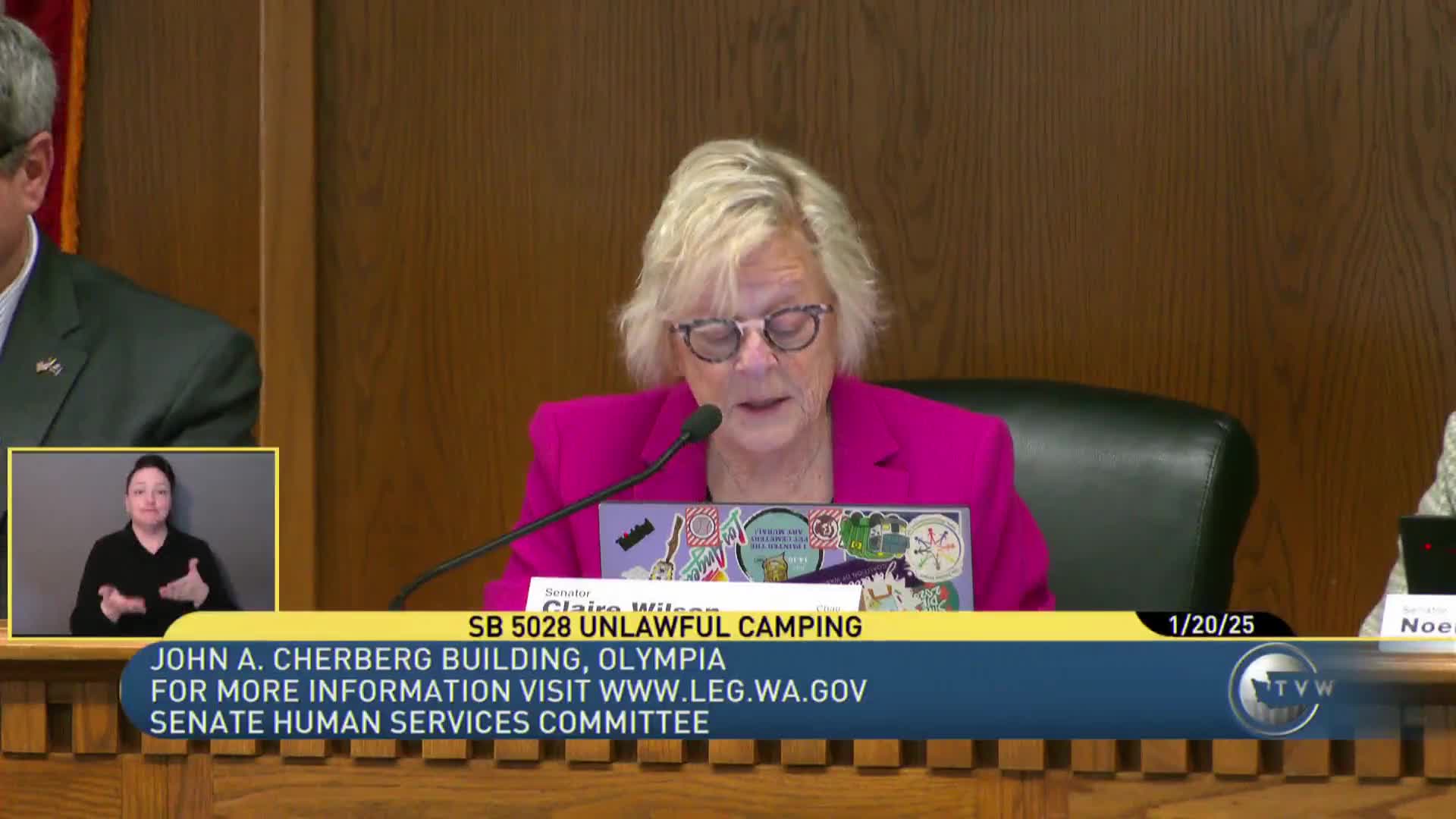
Senator Claire Wilson, sponsor and senator from the 30th Legislative District, described examples from site visits where youth were denied needed care because enrollment was not maintained; she said the bill aims to prevent gaps in coverage and to support continuity of care, including for short stays of fewer than 30 days. Wilson said the legislation directs HCA to leverage existing waiver funding and existing resources and to submit a one-time report by Dec. 1, 2025 on operational plans and barriers to implementation.
Karen Pillar, interim executive director of TeamChild, testified in support and described services required for youth returning to the community, including ongoing medication and behavioral-health supports; she said legal-aid attorneys spend substantial time reconnecting youth to healthcare when coverage is not maintained. James McMahon, policy director with the Association of Sheriffs and Police, also testified in support and framed the bill as a public-safety-oriented reentry practice that begins before release.
Committee staff said a preliminary fiscal note showed no fiscal impact to local governments or DCYF but that the HCA portion of the fiscal analysis was still pending. The committee closed the hearing on SB 5128 with no immediate action recorded.