Get Full Government Meeting Transcripts, Videos, & Alerts Forever!
Get email alerts on the Ag Seed Contracts topic
No spam. Unsubscribe anytime.
Senate committee hears bill to clarify turfgrass seed contracts and payment timelines
Summary
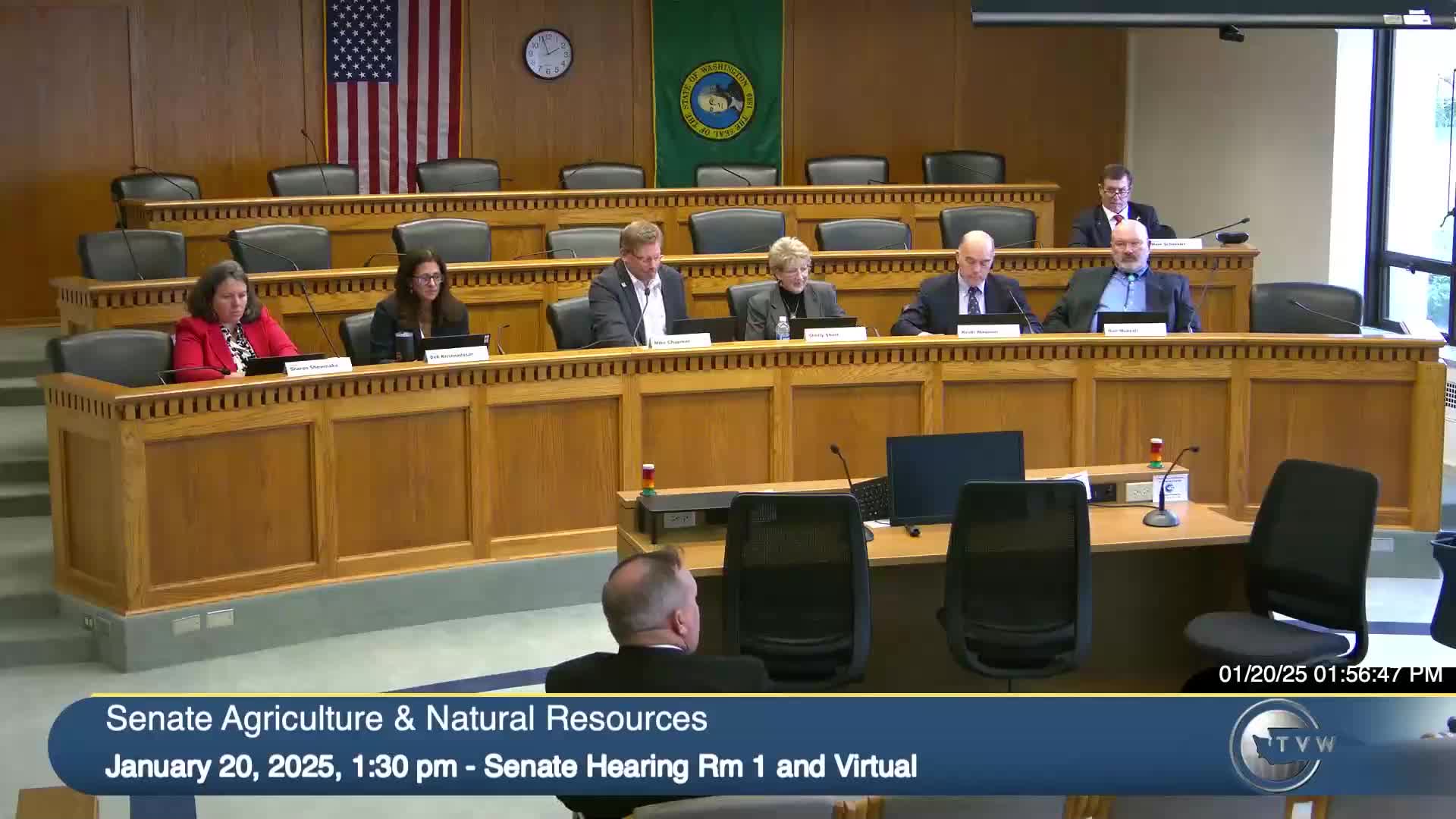
Senate Bill 5,074, presented to the Senate Agriculture, Water, Natural Resources & Parks Committee on Oct. 12, would add definitions for "seed growers," "seed production contract," "seed purchase contract," and "turfgrass seed" to state commission-merchant law and preserve an exemption for turf-seed contracts.
Senate Bill 5,074, presented to the Senate Agriculture, Water, Natural Resources & Parks Committee on Oct. 12, would add definitions for "seed growers," "seed production contract," "seed purchase contract," and "turfgrass seed" to Washington's commission-merchant statutes and would keep turfgrass seed contracts exempt from a contract provision that otherwise limits merchant control over sale timing.
Jeff Olson, staff to the committee, summarized the statutory background and said the bill's changes are intended to address payment practices and contract clarity for seed growers and processors. "The purpose of the Commission Merchants Act is to protect producers, buyers and sellers of agricultural products against illegal practices," Olson said.
Sen. Matt Behnke, prime sponsor, told the committee he learned about payment disruptions affecting turfgrass seed growers and seeks definitions and alignment with Oregon and broader markets. "It's really the clear definitions adding to that part for seed growers, producers, and various parts of those contracts that they're being left out in," Behnke said, adding that consistent timelines could help growers' cash flow.
Turfgrass seed growers testified in favor. Travis Meacham, a central Washington grower, said the bill seeks to "mirror a little bit of the same thing that is happening in Oregon and getting some consistency on payouts" and asked for statutory support to ensure processors pay on the timelines growers expect. The Washington State Department of Agriculture's Alison Halpern (signed in as "other") said the agency could implement the bill but requested further work with committee staff and program experts to refine statutory language. "The bill as written needs a little bit more work," Halpern said; she offered WSDA subject-matter support from the seed inspection and policy teams.
Committee discussion focused on whether the bill should set a statutory maximum payment timeline or leave timing to contract terms. Senator Shuster noted that grass-seed cash flows historically involved extended payouts and sought assurance that title-retention provisions give growers leverage for payment. No formal amendments were offered in the hearing.
Public testimony included growers and industry representatives who described delayed payments and urged alignment with other states; WSDA said it will work with the sponsor and staff to refine the bill. The committee did not vote and will continue drafting with agency input.
Ending: Sponsors and WSDA staff agreed to work on language revisions; no committee vote was taken at the hearing.