Get Full Government Meeting Transcripts, Videos, & Alerts Forever!
Get email alerts on the Ofco Jr Access topic
No spam. Unsubscribe anytime.
Committee hears bill to expand ombuds access to juvenile rehabilitation facilities
Summary
Senate Bill 5032 would clarify and expand the Office of the Family and Children's Ombuds' authority to investigate complaints and access juvenile rehabilitation (JR) facilities and records; committee staff and the ombuds' director described complaints and a fiscal note.
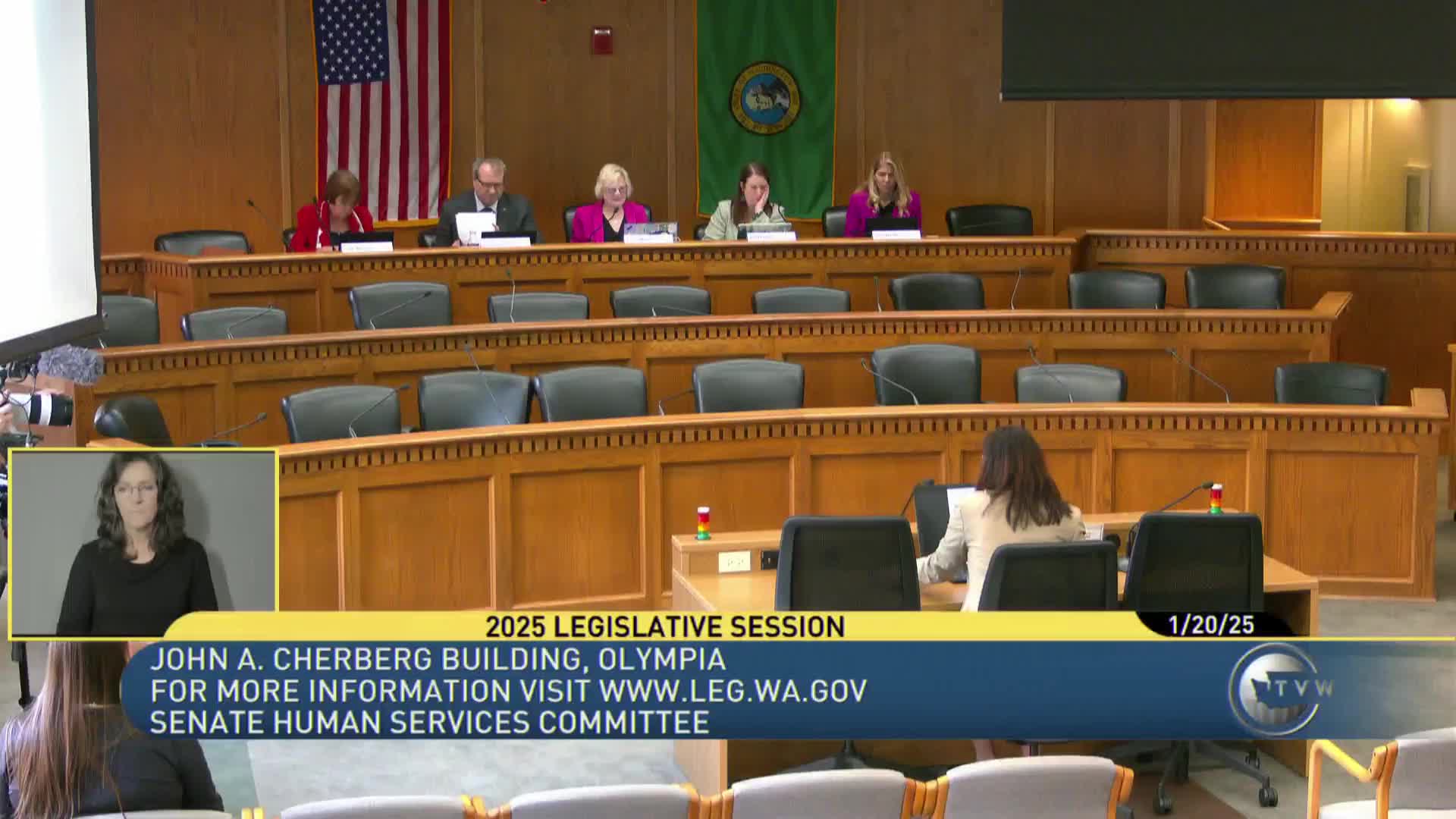
Senate Bill 5032, presented to the Senate Human Services Committee, would expand the statutory authority of the Washington State Office of the Family and Children's Ombuds (OFCO) to include youth and individuals in the state's care at juvenile rehabilitation (JR) facilities and to grant OFCO physical and online access to records and institutions.
For the record, Lisonbee Mendiola, committee staff, told the panel the bill would make OFCO’s authority “include youth and individuals in the state's care or custody, including JR facilities.” Senator Claire Wilson, sponsor of the bill and a member of the 30th Legislative District, said emerging adults and families “don't have a clear path and a place and a way to raise questions and concerns about the Department of Children, Youth, and Families and how they run their facilities like Green Hill or like Echo Glen.”
The measure would expressly permit OFCO to enter state institutions that serve children and young adults, meet with residents, and receive unrestricted online access to the JR case management system. Committee staff noted a fiscal-note estimate showing costs “just over $1,000,000 per biennia for the next 3 biennia.”
Patrick Dowd, director of the Washington State Office of the Family and Children's Ombuds, testified in support and described complaints OFCO has received about Green Hill School, including reports of overcrowding, unsanitary living conditions, limited access to education and programming, unit lockdowns, availability of illegal drugs, and general safety concerns. Dowd said OFCO has been able to respond in cooperation with current DCYF leadership but that the office “is necessary to codify that in State law” and that the office’s ability to respond effectively would depend on additional staff resources identified in the fiscal note.
Dowd also told the committee that JR facilities currently lack a uniform grievance or disciplinary hearing process that would let youth contest disciplinary or placement decisions. He said amending the statute to add OFCO’s explicit authority would not itself amend the child fatality review statute (RCW 74) and that a separate statutory change would be needed to include critical incidents in JR facilities in foster-care child fatality and near-fatality reviews.
Senator Wilson said the bill aims to improve oversight and “improving the quality of the administration, the resources, services, and the supports in our state run youth serving facilities.” She also noted DCYF operates two secure residential JR facilities and eight community residential facilities across the state.
The committee closed the public hearing on SB 5032 with no immediate action recorded. Staff and committee members indicated they expect follow-up questions and that any necessary amendments should be submitted in accordance with the committee schedule.