Get Full Government Meeting Transcripts, Videos, & Alerts Forever!
Get email alerts on the Emerging Adult Second Look topic
No spam. Unsubscribe anytime.
Hearing on HB 1317: Proposal to Expand 'Second Look' for Offenses Committed Before 21 Draws Support and Concern
Summary
House Bill 1317 would expand sentencing review opportunities to people who committed crimes before age 21 and adjust minimum terms for certain first-degree murder cases; testimony included judges, researchers, formerly incarcerated people and prosecutors debating brain science, recidivism data and proportionality.
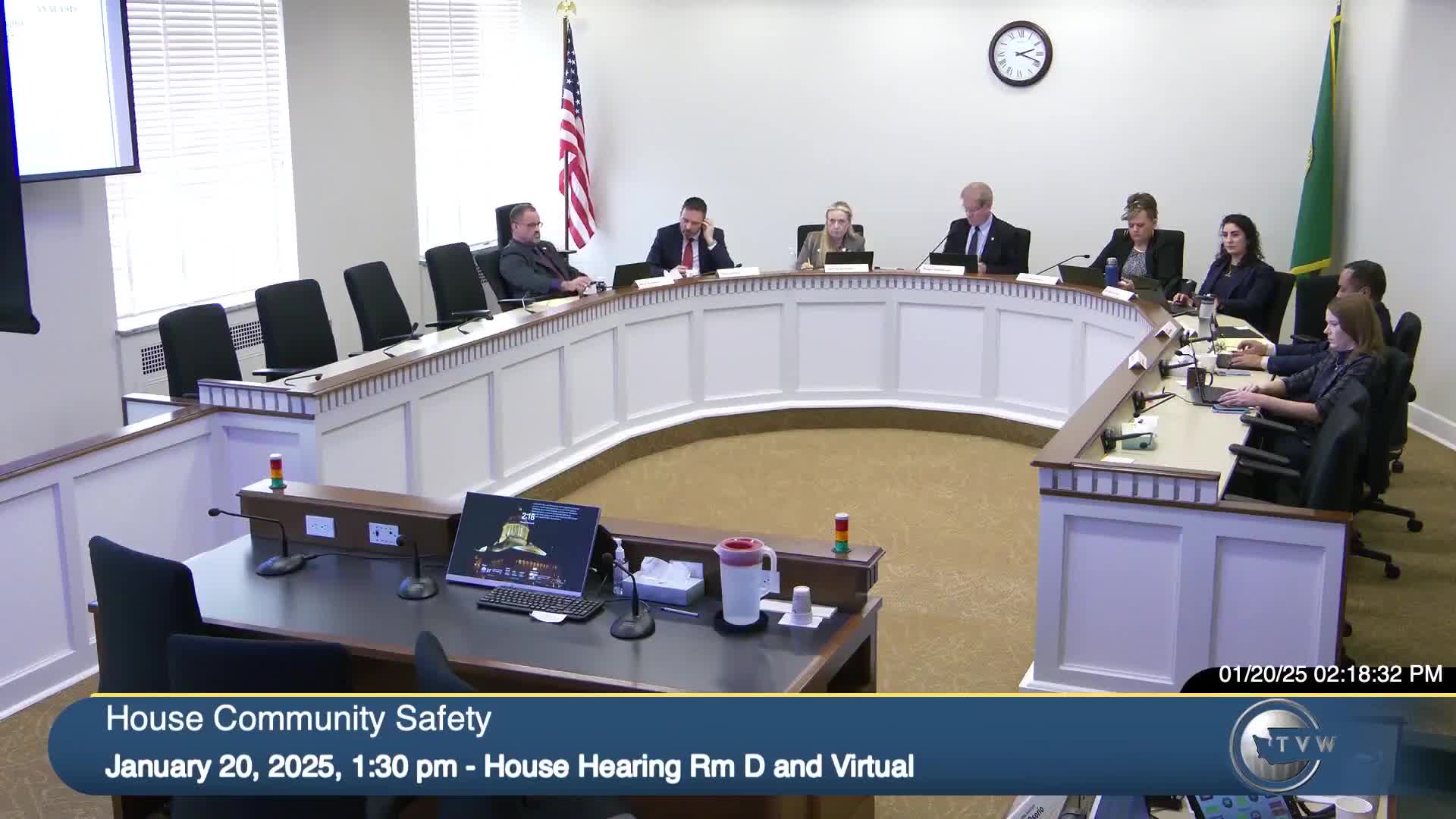
The House Community Safety Committee held public testimony on House Bill 1317 on Jan. 20, 2025, a measure to extend second‑look sentencing review and adjust sentencing parameters for people who committed offenses before age 21.
Under staff briefing, HB 1317 would (a) require that when aggravated murder in the first degree is committed at ages 18–20, the court must impose a maximum of life with a minimum term of at least 25 years if the court finds Miller mitigating factors apply; (b) allow persons convicted of crimes committed under age 21 to petition the Indeterminate Sentencing Review Board after serving no less than 15 years (rather than 20) of total confinement in many cases (with higher thresholds for murder in the first degree and aggravated murder); and (c) permit currently incarcerated people to petition the ISRB regardless of the date of their offense or conviction.
Proponents described the measure as a scientifically grounded, incremental expansion of existing second‑look processes. Representative David Hackney, sponsor of HB 1317, cited brain‑development research and ISRB recidivism statistics and said the bill "does not give a guarantee of release" but would allow professionals to assess a person's growth after decades of confinement. Neuroscientist Catherine Insel discussed adolescent and young‑adult brain maturation, telling the committee that prefrontal control systems and emotional‑reward systems continue to develop into the mid‑20s and that this creates opportunities for change in the 18–24 age range. Formerly incarcerated people — including Eugene Youngblood, Arthur Longworth, and others who served decades in prison — described personal rehabilitation and the benefits to families and communities of providing review opportunities.
Researchers and national comparisons were cited in support. Daniel Landsman (FAM) and witnesses referenced outcomes from Washington and other jurisdictions: low recidivism among people released after long sentences through juvenile second‑look processes, and examples from D.C. and California where expanded review produced very low new-conviction rates. Speakers argued that long, permanent sentences are costly and that age‑based review recognizes developmental science and reduces racial disparities in sentencing.
Opposition and caution came from prosecutors and some law‑enforcement representatives. Russell Brown, executive director of the Washington Association of Prosecuting Attorneys, voiced concerns about proportionality and whether a 15‑year review period is adequate for individuals 18–20 who committed severe violent crimes; he emphasized the need to ensure the seriousness of victims’ harms remains reflected in final outcomes. Several members of the committee and witnesses noted draft language nuances and asked for technical refinements (for example, how aggravated‑murder minimums interact with ISRB review).
The hearing concluded after robust testimony from both sides. No committee vote occurred on Jan. 20; staff and members signaled further drafting and follow-up would be needed before executive action.