Get Full Government Meeting Transcripts, Videos, & Alerts Forever!
Overview: REET, cannabis, vapor, tobacco and alcohol taxes and where the revenue goes
Summary
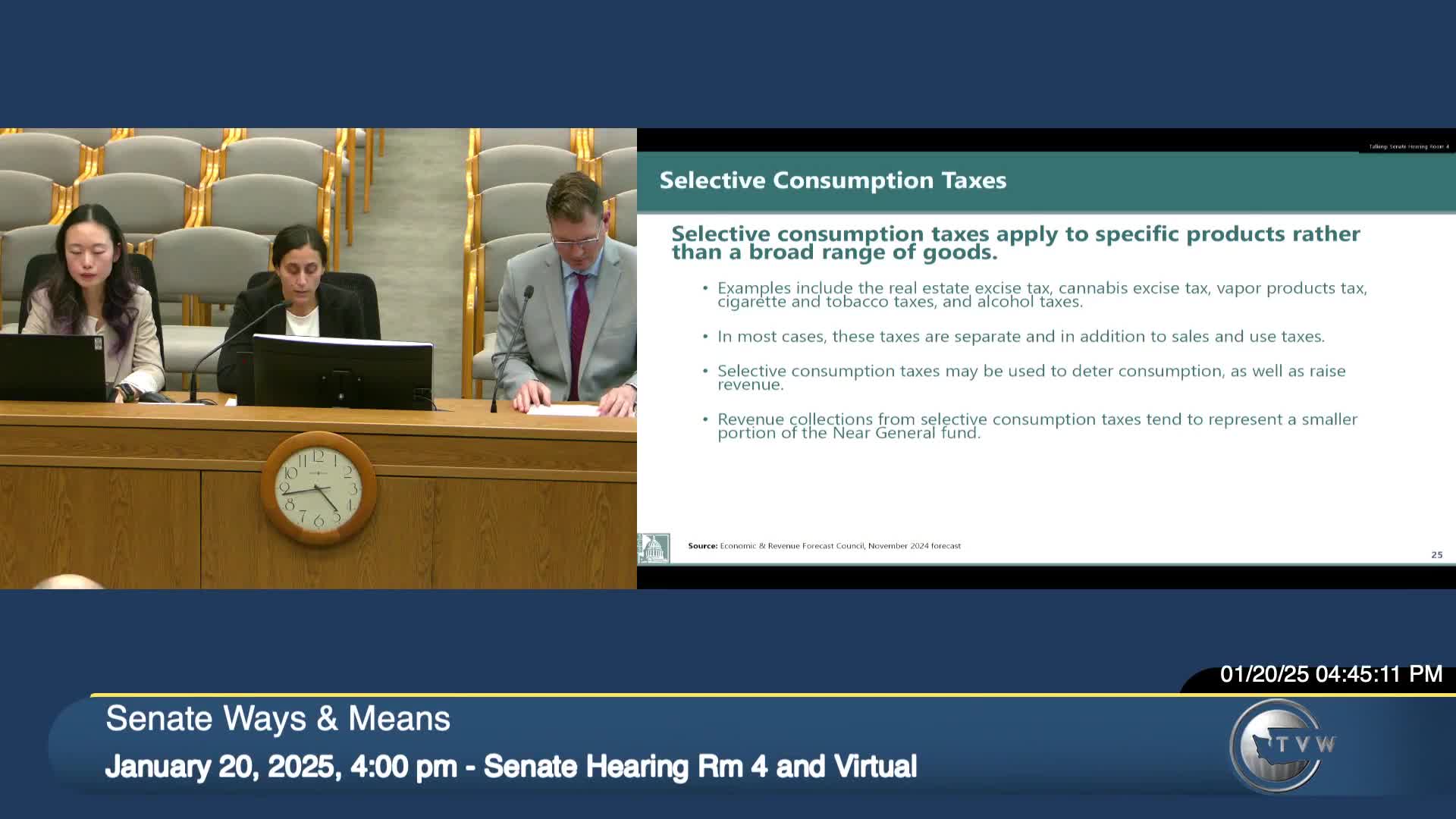
Committee staff summarized the state's selective consumption taxes — including the graduated real estate excise tax, cannabis excise tax distributions, vapor product tax, cigarette and other tobacco taxes, and alcohol taxes — and highlighted volatility and earmarks for those revenues.
Alia Kennedy summarized a group of selective consumption taxes for the committee, emphasizing revenue magnitude, distribution rules and volatility.
Real estate excise tax (REET): Kennedy said Washington moved from a flat REET rate to a graduated structure in 2020. She explained the graduated tiers and gave an example: a $1,000,000 sale would be taxed at 1.1% on the first $525,000 and at higher tier rates above that amount. Staff said REET is the state’s fourth largest tax revenue source and estimated it would generate about $2.5 billion in the current biennium. Kennedy emphasized REET’s volatility, noting the large swings around the 2007 peak and the subsequent decline, and later…
Already have an account? Log in
Subscribe to keep reading
Unlock the rest of this article — and every article on Citizen Portal.
- Unlimited articles
- AI-powered breakdowns of topics, speakers, decisions, and budgets
- Instant alerts when your location has a new meeting
- Follow topics and more locations
- 1,000 AI Insights / month, plus AI Chat