Get Full Government Meeting Transcripts, Videos, & Alerts Forever!
Get email alerts on the Juvenile Second Look Isrb topic
No spam. Unsubscribe anytime.
Committee Hears Testimony for ‘Youth Hope Act’ to Allow Earlier ISRB Review for People Convicted as Youth
Summary
Lawmakers and dozens of witnesses debated House Bill 1111, the Youth Hope Act, which would change eligibility and timing for petitions to the Indeterminate Sentencing Review Board for people convicted of crimes committed before age 18; supporters stressed rehabilitation and victims’ voices, opponents warned of retraumatizing families.
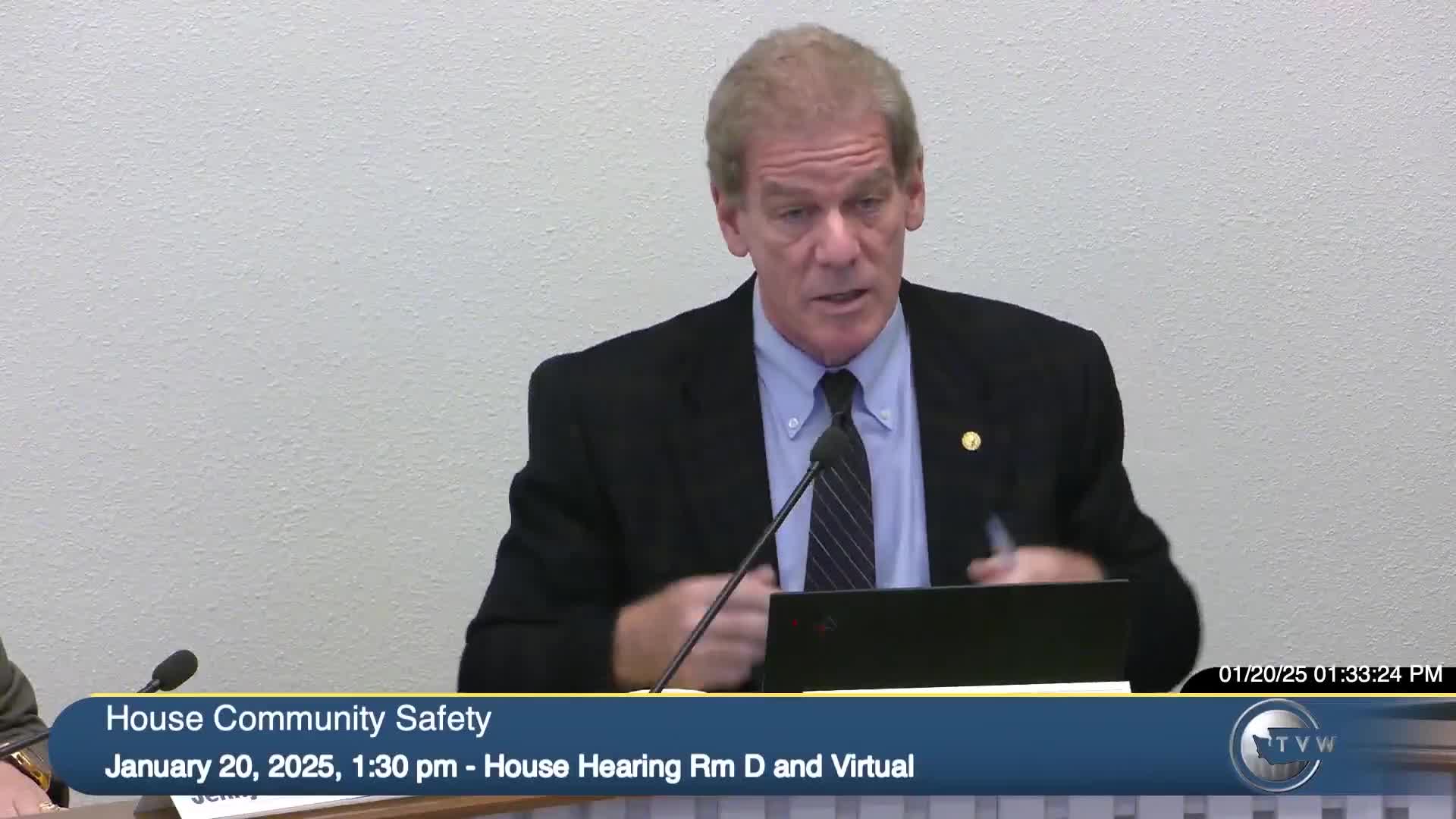
House Community Safety Committee Chair Goodman heard public testimony on Monday, Jan. 20, 2025, on House Bill 1111, known in testimony as the Youth Hope Act, a proposal that would change when people who committed offenses as juveniles can petition the Indeterminate Sentencing Review Board for early release.
The bill, presented by Representative Daria Farvar (46th Legislative District), would alter the ISRB petition eligibility for people convicted of crimes committed before age 18: under the proposal a person would need to reach age 24 (instead of serving at least 20 years), could not have a new conviction in the 12 months prior to filing, and would be screened for disqualifying serious infractions as defined by both the Department of Corrections and the Department of Children, Youth, and Family (DCYF). The bill also caps annual ISRB review of newly eligible petitions at 70 per year until July 1, 2035, specifies a prioritization order, authorizes the Department of Corrections to provide rental vouchers for released petitioners, and requires DOC to collect voucher outcome data to evaluate recidivism effects.
Supporters — a mix of currently and formerly incarcerated people, family members, legal advocates and researchers — framed the bill as an evidence-driven opportunity to balance public safety, victims’ voices and rehabilitation. Representative Daria Farvar told the committee she had met young people at Green Hill School and said the bill’s goals were “accountability and genuine rehabilitation,” adding that the ISRB should continue to weigh both incarcerated individuals’ and victims’ perspectives. Several residents from Green Hill and Echo Glen testified remotely and in person about education, diplomas and mentoring programs while confined. Christian DeVeigh, who identified himself as a resident and program participant, described the bill as a “pathway” and said it would add “willpower” and “way power” to give hope to adjudicated youth. Alexis Hale, a resident at Echo Glen, said a 15‑year juvenile-equivalent sentence left people “spending half of my life in prison” and argued long sentences were not reducing recidivism.
Opponents — including a longtime homicide victim advocate and the Washington Association of Prosecuting Attorneys — told the committee that families of homicide victims can experience renewed trauma if a sentence they understood to be final is revisited. Tiffany Bridal, a former homicide advocate in King County, said resentencing or later review can be “incredibly retraumatizing for victim families.” Prosecutors raised concerns about proportionality for very serious harms, noting that some cases become eligible for review relatively soon after conviction under certain timelines and that severe harms should be reflected in sentencing outcomes.
Researchers and judicial officials also appeared. Dr. Esther Matthews, a researcher and member of the Sentencing Guidelines Commission, testified that hope and related treatment participation predict lower recidivism; Judge David Keenan of King County Superior Court said review mechanisms provide “off ramps” and noted ISRB review already includes victim input. TeamChild staff attorney Alisa Cozad urged passage, saying the ISRB process is “rigorous” and does not guarantee release.
The committee asked for clarifications on specifics the bill delegates to agencies. Representative Griffey requested staff provide the DCYF definition of “disqualifying serious infractions.” Sponsor Farvar said she welcomed improvements and cautioned that the bill does not change the ISRB’s role but adds a class of eligible petitioners.
No vote was taken. The public hearing concluded after extensive testimony from more than two dozen witnesses in person and remotely. The committee noted the bill will proceed to executive action later in the process.
The record of the hearing includes numerous personal accounts from currently and formerly incarcerated people and from victim advocates; testimony ranged from appeals to scientific evidence about adolescent development to concerns about victims’ needs and the mechanics of prioritizing ISRB petitions. The committee did not take action on the bill during this session.