Get Full Government Meeting Transcripts, Videos, & Alerts Forever!
Get email alerts on the Environment & Energy topic
No spam. Unsubscribe anytime.
HB 1188 would give counties and affected tribes a 90‑day approval window on FSEC wind and solar recommendations, proponents say
Summary
House Bill 1188 proposes that when FSEC issues a recommendation for wind or solar projects the recommendation must be transmitted to affected federally recognized tribes and the appropriate county legislative authority; the recipients would then have 90 days to approve, reject or request reconsideration. Supporters said the change restores local
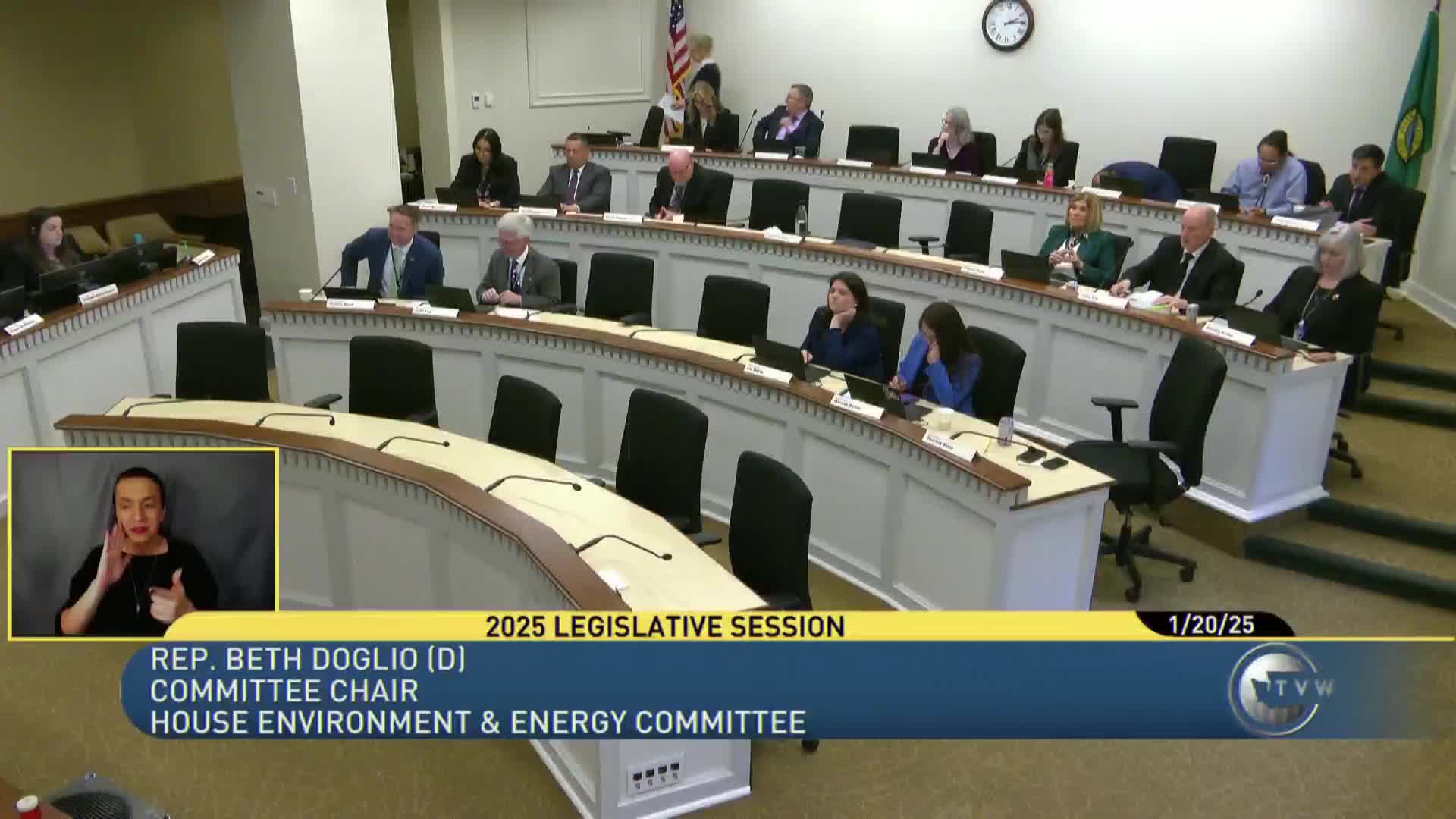
House Bill 1188, introduced to address local control over the siting of large wind and solar facilities, was the subject of a lengthy hearing in the House Environment & Energy Committee.
Jacob Lipson, committee staff, summarized the bill: when FSEC issues a recommendation for wind or solar facility certification, the recommendation would also be transmitted to each affected federally recognized tribe and to the appropriate county legislative authority. Those tribal governments and the county would have 90 days to adopt a resolution approving, rejecting, or requesting reconsideration of FSEC’s recommendation. If all affected tribes and the appropriate county did not adopt a resolution recommending approval within 90 days, the governor would be prohibited from approving the FSEC recommendation.
Representative Dye (sponsor) said the bill aims to correct what she described as a pattern in which developers use FSEC to “steamroll” local concerns, leaving rural residents and tribal communities without meaningful participation. She told the committee that the bill is limited to wind and solar because those projects are land‑use intensive and may affect large areas; she cited a study estimate (as referenced in testimony) that a significant share of land east of the Cascades could be needed to meet clean-energy buildout targets.
Testimony in support came from farmers and county leaders. Andrew Juris and Michelle Keys, fourth‑generation wheat farmers, said HB 1188 would ensure local authorities and residents have a meaningful voice and would help address local costs and infrastructure impacts. Kelsey Hulse of the Washington State Association of Counties said counties support returning more siting authority to local decision makers and want to ensure “rural communities share equitably in the benefits of renewable energy developments.”
Several witnesses described the Horse Heaven Hills wind and solar project and related dispute as background for the bill. Tri-City Cares board member Paul Kreppin and local residents recounted their experience with FSEC and the governor’s override of FSEC recommendations, stating that the governor ordered a larger project footprint after FSEC had reduced project size to mitigate impacts; Tri-City Cares and others have pursued litigation over those decisions.
Opposition testimony included the Association of Washington Business, which said HB 1188 would increase approval uncertainty and costs for developers and could make it harder to build the projects needed to meet state clean-energy goals. AWB requested opposition. Several supporters and opponents urged careful drafting to balance local input, timely project approval, and state clean‑energy objectives.
No committee vote occurred during the hearing. Committee members asked questions about tax incentives, whether both new and existing hydropower count for CETA compliance, and the implications of granting counties and tribes an effective veto if unanimous approvals are not secured within 90 days.
Ending: The hearing closed with a mix of strong local support for restoring county/tribal leverage and business concerns about increased permitting uncertainty; no formal committee action was taken at the session.