WSDOT outlines wrong‑way detection, local safety grants and low‑cost fixes to reduce fatal collisions
Loading...
Summary
WSDOT directors told the House Transportation Committee that wrong‑way driving is increasing and described a program of detection equipment, improved signs/pavement markings, local safety grants and low‑cost operational fixes targeted at high‑risk corridors and vulnerable road users.
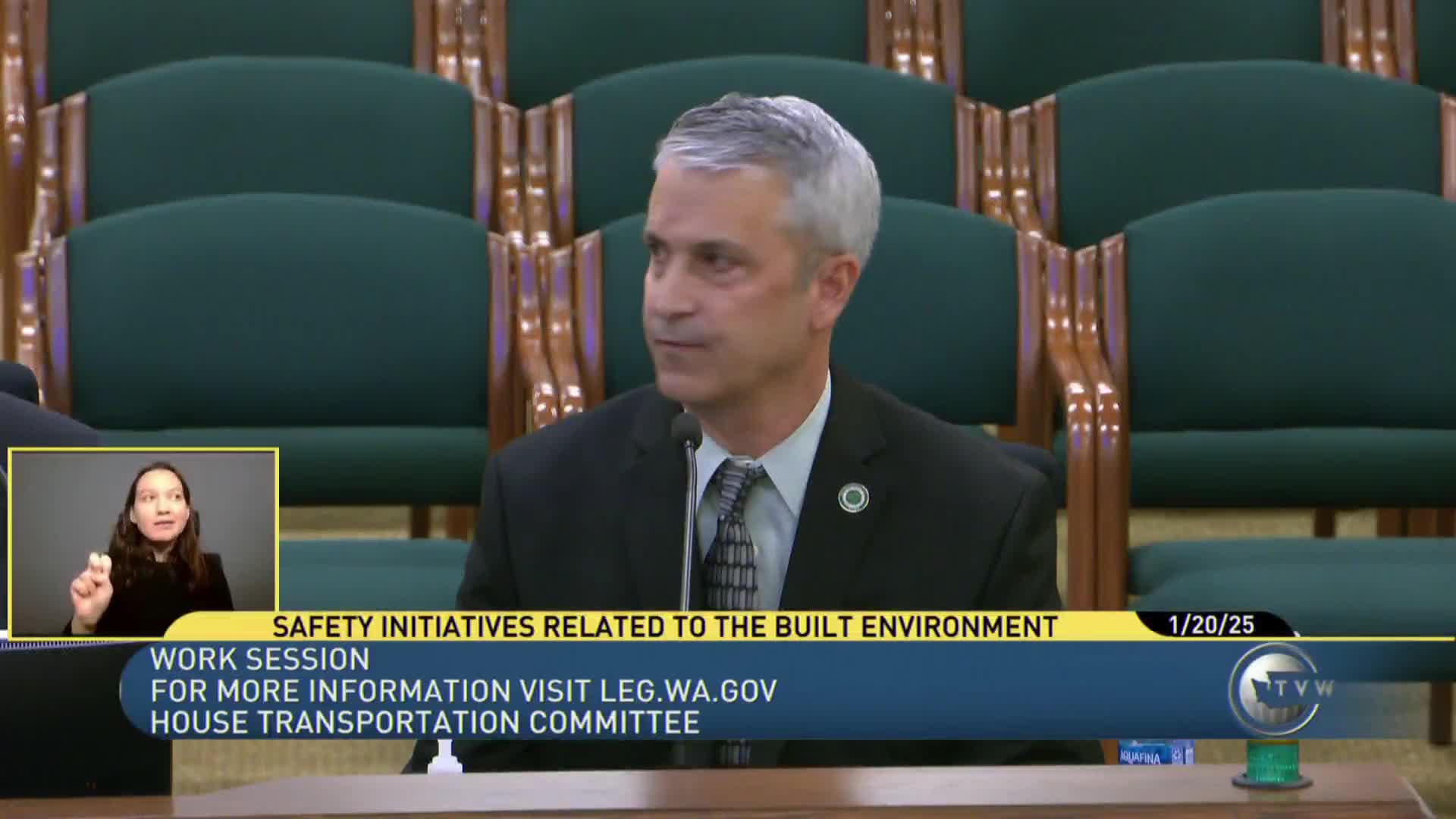
Dongho Chang, director of transportation operations at the Washington State Department of Transportation, told the committee on Jan. 20 that wrong‑way driving is a major contributor to high‑severity collisions and that the state has chosen detection and signing upgrades as a short‑term countermeasure.
Scope and data: Chang said wrong‑way crashes account for about 8% of Washington’s traffic deaths and that Washington ties for the nation’s highest rate with Maine; the national average cited in the briefing was about 3.7%. He said between 2019 and 2023 Washington recorded 493 wrong‑way collisions on state highways with 62 resulting in fatalities, and that about 60% of wrong‑way drivers were impaired, with most such crashes occurring at night and on higher‑speed divided highways. The department identified six counties (King, Snohomish, Pierce, Clark, Yakima and Spokane) where nearly 70% of wrong‑way incidents occur.
Detection and response: Chang described technology that detects wrong‑way entries and activates warning flashers and alerts to traffic management centers to shorten response times; the department cited other states’ results showing high self‑correction rates after detection. WSDOT said it selected 10 locations for detection installs, is improving missing or faded signs and pavement markings at numerous sites, and plans to coordinate with traffic centers and law enforcement for alerts.
Local safety programs and low‑cost enhancements: Jay Dry, WSDOT director of local programs, described federally funded Highway Safety Improvement Program (HSIP) grants and state programs that support cities and counties. Dry said the state awards roughly $35 million for city projects in odd‑numbered years and a similar county allocation in even years; he emphasized that need exceeds available funding and that applications outpace awards. Dry also summarized the new Reducing Rural Roadway Departure program, a $4 million state local‑share program for smaller projects, a $1 million Video Analytics pilot award list, and a flexible pedestrian and bicycle safety fund that targeted emergent ADA and crosswalk needs.
Examples and outcomes: Chang and Dry gave local examples: raised (raised‑level) crosswalks to slow drivers and improve pedestrian accessibility, leading pedestrian intervals that give walkers a head start at signals, and small operational fixes to roundabouts and lane markings. WSDOT presented a low‑cost enhancement example where rechannelizing a roundabout reduced collisions from 45 per year to about 3 per year, citing an estimated societal savings afterward.
Next steps and delivery: WSDOT said it will continue sign and pavement‑marking upgrades, install detection systems at prioritized wrong‑way locations, deploy low‑cost operational fixes statewide (about 160 projects planned), and publish program reports. The department also noted delays on some pedestrian projects due to budget timing and said construction will proceed as bids are awarded.