Get Full Government Meeting Transcripts, Videos, & Alerts Forever!
Get email alerts on the Traffic And Public Safety topic
No spam. Unsubscribe anytime.
State Patrol cites highest roadway deaths since 1970s, warns of trooper shortfalls and lab backlogs
Summary
Washington State Patrol officials told the House Transportation Committee on Jan. 20 that 2023 saw a record number of traffic fatalities, that trooper staffing remains well below funded levels, and that toxicology and blood-sample turnaround times remain a critical bottleneck for prosecutions.
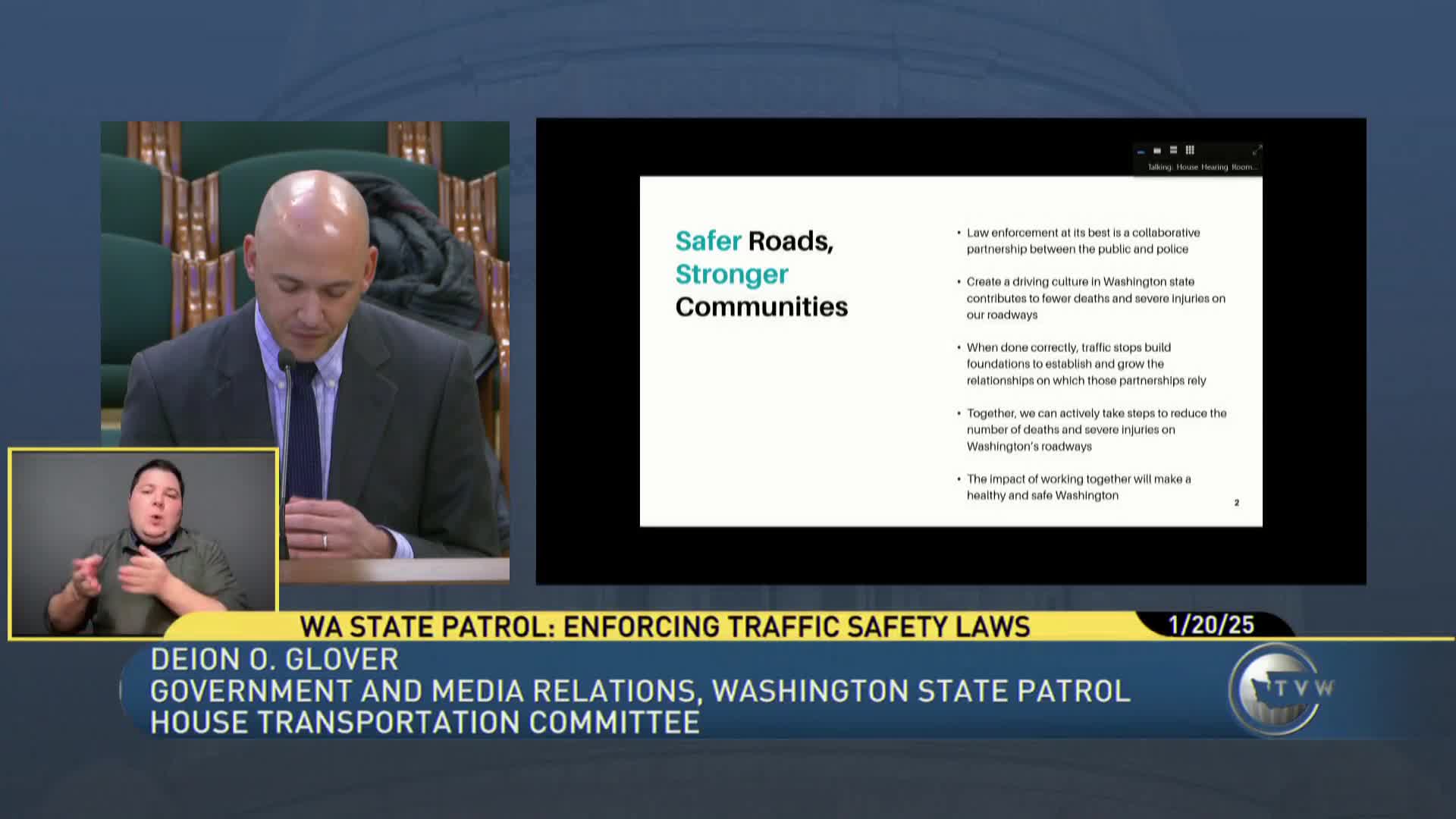
Captain Dion Glover, Washington State Patrol, told the House Transportation Committee on Jan. 20 that the patrol recorded its highest number of roadway fatalities since the 1970s and described staffing and forensic-lab constraints the agency says complicate traffic-safety work.
The patrol’s presentation, led by Captain Dion Glover and accompanied by Chief John Battiste, focused on rising aggressive driving, impaired-driving involvement in fatal crashes, and steps the patrol is taking on hiring and training. "In 2023, we we hit the highest number of fatalities we've ever had since the mid 19 seventies with over 810 folks died on our roadways," Captain Glover said during the presentation.
Why it matters: Washington’s highway deaths have policy and prosecutorial consequences, committee members were told. Patrol leaders said long forensic turnaround times for blood testing can conflict with speedy‑trial deadlines and that staffing gaps reduce the patrol’s ability to both respond to crashes and sustain high‑visibility enforcement.
Key facts presented
- Fatalities and collisions: Captain Glover said the State Patrol investigated 271 fatal collisions (agency‑investigated collisions only) and that over 50% of those collisions involved some form of impairment. He said the agency processed about 35,000 collisions last year, from minor to fatal.
- Impaired driving enforcement and training: The patrol reported removing about 11,000 impaired drivers from Washington roadways last year and described a layered training approach: ARIDE (advanced roadside impairment detection) classes, a Drug Recognition Expert (DRE) program with roughly 130 certified evaluators in the state, and expanded DRE class schedules.
- Staffing and retention: The patrol said it is running multiple recruit classes: 58 individuals were in training at the time of the briefing, 34 had been hired for the next class and another lateral class was planned. The agency reported averaging five retirements per month (about 60 a year), an average trooper tenure of about 10 years, and roughly 253 commissioned positions currently vacant. The patrol said about 85 troopers were eligible to retire immediately.
- Forensic backlog and turnaround: Representative Griffey and others pressed the patrol on turnaround time for blood/toxicology testing. Chief John Battiste and staff said staffing at toxicology labs is the primary constraint, that new hires require lengthy certification (about 18 months), and that the patrol is studying other states’ throughput models. Battiste said the goal is to reduce blood-result turnaround toward a 60‑day window to better align with speedy‑trial expectations.
- Enforcement tools and outreach: The patrol highlighted high‑visibility enforcement emphasis campaigns, use of aviation (aircraft with FLIR) for detecting high‑speed drivers and assists to local agencies, a commercial vehicle enforcement bureau that performed more than 55,000 commercial inspections last year, school‑bus inspections, and expanded community engagement through an Office of Culture and Engagement.
Quotes and source limits: Direct quotes and attributions in this article are restricted to the committee record speakers listed in the transcript: Captain Dion Glover, Chief John Battiste, and Kimberly Mathis (staff). Committee members asked questions but the article does not attribute statements to any speaker except where the transcript identified them.
Outlook: Patrol leaders asked for continued legislative support for recruitment incentives, retention bonuses and resources for labs and training. They said hiring and retention improvements already funded by the Legislature have demonstrable effects on recruitment and retention, but the agency remains substantially understaffed relative to funded positions.