Get Full Government Meeting Transcripts, Videos, & Alerts Forever!
Committee advances bill letting SLIB review requests to raise impact-assistance caps for large industrial projects
Summary
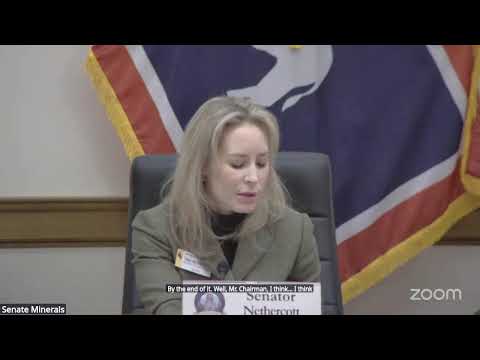
The Minerals, Business & Economic Development Committee voted to move Senate File 19, which would let the State Loan and Investment Board (SLIB) review requests from the Industrial Siting Council to raise the statutory maximum percentages of impact-assistance payments for large industrial projects.
The Minerals, Business & Economic Development Committee voted to move Senate File 19, which would let the State Loan and Investment Board (SLIB) review requests from the Industrial Siting Council to raise the statutory maximum percentages of impact-assistance payments for large industrial projects.
The committee approved the motion to move the bill on a roll call vote (5 ayes). Senator Cooper moved the bill; Senator Rothfuss seconded. Committee members also adopted amendments that removed proposed language stripping judicial review of SLIB decisions and that replaced an explicit 2.76% numeric cap with a limit tied to the Industrial Siting Council's recommendation (the committee directed counsel to refine that wording before further action).
Jenny Staben, administrator of the Industrial Siting Division at the Wyoming Department of Environmental Quality, told the committee that the industrial siting permit process is "unique" and that the Industrial Siting Council holds a contested-case hearing that is bifurcated between whether a project may be built and the separate calculation of impact-assistance payments. "The industrial siting council holds a formal contested case hearing," Staben said, explaining that local governments submit prefiled testimony and exhibits so the council can make findings "based on a preponderance of the evidence." She walked the committee through how impact assistance is calculated from estimated material costs and distributed after construction begins.
Supporters from local government associations said the bill…
Already have an account? Log in
Subscribe to keep reading
Unlock the rest of this article — and every article on Citizen Portal.
- Unlimited articles
- AI-powered breakdowns of topics, speakers, decisions, and budgets
- Instant alerts when your location has a new meeting
- Follow topics and more locations
- 1,000 AI Insights / month, plus AI Chat