Get Full Government Meeting Transcripts, Videos, & Alerts Forever!
Get email alerts on the Impact Assistance topic
No spam. Unsubscribe anytime.
Committee advances bill letting SLIB review requests to raise impact-assistance caps for large industrial projects
Summary
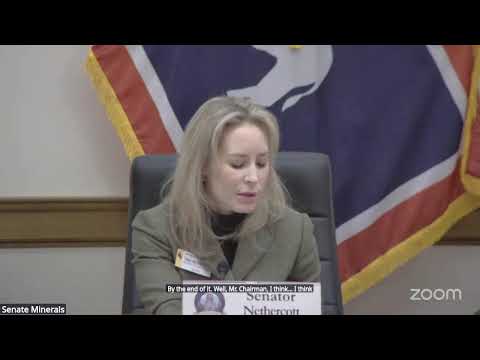
The Minerals, Business & Economic Development Committee voted to move Senate File 19, which would let the State Loan and Investment Board (SLIB) review requests from the Industrial Siting Council to raise the statutory maximum percentages of impact-assistance payments for large industrial projects.
The Minerals, Business & Economic Development Committee voted to move Senate File 19, which would let the State Loan and Investment Board (SLIB) review requests from the Industrial Siting Council to raise the statutory maximum percentages of impact-assistance payments for large industrial projects.
The committee approved the motion to move the bill on a roll call vote (5 ayes). Senator Cooper moved the bill; Senator Rothfuss seconded. Committee members also adopted amendments that removed proposed language stripping judicial review of SLIB decisions and that replaced an explicit 2.76% numeric cap with a limit tied to the Industrial Siting Council's recommendation (the committee directed counsel to refine that wording before further action).
Jenny Staben, administrator of the Industrial Siting Division at the Wyoming Department of Environmental Quality, told the committee that the industrial siting permit process is "unique" and that the Industrial Siting Council holds a contested-case hearing that is bifurcated between whether a project may be built and the separate calculation of impact-assistance payments. "The industrial siting council holds a formal contested case hearing," Staben said, explaining that local governments submit prefiled testimony and exhibits so the council can make findings "based on a preponderance of the evidence." She walked the committee through how impact assistance is calculated from estimated material costs and distributed after construction begins.
Supporters from local government associations said the bill provides a needed "safety valve" for communities facing unusually large workforce impacts. Jeremiah Rehman of the Wyoming County Commissioners Association said the change would allow SLIBto weigh in as a statewide decision maker on whether additional impact funds are warranted. "This legislationtries to put it in the hands of the State Loan and Investment Board as our statewide elected officials to give their say on whether it's appropriate to spend those dollars," Rehman said.
Sweetwater County testimony highlighted recent local experience. Commissioner Richards told the committee that for the Dry Creek Trona project the tiered formula produced far less money than local impact estimates required. "Basically, Dry Creek project broke the tiered formula," Commissioner Richards said, describing how Sweetwater County identified roughly $50 million in impacts while only $35 million in impact funds were available to the county under the formula. He told the committee that the change would not "magically" fix allocation rules but would let communities seek a larger pool of funds when local evidence shows those funds are needed.
Representatives of municipal associations and local public safety officials also voiced support. Matt Hall of the Wyoming Association of Municipalities and Mike Thompson, chief of police in Evansville, said impact assistance helps smaller communities with roads, emergency services and other costs tied to a sudden influx of construction workers.
Committee members questioned two features of the draft bill: first, language that would have removed judicial review of SLIB's final action on increased impact-assistance percentages, and second, whether the proposed 2.76% ceiling could allow SLIB to award a substantially larger percentage than the Industrial Siting Council recommended. After debate, the committee adopted an amendment striking the language that would have barred judicial review. The committee also adopted a second amendment replacing the numeric 2.76% ceiling with an upper limit tied to the council's recommendation; sponsors instructed counsel to refine the statutory wording before the bill proceeds.
The committee record shows the following key details discussed at the hearing: the statutory tiered percentages currently in Title 39 (2.25% for projects with estimated material costs of $350 million or less; 2.0% for $350 millionto $850 million; 1.5% for $850 million or more), the jurisdiction threshold for industrial siting review (discussed in the hearing as about $271 million and rising annually), and that roughly 80 industrial siting permits have been issued since the program began in the early 1970s. Staben explained that impact-assistance payments begin once construction and in-state material sales commence and that the Department of Revenue distributes funds to counties for turn-down to municipalities, which then must report how they used the funds back to the Industrial Siting Division.
Committee action
- Motion to move Senate File 19 forward: moved by Senator Cooper, seconded by Senator Rothfuss; roll-call result announced as 5 ayes (motion carried). - Amendment to remove language that would bar judicial review of SLIB decisions: proposed by Senator Cooper and revised to strike only the phrase limiting judicial review; adopted by voice vote (passed). - Amendment replacing an explicit 2.76% numeric ceiling with a limit tied to the Industrial Siting Council's recommendation: moved in committee and adopted; sponsors directed legislative counsel to refine statutory language and to mirror the change across affected sections of the bill.
Why it matters
The bill would create a formal review path for local governments to request that SLIB increase the statutory maximum percentage of impact-assistance funds available for specific large projects when the Industrial Siting Council finds the tiered maximum is "insufficient to mitigate the identified impacts." That process alters which state body has the final political authority to expand financial assistance beyond statutorily set tiers and clarifies whether SLIB decisions on those discretionary increases remain subject to judicial review. Proponents said SLIB review provides an additional statewide check before authorizing larger distributions; opponents warned about potential politicization of large-dollar decisions without court oversight until the committee removed the judicial-review bar.
What's next
The committee moved Senate File 19 forward with the adopted amendments; counsel will rework the statutory language the committee asked to be clarified. The bill will return for further committee work or floor consideration as the Legislature's calendar allows.