Get Full Government Meeting Transcripts, Videos, & Alerts Forever!
Get email alerts on the Road Safety Speed Limits topic
No spam. Unsubscribe anytime.
Senate approves measure letting local authorities set speed limits on unpaved roads without state speed study
Summary
Senate File 32 passed the Senate 23-4-4 after debate about local control, liability and the cost of state speed studies; supporters framed it as returning authority to county road experts.
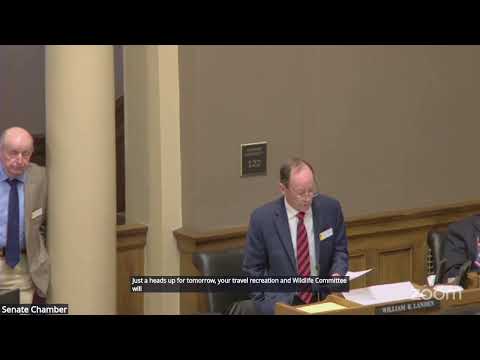
The Wyoming Senate on Jan. 20 passed Senate File 32, a bill allowing local authorities to set speed limits on unpaved roads without requiring a state-conducted speed study.
Senator Rafais — who explained his no vote on final passage earlier in the debate — warned that removing the requirement for a speed study could expose counties to liability and might be unsafe if local authorities unilaterally posted high limits on variable dirt roads. "To me, that ends up potentially leading to danger," he said.
Supporters said local road-and-bridge officials maintain and know the roads and should have authority to set reasonable speed limits without the delay and cost of a state transportation study. Senator Hicks recalled a Carbon County example where a speed study could not be scheduled for a year and would have cost thousands of dollars, delaying safety action. "It's their road. They're elected by those local county people," he said.
Senate passage: The chief clerk called the roll for third reading; Senate File 32 passed with 23 ayes, 4 noes and 4 excused.
What it means: The bill shifts discretion to counties and similar local authorities for unpaved roads, eliminating a state-mandated speed-study prerequisite in many cases. Supporters framed the change as local control and a cost-saving measure for local governments; opponents raised concerns about safety and the variable condition of unpaved roads.
Next steps: With passage in the Senate, the bill will go to the House for consideration.