Get Full Government Meeting Transcripts, Videos, & Alerts Forever!
Get email alerts on the Sales Tax topic
No spam. Unsubscribe anytime.
Senate committee advances bill to eliminate sales tax on firearms and ammunition, citing Second Amendment and industry incentives
Summary
The Senate Revenue Committee voted 4-1 to report Senate File 58, which would exempt firearms and ammunition from state sales tax effective July 1, 2025.
The Senate Revenue Committee voted 4-1 to report Senate File 58, a bill that would remove state and local sales tax on firearms and ammunition in Wyoming, effective July 1, 2025.
Sponsor Senator Olson said the bill aims both to reduce the cost of legally owned firearms and ammunition and to signal Wyoming’s support for the Second Amendment; he told the committee, “owning a firearm ... is a fundamental right” and that elimination of the sales tax would make firearms and ammunition more affordable for Wyoming residents. The bill draws its definitions of “firearm” and “ammunition” from Title 6 (crimes and offenses) and proposes an exemption in Title 39 (taxation and revenue).
Committee discussion focused on two practical questions: how the Department of Revenue would track and report the exempt sales, and how much revenue the state currently collects from firearms and ammunition. Brett Fanning, excise tax administrator at the Department of Revenue, explained that retail reporting is aggregated by retailer and that, if the exemption passed, retailers would report deductions for exempt items. He told the committee that taxable retail gross receipts commonly include many categories (clothing, footwear, equipment) while exempt items at a sporting goods store typically include packaged food and certain gift cards; firearms and ammunition would be reported as aggregated deductions.
Senator Wright and other members questioned the absence of a current fiscal note. Committee members noted a 2013 Department of Revenue estimate (from an earlier bill) that statewide firearm sales then were about $9,000,000 and that the department at that time estimated the sales-tax revenue foregone would have been about $487,000 annually (split between state and local distributions). Committee members cautioned that sales tax is an important revenue source for local governments, while supporters said the revenue impact appears modest and that the policy could attract businesses and residents.
Opponents pointed to the importance of sales tax revenue for cities and counties and urged caution in creating additional exemptions; supporters argued the exemption aligns with policy priorities and noted Wyoming’s existing sales-tax structure is broadly applied and comparatively low. The Department of Revenue said the change would not require transmission of purchaser names or other personally identifiable information; reporting would remain aggregate sales and deduction figures from retailers.
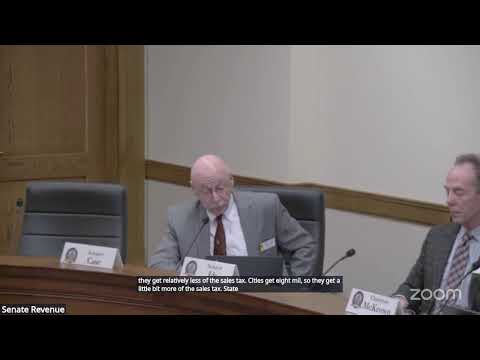
Vote at a glance: roll-call vote on Senate File 58 was Case: No; French: Yes; Eyde: Aye; Pappas: Aye; McEwen (chair): Aye (4–1). The motion to move the bill was recorded as moved by Senator Eyde and seconded by Senator French; the committee approved the bill to go to the floor.
Why it matters: Eliminating sales tax on firearms and ammunition would be a state-level policy signal and would reduce the per-unit purchase cost for buyers. The bill lacks a current fiscal note; a decade-old state estimate suggested relatively small revenue implications compared with other tax sources, but committee members noted the lack of up-to-date revenue modeling.
Next steps: The bill will go to the Senate floor with the committee’s recommendation. If it advances, Legislative Service Office and the Department of Revenue will need to finalize fiscal estimates and implementation guidance for retailers’ reporting systems.