Get Full Government Meeting Transcripts, Videos, & Alerts Forever!
Get email alerts on the Mental Health Funding topic
No spam. Unsubscribe anytime.
Lakes Region Mental Health center outlines revenue pressures, charity care and request for county support
Summary
Lakes Region Mental Health described a $32,000 county funding request for adult outpatient services, rising charity‑care costs driven by Medicaid 'spend down' and efforts to develop billing codes for services tied to criminal‑justice reentry.
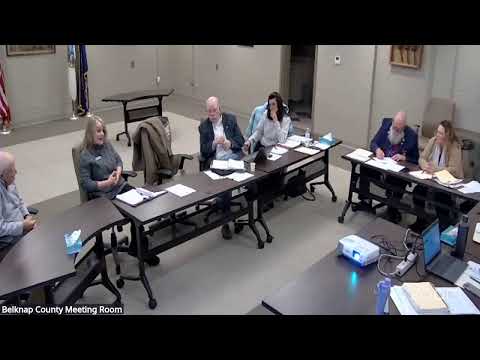
Officials from Lakes Region Mental Health (identified in materials as a designated community mental health center serving 24 towns) briefed commissioners on revenue pressures and asked Belknap County to continue funding for adult outpatient services.
Beth Vashon, chief development and public relations officer, and Sunshine Fisk, chief financial officer, told commissioners the center’s adult outpatient program is primarily funded by insurance revenue and county contributions; they requested $32,000 in county support for the current fiscal year. Vashon said last year the center provided services to 3,280 children and families (with a majority from Grafton County in that year’s mix) and reported roughly $907,000 in charity care to county residents, a 184% increase from the prior fiscal year.
Fisk explained the ‘spend down’ dynamic affecting Medicaid billing: some clients qualify for Medicaid but have monthly deductibles because their income exceeds a program threshold; those deductibles frequently go unpaid and create uncompensated care for the provider. Presenters said the suspension of spend downs during the public health emergency temporarily reduced that burden but the re‑instatement of spend downs has contributed to unsustainable charity‑care levels across community mental health centers statewide.
Commissioners asked about how town and county contributions are used. Presenters said town contributions primarily support access‑to‑care (walk‑in and intake coordination) and county requests offset the adult outpatient program’s operating deficit; the presenters provided a breakdown in the submitted packet and said the organization bills Medicaid for most clinical revenue (roughly 70% of revenue is Medicaid, they said).
Presenters also described emerging work on providing services to people leaving incarceration through community reentry models; they said state changes to billing and code access were being discussed so mental‑health providers could be reimbursed for services delivered during incarceration or in immediate reentry phases.
Outcome/next steps: Presenters supplied packets and finance detail; commissioners did not make an immediate funding decision at the hearing.