Get Full Government Meeting Transcripts, Videos, & Alerts Forever!
Get email alerts on the Jail Staffing topic
No spam. Unsubscribe anytime.
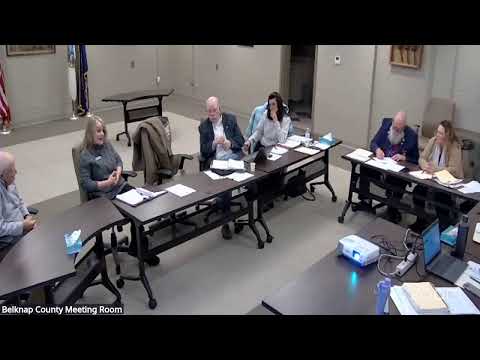
Belknap County discusses adding correctional officer as jail staffing, overtime and programs draw scrutiny
Summary
Belknap County commissioners heard the Department of Corrections’ budget presentation, including a request for one additional full‑time correctional officer, ongoing use of part‑time staff and expected impacts on overtime, programming and jail operations.
Belknap County commissioners heard a budget presentation from the county Department of Corrections that included a request to add one new full‑time correctional officer to improve staffing and reduce overtime.
The corrections superintendent presented staffing figures and operational needs, saying the department currently budgets for 25 full‑time correctional officers, plus sergeants and corporals counted separately, with roughly three part‑time officers who fill shifts as available. The department reported an average daily population (ADP) that has ranged recently from about 67 to 85 inmates and described a shift back to 8‑hour shifts (three shifts per day) to provide steadier coverage.
Commissioners asked how adding a position would affect overtime and coverage. Department leaders said adding one full‑time officer would likely reduce overtime costs but could not provide a precise dollar figure; the department estimated an overtime budget reduction in the low five‑figure range if a hire were made and trained. The department also said the 8‑hour schedule change is expected to produce more consistent staffing during busy daytime hours while allowing lower staffing overnight when inmates are locked down.
The department cited the Prison Rape Elimination Act (PREA) guidance as a recommended staffing standard (roughly one correctional officer per 15 inmates for certain conditions) and described on‑floor staffing requirements that include sergeants and corporals in counts but exclude some command staff. The department emphasized that physical layout, program movement, court transports, medical appointments and mental‑health incidents require multiple officers for many routine tasks, and that shortages can force lockdowns or call‑ins of additional staff.
Commissioners and the superintendent discussed the department’s programs: a one‑person CORE (substance‑use) program contractor administered through Horizons, a chaplain who covers variable hours, education and reentry programming (HiSET/GED, OSHA, ServSafe, parenting), and increased use of the community corrections side of the facility for minimum‑security or sentenced inmates. The CORE contract and related supplies were discussed as roughly a $67,000 line item (clinician plus supplies), with supplemental programming costs for pretrial and sentenced inmates.
On finances, the department reported it had budgeted to fill a new hire with an assumed start date of April 1 in its draft budget but noted hiring would depend on timing of budget approval and the time required to advertise and train new staff. Commissioners expressed concern about recruitment difficulty and the high training cost of new hires; department staff said part‑time hires are harder to fill and can cost nearly as much to train as full‑time employees.
Outcome/next steps: Commissioners indicated the department’s request for one additional full‑time correctional officer was accepted as a safety priority and recommended to be included in the budget package for further consideration; the record does not show a formal roll‑call vote on that request during the presentation. Staff said overtime and other lines would be monitored and adjusted during the fiscal year if hires occur.
The department was asked to provide additional schedule and staffing detail for commissioners and to follow up with requested clarifications after the hearing. Commissioners also invited a facility tour after the meeting.