Get Full Government Meeting Transcripts, Videos, & Alerts Forever!
Get email alerts on the Wildlife Management topic
No spam. Unsubscribe anytime.
North Dakota witnesses large public showing for bill to allow hunting over supplemental feed
Summary
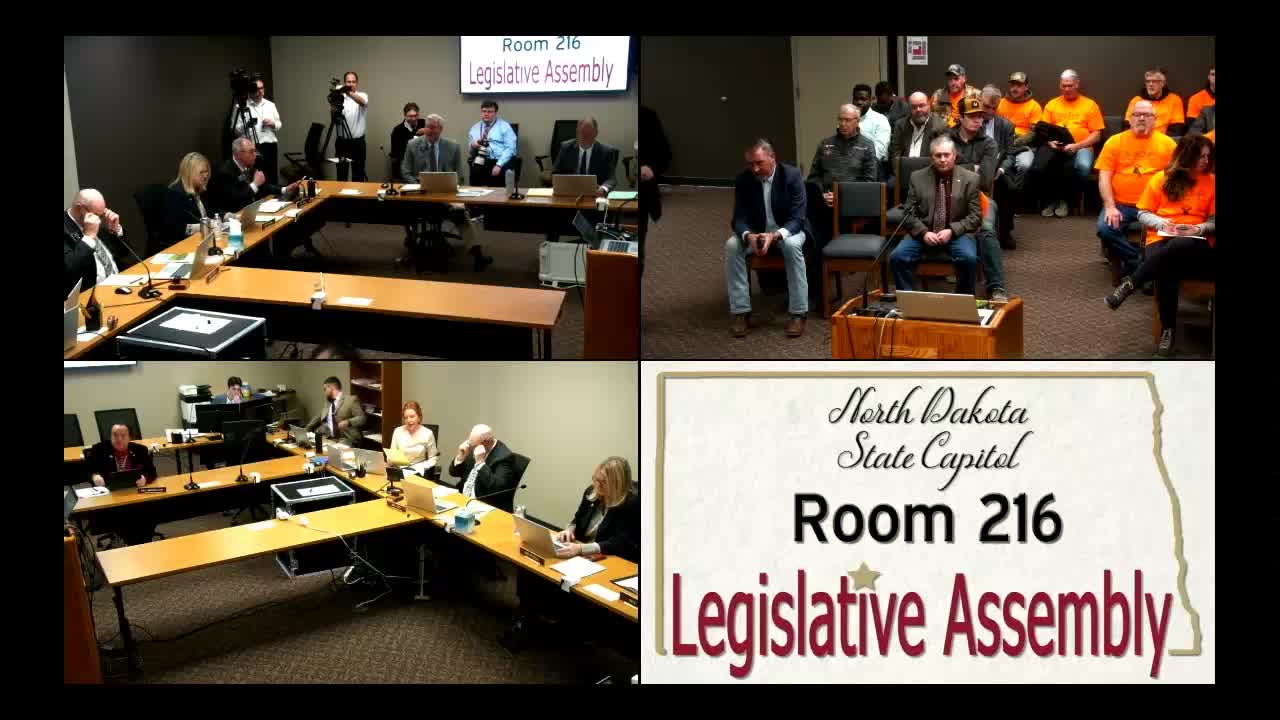
Hundreds of landowners, hunters and agriculture groups testified in favor of Senate Bill 2137, which would overturn or limit current restrictions on hunting over supplemental feed on private land. No formal action was taken; the committee recessed and will reconvene after floor session.
BISMARCK — Supporters of Senate Bill 2137 urged the Senate Agriculture and Veterans Affairs Committee to lift hunting restrictions that bar taking deer over supplemental feed, arguing the rules infringe private-property rights and limit hunting access for youth, veterans and disabled hunters.
Sen. Keith Boehm, who introduced SB 2137, told the committee the bill would "prevent the banning of supplemental feeding of deer," and said feeding wildlife "is an activity that North Dakotans can enjoy and utilize freely." He cited department testing numbers and said disease detections do not equate to confirmed disease deaths.
The bill drew dozens of landowners, farming and ranching groups and hunters to the hearing. Daryl Lease, president of the North Dakota Farm Bureau, said the organization’s membership supports "the ability to do on private property, as they wish with the regards of feeding and the ability to hunt over that feed." Lease added, "You can click a picture, but you can't click your gun," illustrating the current rule allowing feed but restricting the act of taking game over it.
Witnesses framed the debate around two main themes: property and access rights, and the state’s management of chronic wasting disease (CWD). Several speakers questioned the scientific basis for restrictions and the Game and Fish Department’s consistency in applying its own protocols. Jared Higgins, representing the North Dakota Stockmen’s Association, said landowners are "frustrated about inconsistent rules" and urged policy rooted in clear science. Wyatt Thompson and other landowners cited specific hunting units (including 3F2 and 3A1) and argued long-standing local restrictions have not demonstrably slowed CWD prevalence.
Many speakers emphasized hunter recruitment and access. Sen. Thomas and multiple landowners told the committee that supplemental feeding increases the likelihood of clean, ethical shots for youth and hunters with limited mobility. Jeff Willock, a veteran and landowner, said the current ban has "a negative impact on several categories of potential hunters" including youth and disabled veterans and described removing feeders before season as a poor substitute for access.
Opponents were not represented in the oral testimony at this hearing; several presenters anticipated Game and Fish staff would later provide scientific and management rationale. Testimony included a range of numeric claims that speakers attributed to department data or their own records: Sen. Boehm said roughly 49,596 deer had been tested over 22 years with about 105 detections and one confirmed CWD-associated death in North Dakota; Andy Buntrock reported a tally of submitted testimonies as "153 in favor and 48 opposed" as of mid-morning; a presenter referenced federal and state spending on CWD outreach and human-dimensions work, citing grants of roughly $96,300 and $168,000 for public outreach in recent years. Those figures were presented by witnesses as evidence that messaging and testing—rather than on-the-ground feeding restrictions—drive policy.
Witnesses also described land-management practices and local conditions. Several testified that large winter yarding of deer on farms and ranches already concentrates animals seasonally and that year-round supplemental feeding provides nutrition and hunting opportunities across widely rural counties including Grant, Sioux, Bottineau, Renville, McHenry and others. Multiple speakers said the department had paused or applied unit restrictions inconsistently and that in practice wardens rely on discretion because the agency’s proclamations do not specify a yardage for what constitutes hunting "over" feed.
Chairman Lueck did not take a committee vote during the hearing. He said the committee would recess for the Senate floor session at 12:30 and reconvene "at the call of the chair" afterward to finish testimony.
Why it matters: SB 2137 would change how supplemental feeding and hunting over feed are treated on private land across large portions of North Dakota. Proponents say the change would preserve hunting access for recruitment and underserved hunters and protect private-property rights; opponents (expected later in the process) are likely to point to CWD management and public-health considerations. The committee will take additional testimony and hear agency responses before any formal action.