Get Full Government Meeting Transcripts, Videos, & Alerts Forever!
Get email alerts on the Rural Community Endowment topic
No spam. Unsubscribe anytime.
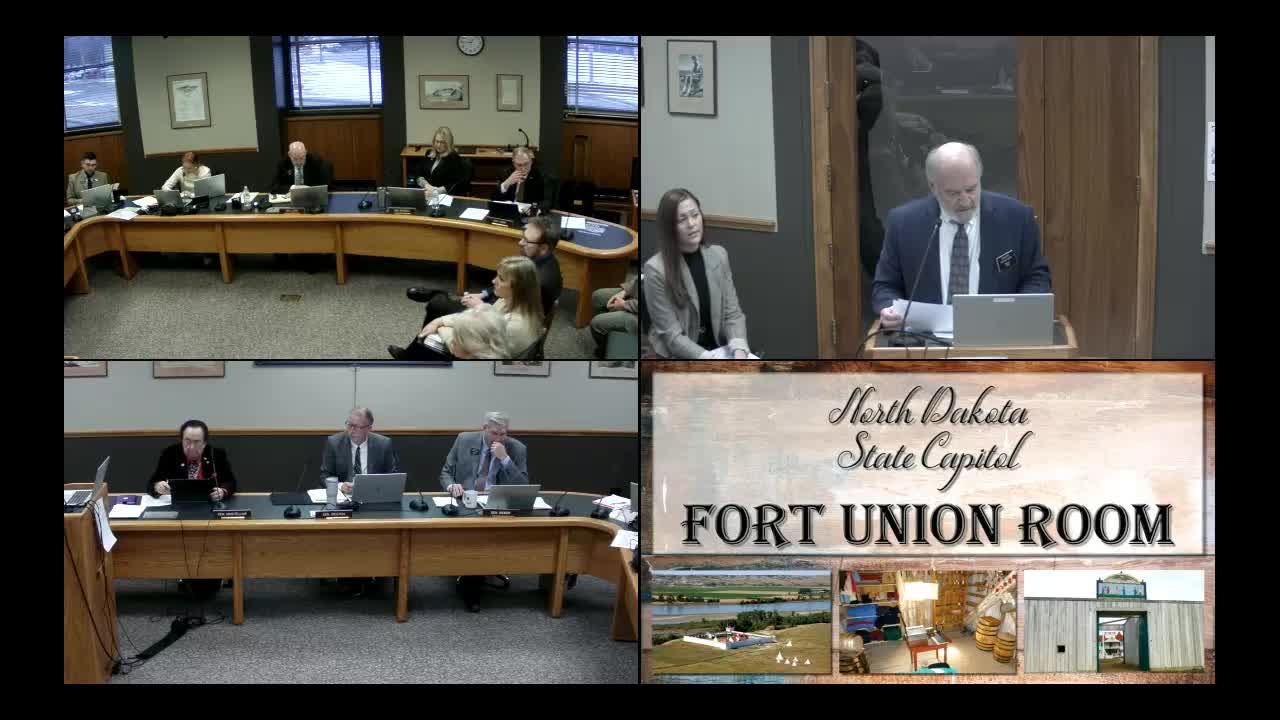
Senate committee hears testimony for $50M rural endowment fund to support towns under 1,000
Summary
Lawmakers heard testimony on Senate Bill 2097, which would create a $50 million Rural Community Endowment Fund with $5 million available immediately; proponents said the fund would fill gaps for very small towns, while existing nonprofit leaders warned the proposal could duplicate current work.
Senator Tim Mathern, prime sponsor of Senate Bill 2097, told the Senate Agriculture and Veterans Affairs Committee the bill would "establish[] an endowment fund, and the earnings of the fund can provide grants to communities under 1,000 population." The proposal would set aside $50,000,000 as an endowment and make an additional $5,000,000 available so grants could begin in the first biennium.
The bill would place the fund in the North Dakota Department of Commerce; Commerce would run a competitive request-for-proposal process to select a state-based grant maker to administer awarding. Megan Langley, executive director of Strength in ND, said the Rural Community Endowment Fund would aim to finance projects that often fall outside typical charitable giving—examples she cited included "matching funds for infrastructure investments" and architecture and engineering fees that small towns cannot afford.
Supporters described the fund as a flexible, long-term resource for communities with limited tax bases and staffing. Langley said endowment payouts are typically calculated as a percentage of the principal and estimated, in an "ideal scenario," at 3–5 percent per year; she said that would translate to roughly $1.75 million to $2.5 million annually from a $50 million endowment. Langley also said the bill would allow up to 10 percent of annual available grant funds to be used for administration by the contracted grant maker so the state would "not be adding FTE" in Commerce.
Several local officials and nonprofit representatives testified in favor, saying the fund would help towns pay for water and sewer projects, housing and childcare facilities, and other investments that can unlock state or federal dollars. Kenny Rogers, a township officer, described rural towns' reliance on basic services and urged lawmakers to "give rural North Dakota some hope." Josh Grama, representing the North Dakota Association of Electric Cooperatives, and Corey Peterson of the League of Cities both said gaps exist for places under 1,000 residents.
Opponents and some witnesses urged amendments or alternative approaches. Kevin Dvorak, president and CEO of the North Dakota Community Foundation (NDCF), said his nonprofit already manages local community endowment funds in many rural places and warned the bill, as written, appeared "more top down than bottom up" and could duplicate existing local infrastructure. Leslie Bieber, a superintendent and a member of the NDCF board, testified she opposed the bill "as currently written" while supporting directing money to rural communities; she suggested leveraging NDCF's existing structures for communities under 1,000.
Committee members asked about oversight, grant timelines and program costs. Langley said the Rural Community Endowment Fund Committee would be selected with rural representation and legislative input and that a typical turnaround for a grant decision could be about 60 days once a proposal was complete. She said the $5,000,000 initial set‑aside would allow the program to make awards immediately while the endowment generated earnings.
The hearing closed with no legislative action taken on SB 2097; committee members indicated further work or amendments may follow in committee before any vote.
Less critical details: witnesses cited sample beneficiary towns (Arthur, Munich, Hoople, among others) and reiterated that many existing state and federal programs require cash matches or exclude very small places by income or population criteria. Supporters argued the endowment would be an additional tool rather than a replacement for other funding sources.