Get Full Government Meeting Transcripts, Videos, & Alerts Forever!
Get email alerts on the Behavioral Health Und topic
No spam. Unsubscribe anytime.
UND and student leaders describe growth in counseling use and peer support programs
Summary
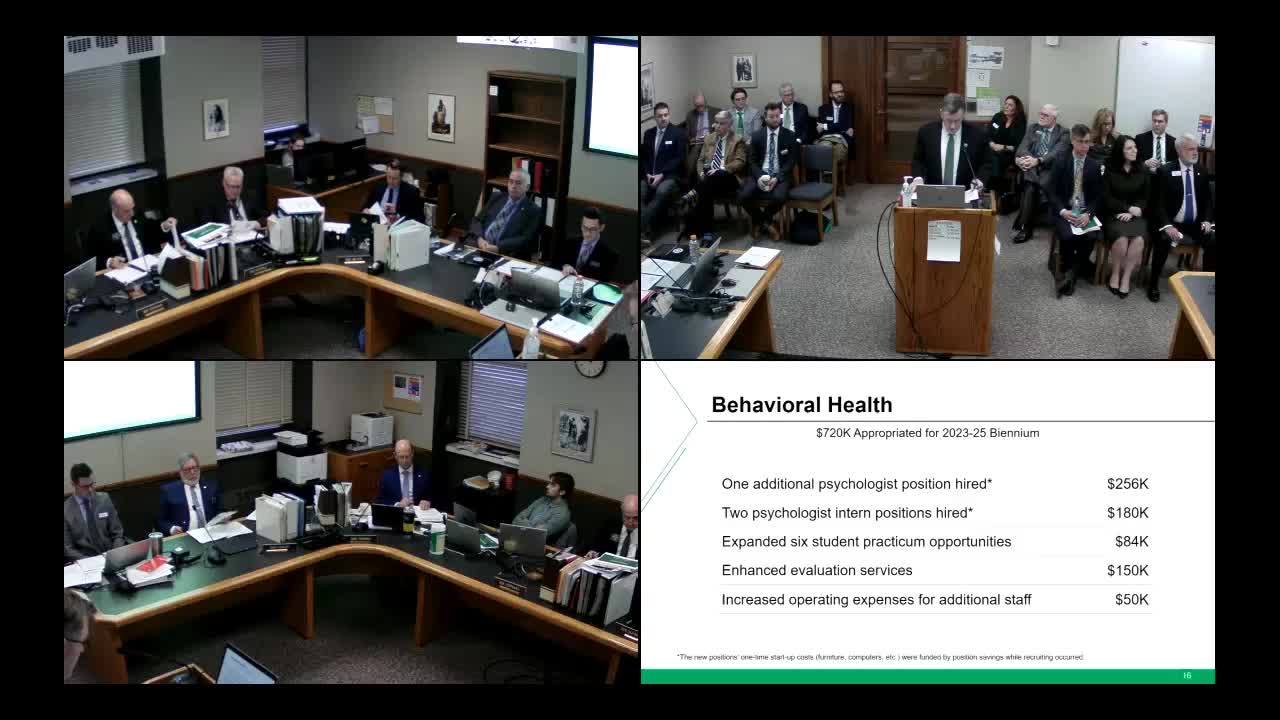
UND officials and the student body president told lawmakers counseling center appointments rose from 1,017 in fiscal 2024 to 1,618 so far in fiscal 2025; administrators and students highlighted the Green Bandana and Green Tag peer‑support initiatives and asked for future committee conversations on behavioral‑health funding and outcomes.
University of North Dakota leaders and student body president Connor Ferguson outlined campus behavioral‑health activity and student‑led peer programs during the Appropriations — Education and Environment Division hearing.
President Andy Armacost and SMHS and student representatives said the legislature’s recent investments increased counseling capacity and that the university has seen a substantial rise in appointments. “In fiscal year 24, we had 1,017 appointments within our counseling center. In fiscal year 25 to date, we have 1,618,” Armacost said, noting a roughly 60 percent increase and that demand continues to grow.
Connor Ferguson, UND student body president, described student peer‑support programs and their reach. “Green Bandana is a training that we offer to students, staff, and faculty where they will get trained to be a mental health peer advocate,” Ferguson said. He added the program helps students find services and provides a visible signal (a bandana) that a trained peer is available. Ferguson also described Green Tag, a new program for staff and faculty designed to identify trained supporters in offices and public spaces.
Administrators and student leaders asked for a more detailed committee review of behavioral‑health investments and outcomes. Armacost proposed a deeper hearing with counseling center leadership and others to evaluate ongoing needs, outcomes of prior funding and potential future allocations. Ferguson noted experimental uses of AI the university is exploring — including chatbots and predictive outreach — to identify students earlier and connect them to services.
Ending: Legislators indicated interest in a follow‑up deep dive into behavioral health funding, program outcomes and whether additional investments should be targeted to peer programs, clinical services or prevention work.