Get Full Government Meeting Transcripts, Videos, & Alerts Forever!
Get email alerts on the Agriculture Beef Commission Elections topic
No spam. Unsubscribe anytime.
Bill to elect North Dakota Beef Commission members draws sharp split: producers favor election, industry groups warn of cost and loss of sector representation
Summary
Representative Dori Hoch introduced House Bill 1207 to establish a district election process for the North Dakota Beef Commission, a change supporters called democratic and opponents called potentially costly and disruptive to sector representation.
Representative Dori Hoch introduced House Bill 1207 to establish an election process for the nine members of the North Dakota Beef Commission, replacing the current system in which the governor appoints most members from nominations made by industry groups.
“Opening the beef commission's election process will provide a voice to every beef producer throughout North Dakota,” Ben Fishback of the Independent Beef Association of North Dakota (IBAND) told the committee, urging a "do pass" recommendation. Fishback and other proponents argued elections would increase transparency and bring greater producer accountability to how checkoff dollars are spent.
North Dakota Farmers Union testified in support, with Matt Purdue noting that eight of the state's 10 commodity checkoff boards already use elected boards and that elections would give all contributing producers an equal chance to serve. Several ranchers and regional producers told the committee they favor district‑level representation so they can directly contact and hold commissioners accountable.
Opponents concentrated on operational and equity concerns. Julie Ellingson of the North Dakota Stockmen's Association said the current statutory selection scheme — which guarantees seats nominated by specific sectors such as dairy producers, cattle feeders and livestock markets — assures the board reflects the full contours of the state’s beef industry. Ellingson and other opponents warned that district elections could leave some specialized sectors under‑represented if geography or population make candidates from those sectors noncompetitive.
Several witnesses raised cost and logistical questions. Representative Hoch said she estimated an initial per‑ballot cost of roughly $3 and, using an approximately 8,000‑producer rollup, put a first‑year expense at about $24,000; she said the commission's state checkoff revenue is about $1 million, so an initial election could be roughly 2.5% of that budget. Opponents and neutral witnesses noted a larger uncertainty: the state’s county extension service does not maintain a comprehensive mailing list of cattle producers, so implementing statewide mailed ballots or mail‑in elections would require building or certifying a voter list.
Julie Ellingson and other witnesses also asked for a clear fiscal note; they and several commissioners said the bill’s redistricting and referendum provisions raise further questions about thresholds, timing and potential costs.
Neutral testimony came from the commission itself. Nicole Wardner, executive director of the North Dakota Beef Commission, explained the statute allows up to four nonvoting ex officio members and described how the commission currently recruits candidates for national appointments.
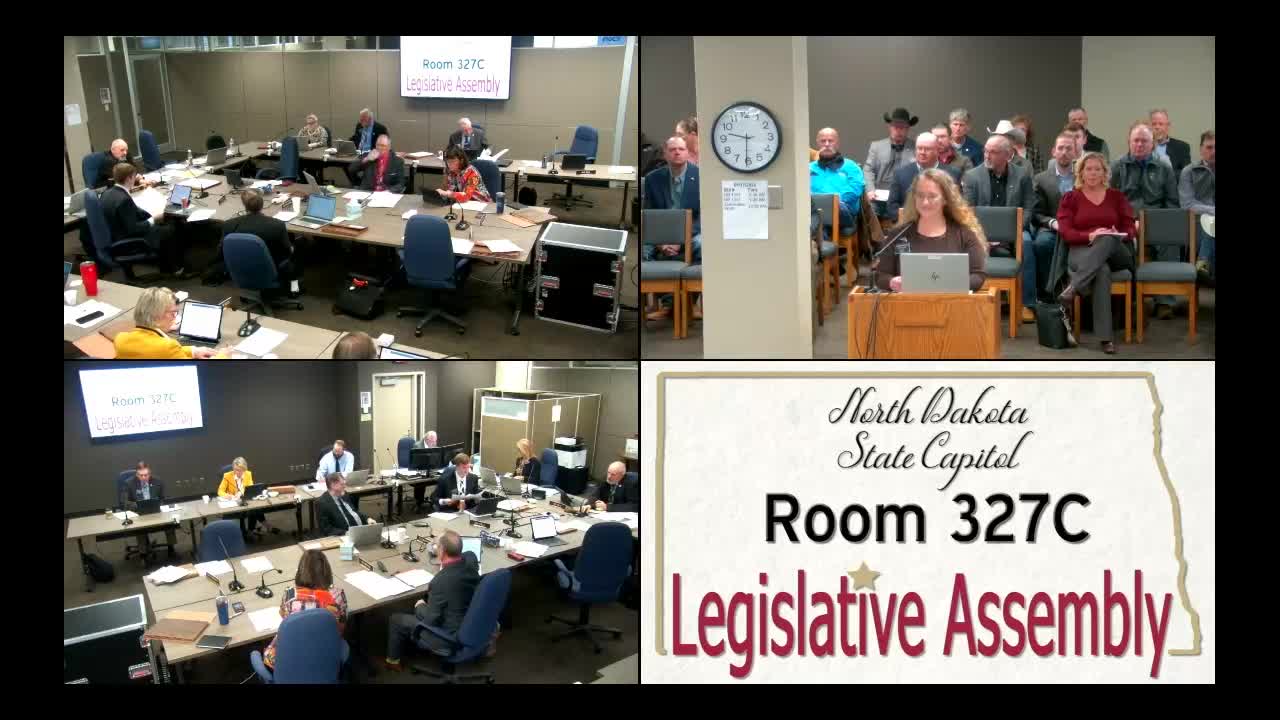
Members of the committee and nearly two dozen witnesses — including county ranchers, commodity‑group representatives, auction market owners and industry association leaders — debated the bill for more than an hour. No committee vote was taken; the hearing was closed and proponents and opponents were asked to continue stakeholder discussions.
Why it matters: House Bill 1207 would change who selects the commission that directs the state beef checkoff — a tax‑like assessment on cattle sales used for research, promotion and education. Supporters say elections will broaden participation; opponents say the change risks diluting representation for sectors critical to the industry and would add administrative costs.
What happens next: Committee members said they would continue to consider the bill and review further fiscal and implementation details — particularly how extension offices would administer elections and how district boundaries were drawn.
Quotes in this article are drawn from witnesses who testified before the House Agriculture Committee; names and roles are given at first reference.