Get Full Government Meeting Transcripts, Videos, & Alerts Forever!
Get email alerts on the Hospital Finance Capacity topic
No spam. Unsubscribe anytime.
Hospitals warn of thin reserves, high occupancy and discharge bottlenecks
Summary
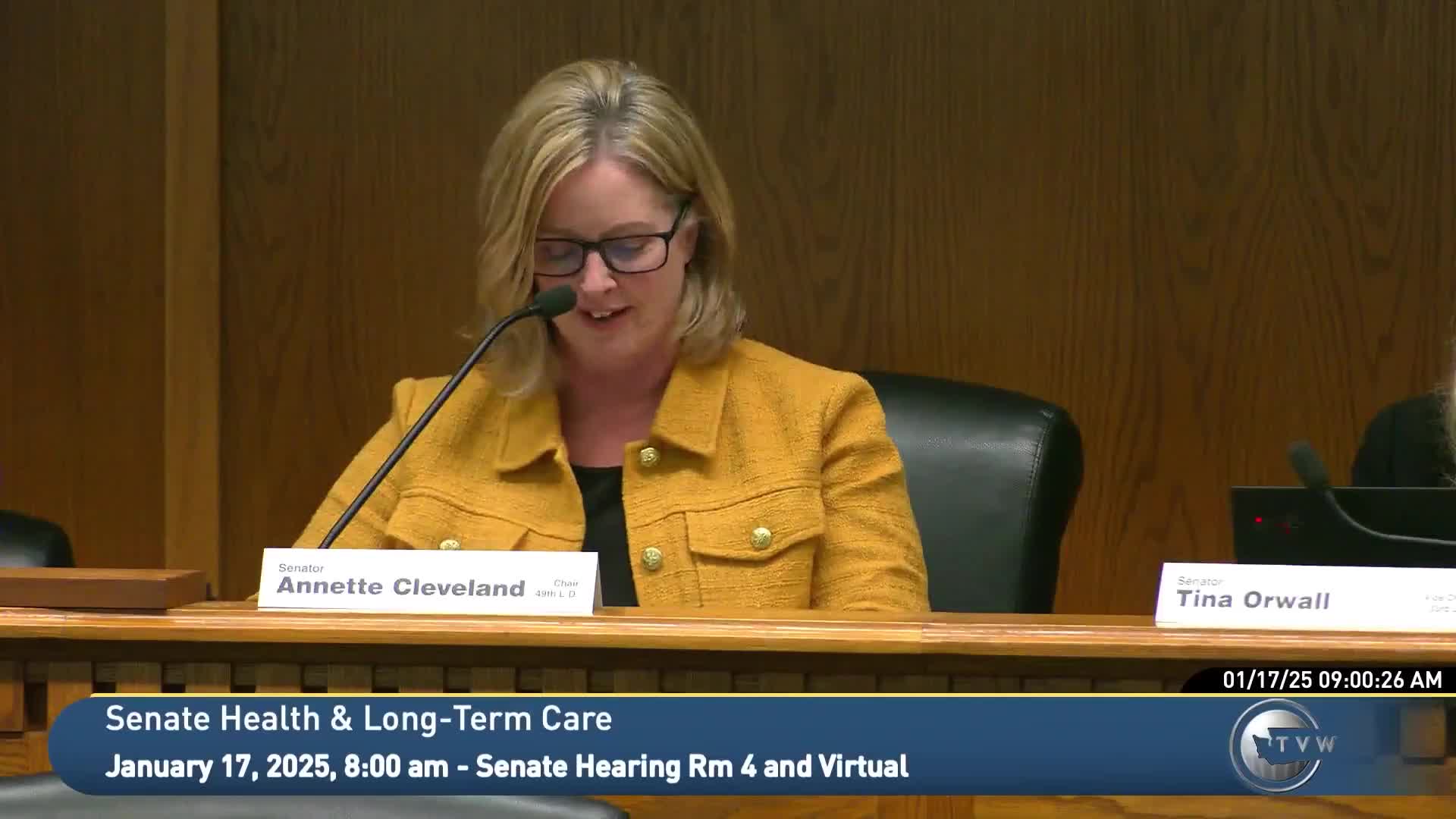
Hospital leaders told the Senate Health & Long Term Care Committee that hospitals statewide are running near capacity, face shrinking reserves and longer patient stays, and that limitations in post-acute settings and payment rates are constraining bed throughput and financial stability.
Hospital leaders told the Senate Health & Long Term Care Committee that Washington hospitals are operating near capacity, have seen four years of financial losses and continue to face complex discharge and workforce challenges that reduce bed availability.
Florence Chang, president of MultiCare Health System and chair of the Washington State Hospital Association—s public policy committee, said Washington—s 101 community hospitals are part of a broad health ecosystem that depends on primary care, long‑term care and outpatient specialty services. "Hospitals are operating very high in terms of 96% occupancy," Chang said. "When an acute care bed is taken up by a patient who could be discharged, it causes longer emergency department wait times."
Maryann Keene, CEO of Ocean Beach Hospital and chair of WSHA—s rural hospital committee, told the committee hospitals provided substantial volumes of care last year: emergency department visits measured in the millions, hundreds of thousands of inpatient stays and roughly 75,000 births. She said hospitals are treating increasingly complex patients and that length of stay is growing: since 2019 stays for complex patients rose about 35%.
Keene and Chang described the effect of complex discharge — when patients are clinically ready for discharge but cannot move to a post‑acute setting such as a skilled nursing facility or an adult family home — and noted the average hospital cost to care for a patient who no longer needs inpatient services is roughly $1,000 per day. The legislature directed investments in recent sessions to reduce that backlog, Keene said, and the number of complex discharge patients decreased from pandemic highs but remains elevated.
Shailene Whittaker, senior vice president for government affairs at the Washington State Hospital Association, presented state financial aggregates showing hospitals— operating margins and cash reserves deteriorated after the pandemic. WSHA reported that hospitals had a negative 5.2% operating margin in 2023 and lost approximately $1.7 billion; preliminary 2024 numbers show an improved but still negative operating margin (around -1.3%) and a $400 million loss after state safety‑net payments began flowing. Hospital reserves (days cash on hand) also fell; bond rating guidance generally considers about 200 days cash on hand healthy, and many Washington hospitals are well below that benchmark.
Committee members asked about insurer payment practices and the effect of claims denials and slower payments on hospital liquidity. Whittaker and Chang said reimbursement delays and greater denial rates since the pandemic have extended revenue cycles and strained reserves. "Once a payment is denied, to get paid for that care sometimes can take six months," Whittaker said.
Panelists also described structural factors that affect bed availability. Washington has fewer hospital beds per capita than most states, a trend driven in part by a long‑term shift to outpatient care. WSHA cited a Kaiser Family Foundation ranking that placed Washington near the bottom nationally for beds per 1,000 residents. The association said having fewer beds, higher acuity patients and limited post‑acute capacity together compress the system and raise the risk of service reductions if financial pressures continue.
Hospital leaders thanked the Legislature for the 2023 safety‑net assessment and related payments but cautioned those funds and the larger hospital stabilization efforts remain at risk if the Legislature reduces funding amid a tight state budget. They asked lawmakers to weigh the financial strains when considering cuts and to prioritize interventions that improve throughput, stabilize post‑acute capacity and support workforce recruitment.
Lawmakers acknowledged the need to address upstream drivers of hospital capacity, including primary care and long‑term care placement, and asked presenters about options to shore up reserves, speed claims payments, and reduce administrative barriers to discharge.