Get Full Government Meeting Transcripts, Videos, & Alerts Forever!
Get email alerts on the Senior Housing Right To Counsel topic
No spam. Unsubscribe anytime.
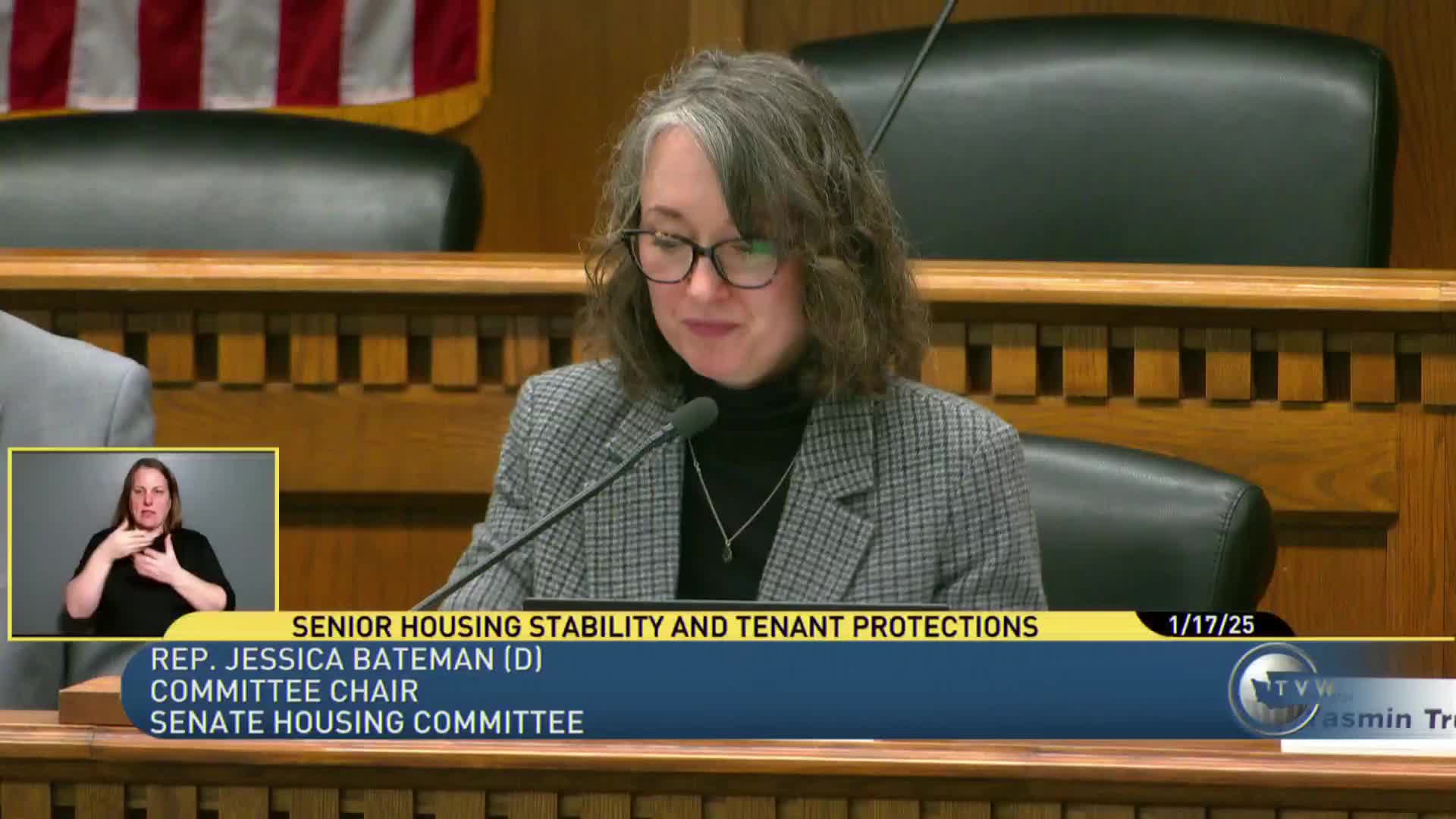
Committee hears plan to fund right-to-counsel for Medicaid residents in long-term care
Summary
The Senate Housing Committee heard testimony on a proposal for publicly funded legal counsel for Medicaid beneficiaries facing discharge from assisted living, adult family homes and enhanced services facilities after OCCLA and DSHS officials said federal rules require comparable protections for these residents.
The Senate Housing Committee heard testimony on a proposed program to provide publicly funded legal counsel for Medicaid beneficiaries facing discharge from certain long-term care settings.
Program counsel Beth Leonard of the Office of Civil Legal Aid (OCCLA) told the committee OCCLA had prepared a decision package requesting state funding to create a right-to-counsel program for Medicaid residents in assisted living facilities, adult family homes and enhanced services facilities. "We understand that the Centers for Medicare & Medicaid Services recently determined that DSHS is out of compliance" with a federal home-and-community-based settings rule, Leonard said, and that CMS identified the right to counsel as a gap the state needs to address.
Why it matters: Committee members were told that filling the gap is necessary both to protect vulnerable residents from unlawful or unsafe discharges and to bring the Department of Social and Health Services (DSHS) back into compliance with federal Medicaid requirements, which, if not addressed, could trigger enforcement action that affects funding and operations.
Leonard said OCCLA’s proposal would make counsel available only to residents who receive Medicaid as the payer for their services and estimated DSHS’s data indicate about 115 potentially eligible discharges per month (roughly 1,300 people annually). OCCLA asked the legislature to fund a specialized program with trained advocates who can handle accessibility needs and complex interactions among federal Medicaid rules and state law. "These cases are quite complex and not appropriate for a pro bono attorney or volunteer attorney," Leonard said.
Bea Rector, Assistant Secretary, Aging and Long Term Support Administration (DSHS), told the committee the department serves about 70,000 people a month in Medicaid long-term services and supports and that roughly 26% of those served are in residential settings (adult family homes, assisted living and enhanced services facilities). Rector said DSHS supports targeted legal assistance to keep people safely housed or to secure a safe, orderly discharge when necessary. She also described several small housing programs administered by her agency, including short-term rental “bridge funding,” supportive housing services to help people find and retain housing, and temporary hotel/motel placements while permanent arrangements are found.
Provider groups and ombuds advocates described operational realities. Karen Marney, representing Washington Health Care Association and LeadingAge, said discharges from licensed residential care are governed by the resident-rights statute (cited in testimony as RCW 71 29) rather than the Residential Landlord Tenant Act, and that facilities must provide a 30-day notice and identify a discharge location in writing. "The facility also has to provide a discharge location," Marney said, noting the statutory differences between licensed-resident discharges and ordinary landlord evictions. She and other provider witnesses urged better access to case management, mitigation funds for nonpayment by Medicaid residents, and funding for behavioral-health supports to prevent avoidable discharges.
John Ficker, Executive Director of the Adult Family Home Council, described practical constraints for small home-based providers: each bed can represent a large share of a home’s revenue, and when a resident’s needs exceed home capacity — for instance, because of medical acuity or behavioral health issues — finding an appropriate receiving placement can be difficult. "We do support the right to counsel," Ficker said, adding that upstream supports (intensive case management, mitigation funds, improved bed-hold policies and better discharge planning) would reduce the number of discharges.
Committee follow-up and funding status: OCCLA testified that the decision package requesting funding is included in the governor’s budget. Committee members asked DSHS for additional data on program demand and on the size of existing housing subsidies; Rector agreed to provide more detailed program and demand data. Several senators said the topic crosses committee jurisdictions (health and housing) and requested continued interagency work and follow-up during the legislative interim.
Ending: Witnesses emphasized the program’s narrow eligibility (Medicaid-paid residents in specified residential settings), the need for specialized advocates able to serve clients with accessibility and cognitive needs, and the potential federal consequences if Washington does not align its protections with CMS rules. Committee members signaled interest in further work and asked agencies to return with more data and implementation details.