Get Full Government Meeting Transcripts, Videos, & Alerts Forever!
Get email alerts on the Sodium Nitrite Regulation topic
No spam. Unsubscribe anytime.
Bill would restrict high‑concentration sodium nitrite sales after families link product to youth suicides
Summary
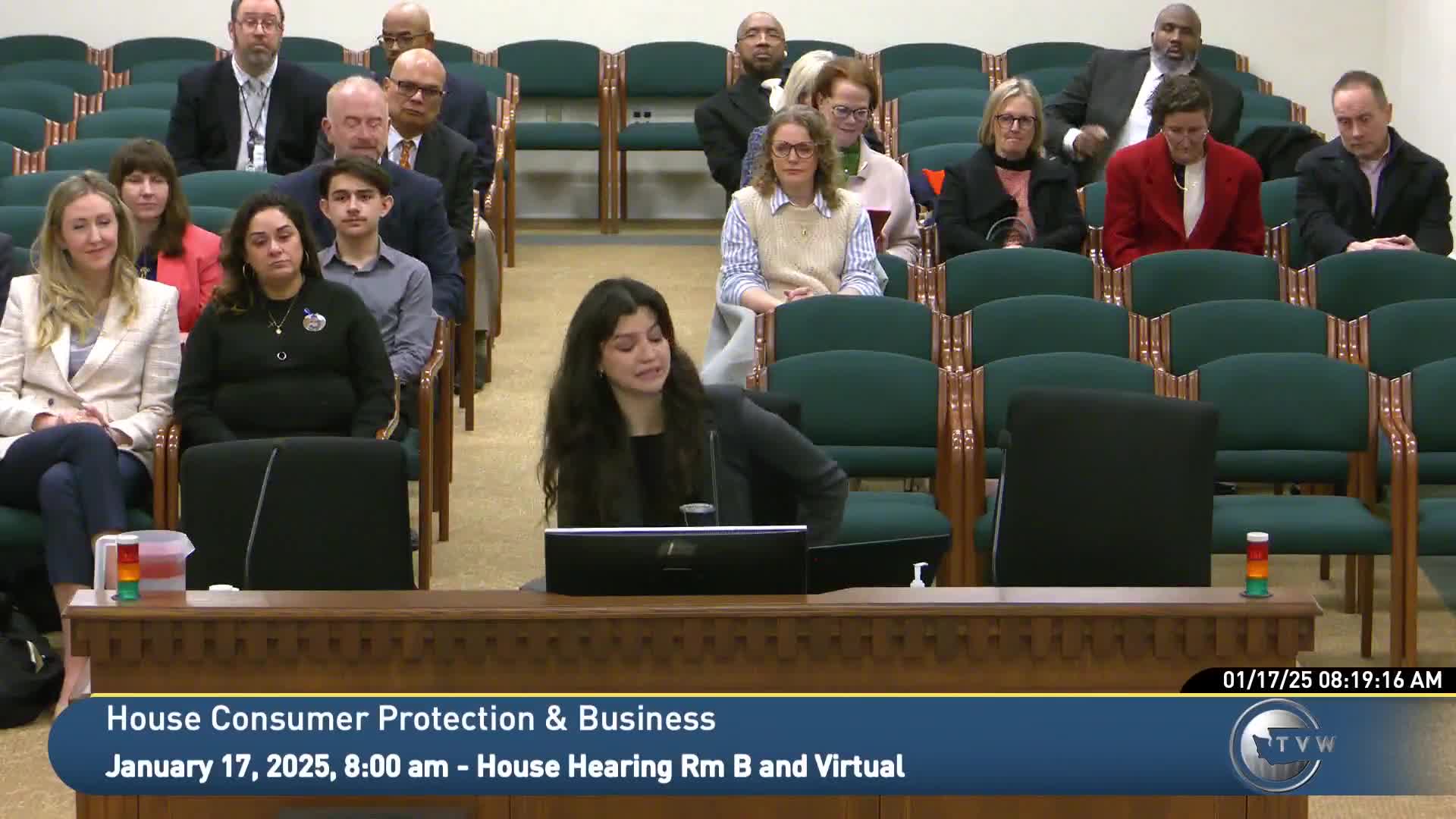
Representative Charlotte Mena opened a public hearing on House Bill 1209, which would restrict sales and transfers of high‑concentration sodium nitrite and require warning labels, sales verification for commercial buyers and recordkeeping.
Representative Charlotte Mena opened a public hearing on House Bill 1209, which would restrict sales and transfers of high‑concentration sodium nitrite and require warning labels, sales verification for commercial buyers and recordkeeping.
Committee staff Peter Klotfelter summarized the proposal: products with sodium nitrite above 10% mass or volume could not be sold except to verified commercial businesses or institutions that affirm they require the product and provide an employer identification number. Sellers would need systems to verify business purchasers, packages would require a standardized danger warning, covered entities must keep sales records for three years, and civil penalties would range from $10,000 for a first violation up to $1,000,000 for a second. The bill also creates a private right of action and makes violations actionable under the Consumer Protection Act.
Sponsor Charlotte Mena framed the bill as urgent and urged passage after describing what she said were at least 30 young people who purchased sodium nitrite online and used it to die by suicide. "Unless the legislature acts, there is nothing that prevents the sale of sodium nitrate at lethal concentrations," Mena said, and described the risks of concentrated product being marketed online.
Several family members and attorneys testified about individual losses and about online availability. Michelle Vasquez Stickley, whose 15‑year‑old son died after purchasing sodium nitrite online, described how a package arrived at home and was readily accessible to her son; she asked lawmakers to prioritize "lives over profits." Attorney Carrie Goldberg, who represents multiple families in litigation, said sales on large online marketplaces spiked after online forums identified the chemical as a lethal suicide method.
Mental‑health organizations supported the bill as a lethal‑means reduction measure. Anna Nepomaceno, director of public policy for NAMI Washington, cited state youth suicide statistics and said that rapid lethality after ingestion leaves too little time for rescue.
Business groups and trade associations said they generally support restricting household access but asked for practical changes. The Association of Washington Business and the Washington Retail Association supported the policy goals while requesting a private‑right‑to‑cure provision and expressing concerns about private enforcement and impacts on small retailers.
The committee did not take a final vote. Sponsors and stakeholders discussed technical drafting and enforcement pathways; committee members asked staff and witnesses for data on seller platforms and distribution channels. The hearing record includes substantial personal testimony from impacted families and legal counsel urging passage.