Get Full Government Meeting Transcripts, Videos, & Alerts Forever!
Get email alerts on the Insurance Regulation topic
No spam. Unsubscribe anytime.
New insurance commissioner spotlights consumer outreach, PBM enforcement and Medicare Advantage concerns
Summary
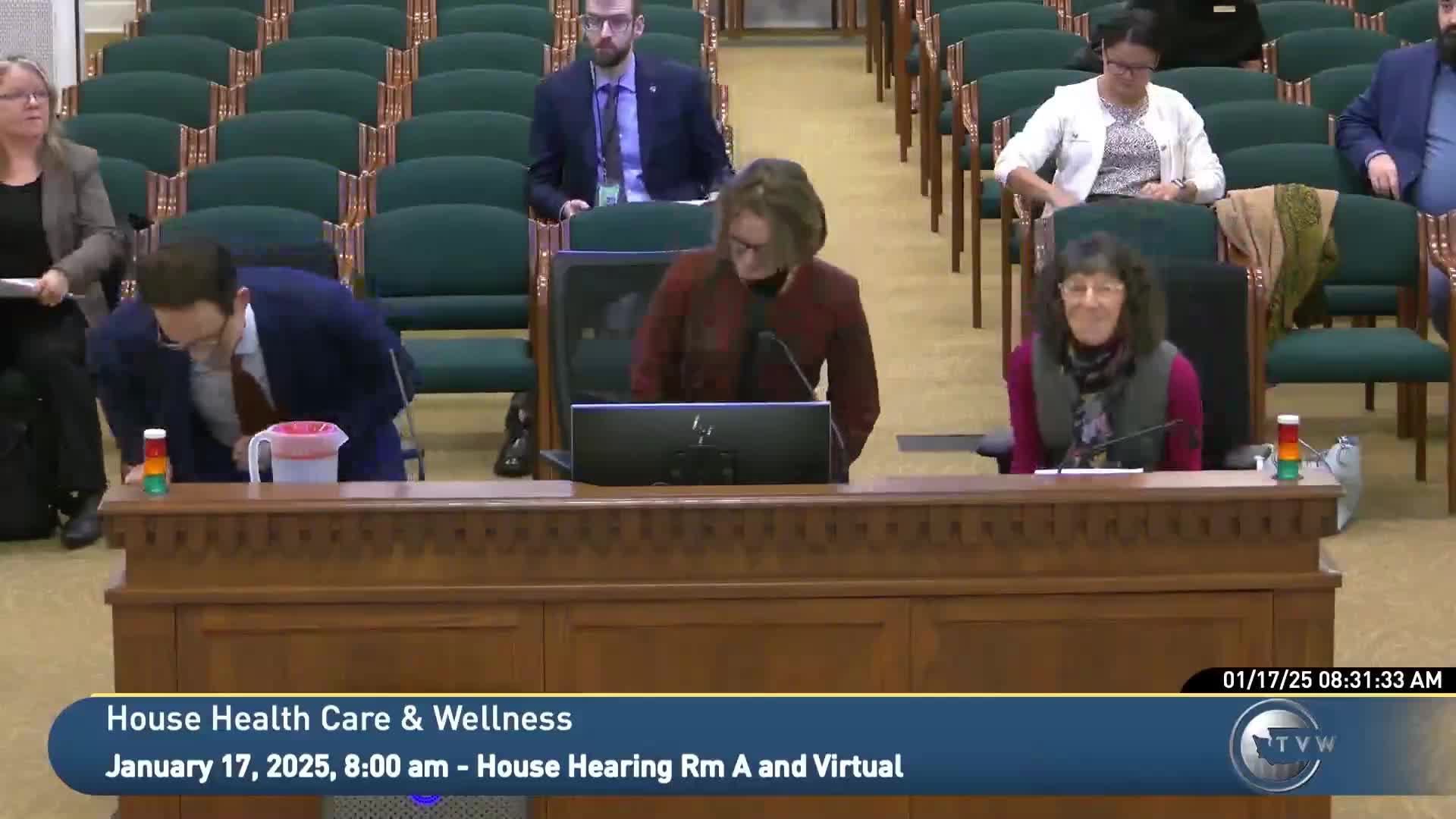
Patty Kuder, Washington’s Insurance Commissioner, outlined plans to expand consumer advocacy, enforce new pharmacy benefit manager rules, and increase outreach on Medicare Advantage and property-casualty concerns during a Jan. 17 House Health Care & Wellness Committee briefing.
Patty Kuder, Washington’s insurance commissioner, told the House Health Care & Wellness Committee on Jan. 17 that her office will prioritize consumer advocacy, expand outreach across the state and enforce newly enacted rules for pharmacy benefit managers.
"My top priority this year is gonna be building on and expanding our consumer advocacy and outreach efforts," Kuder said, adding that the Office of the Insurance Commissioner (OIC) will travel statewide to meet constituents and employers.
Kuder and her staff described the OIC’s scope and limits: the office regulates fully insured health plans (individual, small-group and large-group plans sold as insured policies) but said many employer-sponsored plans are self-funded and therefore primarily governed by the federal Employee Retirement Income Security Act (ERISA). That distinction limits state regulation of self-funded employer plans unless the employer opts in to state protections.
Pharmacy benefit managers and recent legislation: Jane Beyer, senior health policy advisor, described 2024 legislation (Senate Bill 5213) that tightens state oversight of pharmacy benefit managers (PBMs). Beyer said the law will prohibit spread pricing, require patient consent before automatic mail‑order enrollment, and bar certain PBM practices that disadvantage independent pharmacies. The office said it set up a unit to investigate PBMs and that many of the statute’s enforceable provisions take effect Jan. 1, 2026.
Jurisdictional limits and opt‑in: OIC staff explained that ERISA preemption prevents the state from imposing many requirements on self‑funded employer plans, but that large employers may opt in to selected state protections; OIC said more than 350 self-funded plans have already opted in, covering about 400,000 people.
Medicare Advantage and SHIBA: Committee members raised Medicare Advantage issues; Kuder said complaints about Medicare Advantage enrollment and access were a major driver of constituent contacts. OIC emphasized the Senior Health Insurance Benefits Advisors (SHIBA) program as the first line for consumer guidance on Medicare options and said it will increase SHIBA resources and public education.
Consumer assistance and enforcement data: Jane Beyer said OIC reviewed and approved about 11,000 policy forms and roughly 4,000 health, life and disability rate filings last year, handled nearly 10,000 consumer complaints and secured roughly $45 million in recoveries for consumers. The office also reported about 160 enforcement orders in the period described, with more than 100 orders yielding fines.
Property & casualty and wildfire insurance: Committee members pressed on homeowners nonrenewals and wildfire-related rating practices. Kuder said Washington’s insurer-of-last-resort (the state FAIR plan) enrolls fewer than 250 policies and that OIC is working on options to preserve insurability and to limit localized nonrenewal impacts.
Kuder closed by offering OIC staff as legislative resources and by inviting lawmakers to join outreach events that aim to educate consumers and reduce the need for appeals and litigation.