Get Full Government Meeting Transcripts, Videos, & Alerts Forever!
Get email alerts on the TANF Policy topic
No spam. Unsubscribe anytime.
Advocates urge restoring pre-2011 TANF time-limit policy and tying grants to cost-of-living measure
Summary
The Statewide Poverty Action Network told the committee that Washington’s TANF time-limit policy has cut thousands of families from aid, disproportionately affecting families of color, and proposed reinstating the pre-2011 policy and indexing cash grants to a state needs standard.
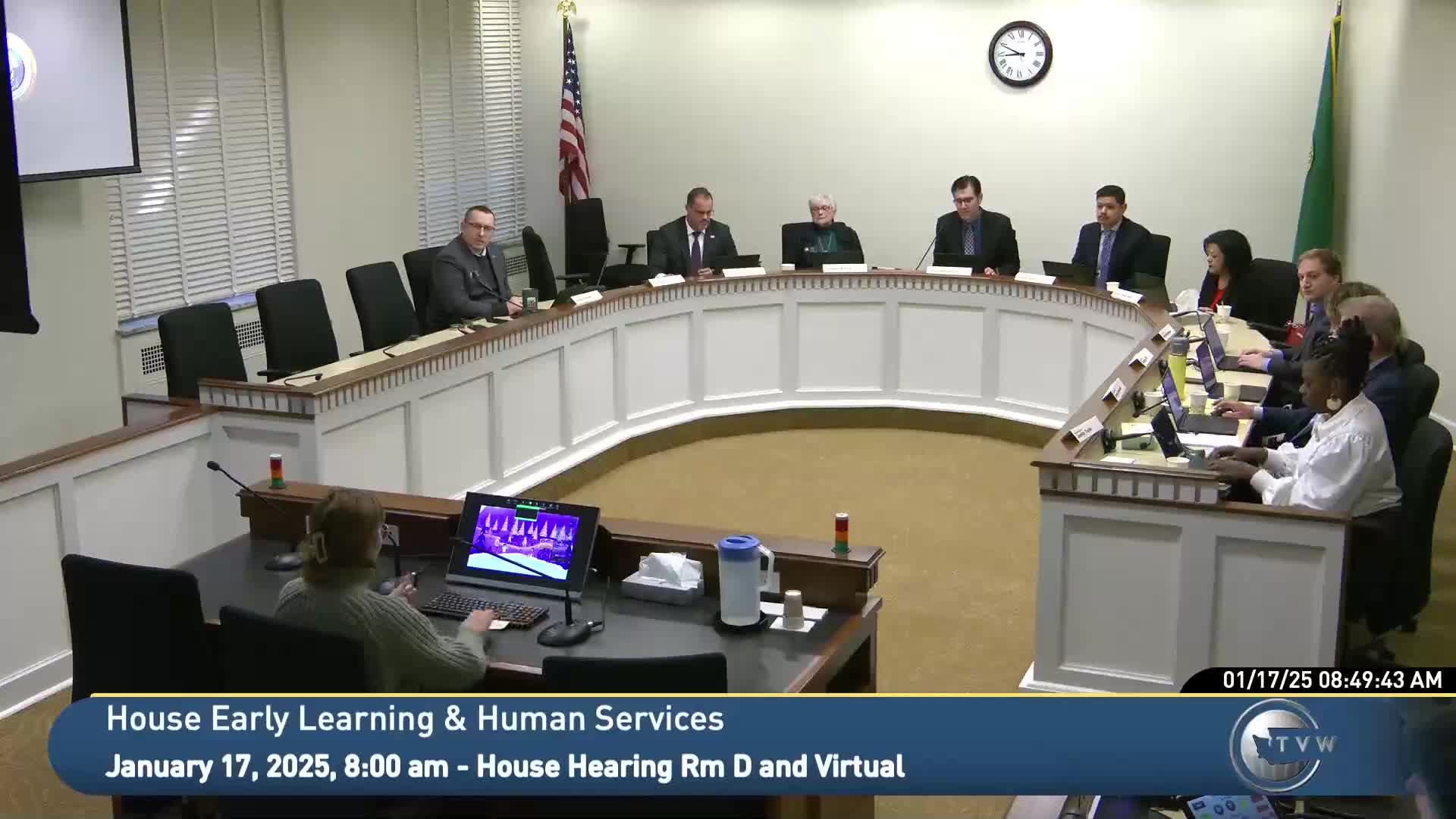
Liana Crescent (Statewide Poverty Action Network) told the Human Services, Youth, & Early Learning committee that Temporary Assistance for Needy Families (TANF) policy changes enacted in 2011 continue to cause deep hardship and racial disparities in program access.
Crescent said TANF serves predominantly families with children, that about 70% of the caseload are children, and that a family of three currently must make no more than $1,412 per month to qualify for TANF in Washington. She said the maximum monthly grant for a family of three is $706 and that the average grant is $583 per month. Crescent described TANF’s 60-month lifetime limit and explained that, since 2011, families who exhaust months face narrow hardship exemptions that are administratively burdensome and traumatic to document, particularly for survivors of domestic violence.
Crescent said the temporary reinstatement of the pre-2011 policy during COVID improved equitable access and reduced racial disparities, but that the legislature allowed that proviso to lapse in June 2023. She said 7,500 families, including about 5,000 children, were removed from TANF as a result. Crescent urged reinstatement of the pre-2011 time-limit policy and said her organization expects legislation to be introduced by Representative Cortez to restore broader access.
On cash amounts, Crescent proposed tying the TANF grant to a percentage (she suggested 16%) of Washington’s needs standard (a state-calculated basic-needs budget), which would automatically adjust with cost-of-living changes and reduce the long-term harm of “deep poverty.” She argued automatic inflators make TANF more comparable to other safety-net programs and would reduce administrative burden and benefit cliffs.
Committee members asked about eligibility requirements and program metrics. Crescent summarized TANF eligibility requirements she cited: household income limits, asset limit ($12,000), U.S. citizenship or five-year residency, and workforce participation requirements formalized in individualized responsibility plans. She said the average length of stay on TANF is about 24 months and the median is 13 months, and that roughly 10–13% of families remain beyond the federal participation thresholds, consistent with federal limits on caseload composition.
Crescent asked the committee to consider legislation to reinstate broader time-limit exemptions and to adopt an automatic inflator for grant amounts; she offered to supply data to members and to work with the committee on draft language.