Get Full Government Meeting Transcripts, Videos, & Alerts Forever!
Minn. workforce committee hears broad concerns over paid leave, sick‑time mandates and staffing
Summary
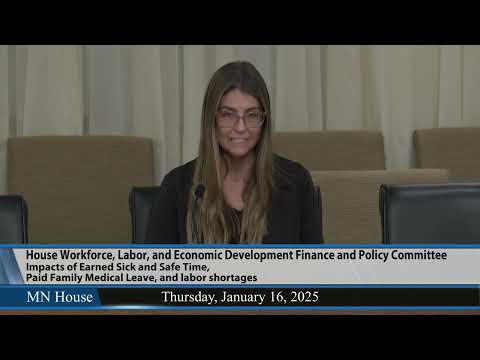
At its first official meeting, the Minnesota House Workforce, Labor and Economic Development Committee heard business groups and local governments urge changes to Minnesota's Earned Sick and Safe Time and Paid Family and Medical Leave laws, saying the mandates are creating administrative burdens, cost uncertainty and operational challenges for employers and for core public services.
At its first official meeting, the Minnesota House Workforce, Labor and Economic Development Committee heard business groups and local governments urge changes to Minnesota's Earned Sick and Safe Time (ESST) and Paid Family and Medical Leave (PFML) laws, saying the mandates are creating administrative burdens, added costs and risks to critical public services.
Lauren Schadhorst, director of workplace management and workforce development policy for the Minnesota Chamber of Commerce, told the panel the business community is worried "about some upcoming mandates and some things that have been passed in the last couple of years." She said Minnesotans are seeing businesses move or expand outside the state and urged lawmakers to "use this economic data to have an honest assessment of the state's headwinds."
The testimony collected a range of concerns that committee members said merit further study. Local government representatives said the laws were enacted outside collective bargaining and can require negotiations or arbitration to reconcile with already bargained benefits. Matt Hilgert of the Association of Minnesota Counties said the new programs "were created and mandated outside the collective bargaining process" and noted counties could face meaningful payroll costs when the PFML payroll contribution is fully implemented. Owen Wirth of the League of Minnesota Cities said cities are "navigating a complicated network of leave policies" and highlighted limits the statute places on employers' ability to monitor leave use for essential personnel.
Why it matters: Witnesses said the laws affect a wide range of employers and public services and require clearer statutory language or administrative guidance before full…
Already have an account? Log in
Subscribe to keep reading
Unlock the rest of this article — and every article on Citizen Portal.
- Unlimited articles
- AI-powered breakdowns of topics, speakers, decisions, and budgets
- Instant alerts when your location has a new meeting
- Follow topics and more locations
- 1,000 AI Insights / month, plus AI Chat