Get Full Government Meeting Transcripts, Videos, & Alerts Forever!
Get email alerts on the Environment Pfas topic
No spam. Unsubscribe anytime.
St. Clair County receives feasibility report recommending PFAS treatment options for Smiths Creek landfill leachate
Summary
Consultants told the county the landfill’s leachate contains PFAS at levels that occasionally exceed Port Huron’s permit; foam fractionation and granular activated carbon with ion-exchange were recommended as cost-effective options, while reverse osmosis was ruled cost-prohibitive. The board voted to receive and file the report.
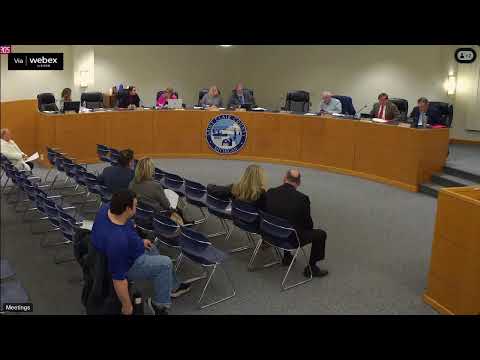
St. Clair County commissioners on Jan. 16 received a feasibility report from consultants retained to evaluate treatment options for PFAS in leachate collected at the Smiths Creek landfill.
The report, presented by Tetra Tech principals Ari Kremen and Kirsty Shuri, concluded that two commercially proven treatments — foam fractionation and granular activated carbon combined with ion-exchange — would meet the landfill’s current indirect-discharge permit limits for PFOS and are cost-effective under present conditions. Reverse osmosis met treatment goals but had much higher estimated costs, driven by expensive concentrate disposal.
Kremen summarized the legal and regulatory context that framed the study. “Leachates and other wastewaters are managed under the Clean Water Act,” he said, and noted that the U.S. Environmental Protection Agency (EPA) is expected to advance a regulatory proposal (referred to in the study as Plan 15) that could tighten oversight of PFAS in coming years. Kremen added that the state implementing agency (EGLE, Michigan Department of Environment, Great Lakes, and Energy) would apply any future federal standards through state permitting.
Kirsty Shuri described the three technologies pilot-tested at the site and reported pilot results. “The pilot testing confirmed that foam fractionation would be able to meet the permit limit that’s currently in place for PFOS,” she said. Shuri said foam fractionation is PFOS-selective, deployable soon and slightly less expensive than granular activated carbon (GAC) combined with ion exchange. She said GAC plus ion exchange is more protective of both long- and short-chain PFAS but that the media can be exhausted faster because other leachate constituents compete for adsorption.
The consultants provided cost estimates expressed as treatment cost per gallon. Under current operations, the study estimated the county’s baseline treatment cost at about $0.03 per gallon. Foam fractionation and GAC/ion-exchange were estimated at roughly $0.06–$0.07 per gallon; reverse osmosis was estimated to exceed $1.00 per gallon, largely because of concentrate disposal costs.
Commissioners asked about operational lifetime, expandability and long-term regulatory risk. Kremen said major equipment components typically have multi‑decade service lives if maintained — tanks and vessels can last 20 years or more, pumps about 5–10 years, and reverse‑osmosis membranes commonly require replacement every 5–7 years. He also noted landfill operations can continue to generate leachate during the site’s active life and through post‑closure care, a timeframe he described as potentially 60–70 years when combined active and post‑closure periods.
When asked whether systems could be combined, the consultants said hybrid approaches are feasible (for example, foam fractionation followed by carbon polishing), and that system selection should weigh near-term permit compliance, long‑term regulatory uncertainty and lifecycle costs. “Both foam fractionation and granular activated carbon with ion exchange would be good options,” Shuri said; she added that reverse osmosis, while effective, is rarely cost-effective where an indirect discharge (via a municipal wastewater treatment plant) is available.
The board voted to receive and file the feasibility report. No formal procurement award or construction authorization was made at the meeting.
The county administrator later reported that a foam fractionation unit is being installed and was on track for completion by the end of the month to meet deadlines from the City of Port Huron’s wastewater treatment facility.
Kremen and Shuri — and the commissioners who questioned them — stressed that regulatory change remains the main uncertainty: EPA and state standards could tighten over several years and phase in through permit renewals. The consultants recommended choosing a technology that allows modular upgrades or added polishing steps if future limits require additional treatment.