Get Full Government Meeting Transcripts, Videos, & Alerts Forever!
Get email alerts on the Wetlands Buffers Map topic
No spam. Unsubscribe anytime.
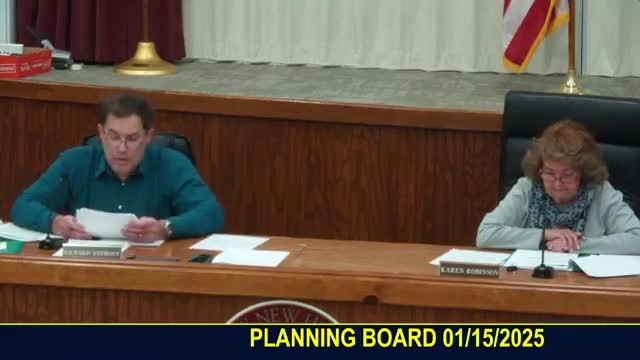
Plaistow board trims proposed prime-wetland buffers, conditions map vote on buffer amendment
Summary
After a lengthy public hearing, the Planning Board adjusted recommended prime-wetland buffer dimensions and agreed to post the buffer amendment to the warrant; the board also conditioned adoption of the prime-wetlands map on the buffer amendment to avoid notification conflicts.
The Plaistow Planning Board on Jan. 15 narrowed recommended buffer widths for areas proposed as “prime wetlands” and voted to post the buffer amendment to the March 2025 town warrant. The board also added language conditioning adoption of the separate prime-wetlands map on passage of the buffer amendment to avoid a situation in which different notification footprints could leave some property owners unnotified.
The board’s discussions followed an extended public comment period in which residents raised two main concerns: that the earlier, larger buffer figures would restrict existing property owners without grandfathering, and that notifications to abutters had been inconsistent between 2023 and 2024 mailings.
At issue were three buffer-types for mapped prime wetlands: the limited-use buffer, the parking-and-structure setback, and the wastewater-system setback. The Planning Board’s recommendation — revised during the hearing — set the limited-use buffer at 50 feet and reduced the parking and wastewater setbacks to 75 feet for mapped prime wetlands larger than 3,000 square feet. The revised figures were intended as a compromise between Conservation Commission recommendations and abutter concerns about significant laybacks from existing homes.
Public comments emphasized notice problems. Resident Ryan Labreck told the board he had compared certified-mail lists and found fewer recipients on the 2024 mailing, which used a smaller setback footprint, than had been included in the 2023 notice list. “There are 75 people on the reduced list who never got their notification,” Labreck said, and he urged the board not to adopt a map and buffer change on a schedule that could leave affected owners unaware.
To address those concerns, Board members added a caveat that would render the prime-wetlands map adoption null and void if the buffer amendment fails at town meeting. Board members said that approach prevents the town from adopting a map using a notification footprint that would differ from the zoning notice standard.
The board voted to post the buffer amendment (Z258) to the warrant with its recommended revisions and, separately, to post the prime-wetlands designation map to the warrant (Z2511) with the condition that, should the buffer amendment fail, the map article would be null and void. The board recorded its recommendation for both articles for voters to consider at the March 2025 town meeting.
What residents asked: Several speakers asked for existing homes to be grandfathered so current owners would not lose existing uses or face new setback-based restrictions, and asked planners to coordinate mailings using the same setback assumptions so that notification lists are complete.
What’s next: The buffer amendment and the prime-wetlands map will both appear on the March 2025 town-warrant. The Planning Board added language tying the map’s effectiveness to the passage of the buffer amendment to avoid a mismatch between map adoption and abutter notification scopes.