Get Full Government Meeting Transcripts, Videos, & Alerts Forever!
Get email alerts on the Personnel Contracts topic
No spam. Unsubscribe anytime.
Cumberland County board debates renegotiated director of schools contract, asks counsel for revised drafts
Summary
Cumberland County Board of Education members spent a January work session scrutinizing a proposed four‑year contract for Director of Schools Michael Stepp, asking counsel to prepare revised drafts that include a shorter-term option, clarified severance language limited to base salary, and explicit choices on a car allowance versus a district-provided vehicle.
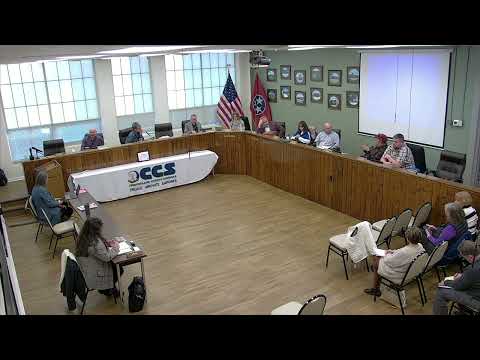
Cumberland County Board of Education members spent the bulk of a January work session poring over a proposed renegotiated contract for Director of Schools Michael Stepp, asking for changes to term length, severance language and several administrative provisions and directing board counsel to produce revised drafts.
The discussion covered the contract’s proposed four-year term beginning January 2025; a vehicle/car-allowance provision (a $600-per-month option versus district purchase and maintenance of a road-worthy vehicle); a residency clause; the board’s and director’s duties as referenced to Tennessee law; and indemnification and severance terms. Board counsel Chris McCarty, who reviewed the draft on behalf of the board, told members the terms were legally typical but could be adjusted to reflect local preferences.
Board members repeatedly raised two practical concerns: limiting long-term financial exposure if a future board sought to end the contract and ensuring evaluation timing would give the board current performance information before any renewal decision. Several board members told counsel they preferred a shorter term than four years; council said the board could lawfully offer any term up to four years but agreed to prepare alternate drafts reflecting shorter terms, including a two-and-a-half-year option discussed during the meeting.
Members debated the contract’s severance/buyout language for a no-cause termination. The board asked counsel to draft an option tying any no-cause payout to base salary only (excluding certain benefits and allowances), so that a contract buyout would not automatically include the full value of fringe and vehicle allowances. McCarty indicated that approach is a typical drafting option and said he would insert it as an explicit choice in the revised draft.
Other provisions discussed in detail included: - Residency requirement: the draft includes a clause requiring the director to live within the district. Counsel said Tennessee law allows residency requirements but that they are less common in tight labor markets; the board confirmed the clause can be added or removed by agreement with the director. - Automobile allowance vs. district vehicle: the draft included a $600 monthly car allowance; members asked for a cost-comparison to a district-purchased vehicle (counsel and staff provided a back-of-envelope estimate that a mid-size SUV might run about $40,000 and that 5½ years of the $600 monthly stipend would approximate that purchase price). Counsel said he would include both options in the contract language so the board could choose in the minutes. - Vacation/sick leave and payout on separation: members discussed the contract language that reimburses unused vacation at a per-diem rate; some favored a carryover cap rather than a cash payout. Counsel said state law affects treatment of unused leave and suggested clearer language and possible carryover limits as alternatives. - Evaluation timing and renewal notice: the draft sets an annual evaluation and a March notice date for renewal decisions; board members asked for evaluation timing aligned with fiscal-year reporting so reviews are current before renewal. Counsel recommended keeping an annual month specified in the contract (TSBA commonly suggests June) but said the board can select a month that better matches its renewal timetable. Counsel also pointed out that paragraph 23 (renewal/notice) can and should be adjusted so the director is notified with enough time to seek other employment if needed. - Indemnification and insurance: the draft includes indemnification and professional liability (D&O and liability coverage) for acts performed in the director’s professional capacity; counsel explained limitations for criminal or willful misconduct.
Throughout the meeting, counsel and the board emphasized that the draft remains negotiable and that no final approval or vote on the contract occurred during the work session. McCarty said he would prepare a new draft that (a) preserves several standard protections and required statutory references, and (b) includes alternative language the board requested — notably a two-and-a-half-year term option, explicit vehicle-purchase vs. allowance language, and a version of the no-cause payout limited to base salary. McCarty told members he would circulate revised drafts and “baked-in” options to the board before the next public meeting.
At the same session, board member Scott Van Winkle presented comparative salary and finance material the board requested. He said a revised contract pushing the director’s pay toward the 40–50th percentile statewide would substantially increase the district’s cost and could raise projected buyout exposure in a no-cause termination scenario; Van Winkle estimated one possible buyout exposure at roughly $700,000 under a four‑year payout scenario and asked the board to weigh term length against fiscal exposure.
The director, Michael Stepp, and counsel publicly confirmed the draft remains negotiable; Stepp said he could accept a two-and-a-half-year option if the board preferred. Stepp also said he would provide the board with requested clarifying information about his travel and military leave usage. Counsel said he would produce the revised draft and two explicit options (car allowance vs. district-purchased vehicle and alternative term lengths) so the board could decide in public minutes which option to pick.
What the board asked staff and counsel to do next - Counsel (Chris McCarty) to circulate a revised contract draft with explicit options: (1) two-and-a-half‑year and four‑year terms, (2) $600 monthly car allowance OR district-provided vehicle option with maintenance, and (3) a no‑cause payout option limited to base salary only. Counsel also said he would clarify language around vacation payout, residency, and evaluation month. - The director (Michael Stepp) to provide the board with requested travel/mileage and military-leave detail by email so members have factual context for allowance and leave clauses. - No final vote or formal contract approval occurred at the work session; the revised draft will be circulated for review before any public meeting vote.
Votes at a glance - Motion to postpone several agenda items (6A–6L) to the Saturday work session: motion moved and seconded during the meeting; board recorded a majority in favor and the motion carried. (Tally recorded in the transcript: six members said “yes”; formal names were not provided on the motion record.)
Why it matters: the contract sets the legal terms, compensation and evaluation rhythm for the school system’s top executive. Term length and severance clauses shape the district’s financial exposure if a future board decides to change leadership; evaluation timing affects whether a renewing or new board has current evidence of performance before making a renewal or replacement decision. Board members said they want a contract the district can sustain financially while also being competitive in recruitment and stable for leadership.
What the board will see next: counsel will circulate revised draft language that explicitly presents the options the board discussed and that records the specific items the board asked counsel and staff to clarify. The board will consider those drafts in a future public meeting before any formal approval.
Ending: The board did not vote to approve the contract at the work session; members left the meeting with counsel assigned to draft alternate versions and with public circulation of revisions planned before a future vote.