Get Full Government Meeting Transcripts, Videos, & Alerts Forever!
Get email alerts on the Health And Welfare Reorg And Budget topic
No spam. Unsubscribe anytime.
Idaho Department of Health and Welfare outlines reorganization, budget requests including vehicle replacements and IT upgrades
Summary
The Idaho Department of Health and Welfare told JFAC it is reorganizing internal divisions to match how work is done and asked for replacement vehicles, IT hardware and temporary flexibility for licensing surveys.
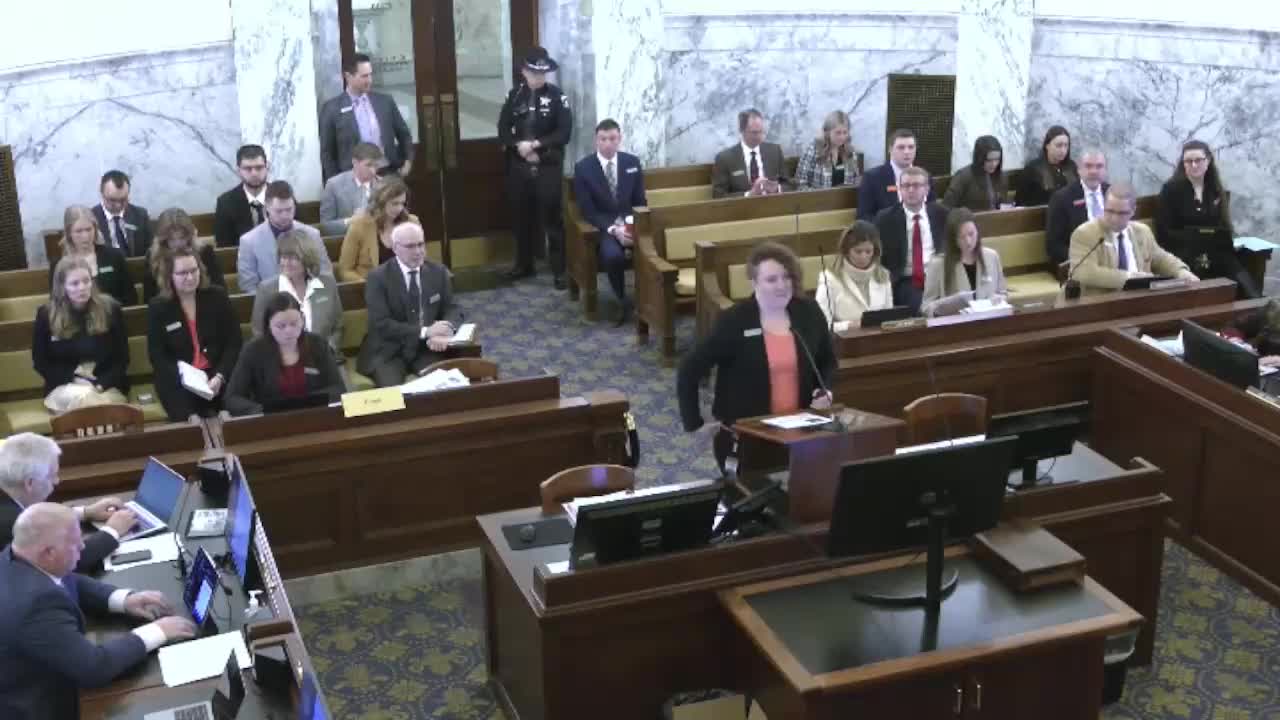
The Idaho Department of Health and Welfare presented an overview of a department reorganization and a set of budget requests Monday to the Joint Finance and Appropriation Committee, describing structural changes the agency says align the budget with how work is already administered and seeking funding for vehicle replacements, IT upgrades and licensing operations.
Alex Williamson, budget and policy analyst with the Legislative Services Office, told the committee the department is authorized 3,015.94 full‑time positions (FTP) and reported 315.57 vacancies at the time of the agency’s budget submission. Williamson summarized requested internal changes the agency asks the legislature to codify in program‑maintenance budgets: splitting Family and Community Services (FACS) out; grouping public health and self‑reliance as Health and Human Services; renaming support services to Division of Operations; creating a Child, Youth, and Family Services division; and moving specific programs — including Extended Employment Services (EES) and children’s developmental disabilities programs — under Medicaid for budgeting and reporting alignment.
Alex Adams, director of the Idaho Department of Health and Welfare, said the reorganization is intended to improve “line of sight” and accountability across a large agency that administers Medicaid, SNAP, child welfare and other programs. "Budgets are laws, not suggestions," Adams said, arguing the change also creates a Chief Financial Officer who reports directly to the director and adds a standalone legislative and regulatory affairs function.
On assets and replacement items, Williamson outlined one‑time requests included in the department’s 2026 request: $2.8 million in replacement items (which the analyst said included $1.8 million to replace 60 vehicles, $648,000 for office remodels/furniture and $384,000 for visitation rooms), $1.8 million in Office of Information Technology hardware replacement, and $711,000 in one‑time funds for SQL Server licensing and hardware (with an ongoing $140,000 request for software assurance). The governor recommended most items as requested but zeroed out a requested appropriation for cloud server capacity, the analyst said.
Director Adams described the vehicle request in more detail: the department operates about 435 state vehicles, roughly two‑thirds used in child‑welfare work (transporting children to visits, court, medical care). He said vehicle mileage among the units proposed for replacement ranged from about 105,000 to 159,000 miles, and the agency’s target is a seven‑year replacement cycle. Adams said COVID‑era market pressures and an abbreviated replacement last year left the department behind schedule.
Licensing and certification — which inspects and certifies health‑care facilities and had 71.9 authorized FTP with 13.9 vacancies at submission — asked for a fiscal‑year 2025 supplemental and ongoing exemption to a transfer limitation enacted in prior legislation. The exemption would allow the division to transfer personnel‑cost authority to operating expense to continue temporarily hiring contract nurse surveyors when staff vacancies prevent the division from meeting federally required inspection cycles. Williamson said the division previously requested a one‑time transfer of about $400,000 in FY2024 to fund contract nurses; Director Adams told the committee the division used about $300,000 of that and reverted roughly $100,000.
Adams noted the cost tradeoffs: staff surveyors are paid about $35 per hour, while contract surveyors can cost about $90–$95 per hour. He said long‑term care staffing vacancies peaked at roughly 80% during the pandemic, and the vacancy rate for the division stood at about 19% in the submission; turnover in the division has fallen from 21% (2021) to 7% most recently.
The department also reported progress on the Medicaid Management Information System (MMIS) modernization. Adams described MMIS as a major IT upgrade (the agency referenced an earlier estimate in testimony of about $180 million for the system), and LSO reported six IT‑related positions posted in support of MMIS work; Adams expected hires in the near term.
The committee heard about the newly created ombudsman office and its inaugural lead. Adams said he had met with the new ombudsman, Trevor Sparrow, and called the relationship "symbiotic," noting the office is intended as an accountability mechanism for the agency.
Why this matters: Health and Welfare is the state’s largest agency by appropriation; organizational alignment affects how appropriations are tracked, who is accountable for program results, and where spending authority appears in the budget book. Requests for vehicle replacement, IT refreshes and SQL licensing are capital and IT maintenance items the department argues are required to operate existing programs safely and effectively.
What the committee asked for follow‑up on: members requested lists and details for the vehicle fleet and replacement schedule, further detail on how prior replacement dollars were spent, and updates on hiring for MMIS and other IT positions. Committee staff will provide additional documentation and the department will appear in upcoming division‑level budget hearings.