Get Full Government Meeting Transcripts, Videos, & Alerts Forever!
Get email alerts on the Budget Process Program Maintenance topic
No spam. Unsubscribe anytime.
JFAC staff outlines program‑maintenance structure, sales‑tax distributions and general‑fund tracking
Summary
Budget staff described how Idaho’s program‑maintenance bills are structured, how sales tax is distributed (including funding earmarks such as the tax relief fund and TEChum allocations), and circulated a general‑fund daily update to help JFAC track appropriations versus the governor’s blueprint.
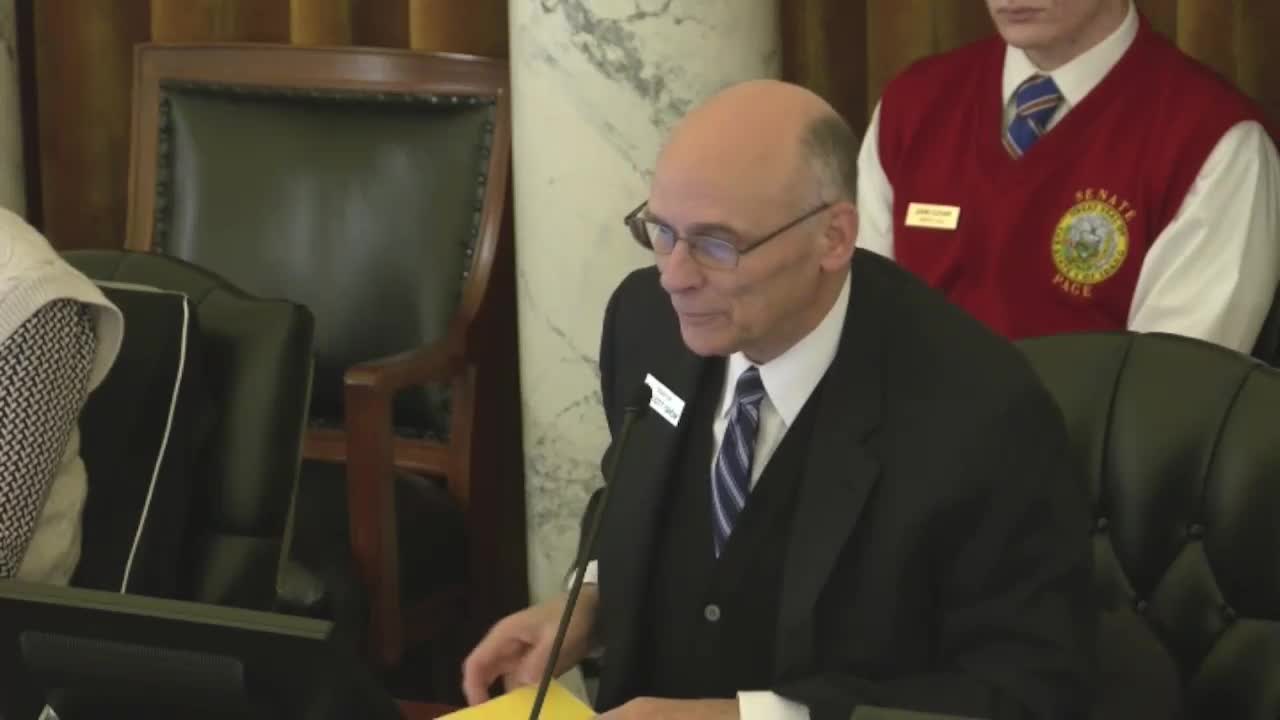
Keith Bybee, Division Manager for Budget Policy Analysis, walked JFAC members through the committee’s approach to program maintenance appropriations, the separation of maintenance and enhancement bills, and the revenue mechanics that determine how much of gross sales tax actually reaches the general fund.
“Program maintenance bills include the base budget plus benefit cost adjustments, contract inflation, statewide cost allocation and the Change in Employee Compensation (CEC) adjustments,” Bybee said, describing the legislative practice of grouping maintenance items into 10 appropriations bills organized by functional area. He explained that replacement items, IT replacement requests, annualizations and population forecast adjustments (formerly called nondiscretionary items) are handled in separate enhancement bills to give the legislature more opportunity to scrutinize growth versus ongoing costs.
Bybee told members the maintenance package will include CEC recommendations this year rather than placing CEC separately. He said the maintenance hearings are scheduled to allow members time to review “building block” packets in advance, and that the committee will take final maintenance decisions on Friday, January 17 (committee schedule referenced in the presentation).
The staff presentation also covered sales‑tax distributions. Bybee summarized the statutory distribution formula and how earmarks reduce the portion of gross sales tax that flows to the general fund: revenue sharing to local governments (11.5% of net collections), a dedicated allocation for the tax relief fund (the share of online sales taxes identified for relief), a 4.5% allocation currently supporting Tech‑related bonding with $80 million identified for bonds and any excess flowing to local transportation districts, and other statutory earmarks (including the School Modernization Fund at $125 million). He noted new or growing earmarks reduce the share of sales tax available for general‑fund appropriation and cautioned lawmakers that those choices increase the pressure on the general fund during a downturn.
Several members asked detailed questions: Representative Tanner and Senator Graham pressed staff on the rationale for classifying population‑forecast adjustments as enhancements rather than maintenance; Senator Ward Engelking asked whether replacement items and nondiscretionary items would be discussed later; Director Bedrock and Representative Petzke asked for clarification about how distributions and earmarks (including the Tech allocation) are calculated. Bybee responded that the Tech allocation is based on a 4.5% calculation of net collections with $80 million guaranteed for bonding by statute, and that proposals to add a further $50 million would either be drawn from existing percentages or would reduce the general fund if taken in addition to the 4.5% formula.
Bybee closed with an overview of the general‑fund daily update, a tracking spreadsheet staff will update frequently during the session. He said the report compares the governor’s recommendation to legislative actions and highlights items still to be decided (asterisked lines), such as revenue projections and proposed transfers. The general‑fund daily update will be refreshed regularly as agencies and bills are considered so members can monitor whether appropriations are tracking toward or away from the governor’s blueprint.
Staff distributed the green general‑fund update sheet to members and reiterated availability to assist new JFAC members in reviewing the legislative budget book and the decision packages before the maintenance hearings.